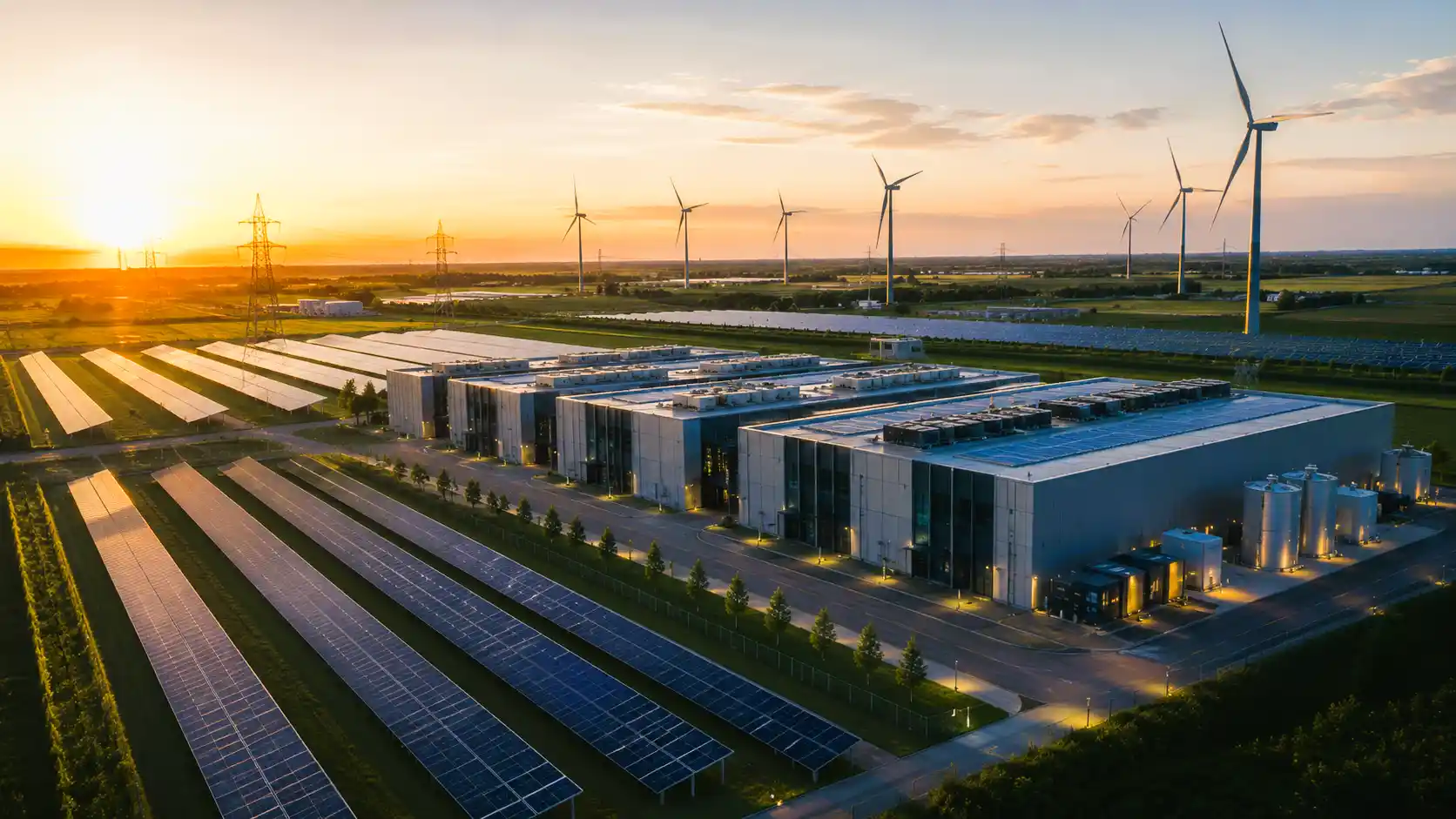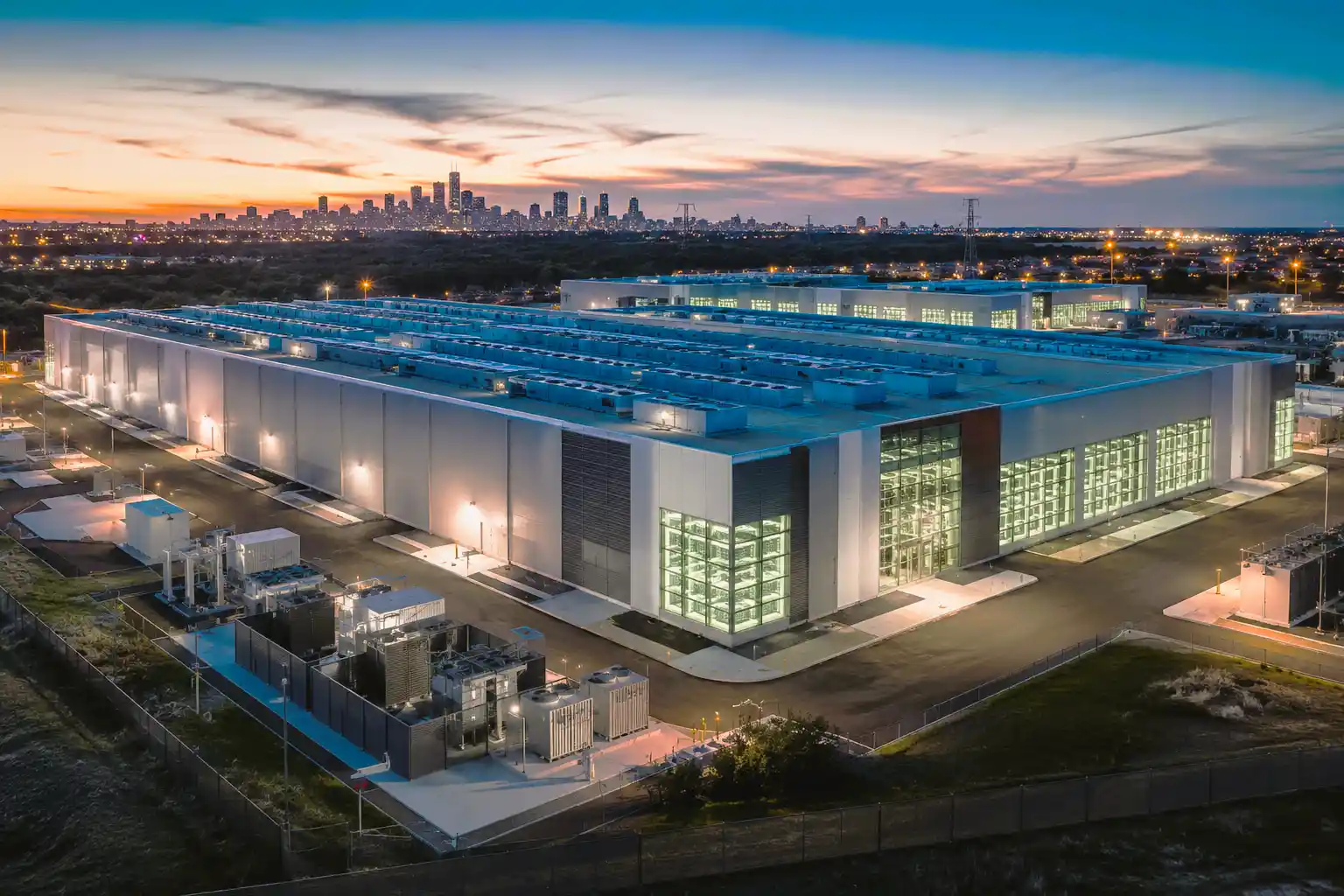
The artificial intelligence revolution is entering a new phase where the biggest investment opportunities may no longer exist only inside software companies. AI infrastructure investment is becoming a defining theme of global capital markets as artificial intelligence systems demand unprecedented computing capacity, electricity supply, and physical infrastructure. The rapid expansion of AI data centers is transforming electricity demand forecasts, forcing governments, utilities, and investors to reconsider the future of power infrastructure.
For years, the technology industry focused primarily on algorithms, applications, and digital platforms. However, the next stage of AI growth depends on the physical systems supporting these innovations: advanced semiconductor facilities, hyperscale data centers, transmission networks, renewable energy projects, and reliable power generation. This shift is creating a broader digital infrastructure investment cycle that connects technology with energy markets.
Institutional investors, infrastructure funds, and corporations increasingly view AI-related infrastructure as a strategic asset class. Yet, this opportunity comes with significant challenges, including grid constraints, financing requirements, environmental concerns, and uncertainty around long-term AI adoption. The companies and economies that successfully integrate computing capacity with energy resilience may gain a significant competitive advantage in the coming decades.
Why AI Is Driving Unprecedented Power Demand?
The growth of artificial intelligence is fundamentally changing the relationship between technology and electricity. Traditional internet services required enormous data centers, but AI workloads introduce a different level of computational intensity. Training advanced AI models requires thousands of high-performance processors operating continuously for extended periods, while AI inference the process of generating responses and predictions creates ongoing demand as millions of users interact with AI systems daily.
According to analysis from organizations such as the International Energy Agency (IEA), data centers are expected to become one of the fastest-growing sources of electricity consumption globally. The expansion is being driven by cloud computing, artificial intelligence applications, digital services, and increasing data generation.
The rise of hyperscale data centers has become central to this transformation. These facilities, operated by major technology companies and cloud providers, contain thousands of servers and require massive amounts of electricity, cooling systems, and specialized infrastructure. Unlike traditional office buildings or smaller computing facilities, hyperscale campuses often require dedicated power solutions because local grids may struggle to support their energy requirements.
This dynamic is creating a new investment relationship between technology and energy. AI companies can develop advanced models only if sufficient computing capacity exists, while computing capacity depends on access to affordable and reliable electricity.
For investors, this represents a significant change in capital allocation. The AI opportunity is no longer limited to software margins and user growth; it increasingly involves physical assets with long-term revenue potential. Companies positioned across energy generation, utilities, semiconductor manufacturing, and digital infrastructure may benefit from this expanding demand. However, investors must also consider whether projected AI growth justifies the scale of infrastructure spending required.
The Infrastructure Behind the AI Boom
The AI economy requires a complex ecosystem extending far beyond data centers. Every stage of the AI supply chain depends on infrastructure investment, from electricity generation to semiconductor production.
Power generation has become one of the most important components of the AI expansion. Data centers require consistent electricity supply, making reliability a critical factor. Renewable energy sources such as solar and wind are gaining attention because technology companies are seeking cleaner energy solutions to reduce emissions. However, renewable projects also face challenges related to intermittency, storage capacity, and grid connection delays.
Nuclear energy is also receiving renewed attention as governments and corporations search for stable, low-carbon electricity sources. Unlike renewable sources dependent on weather conditions, nuclear facilities can provide continuous baseload power. As AI workloads increase, some investors believe advanced nuclear technologies could become strategically important for supporting future digital infrastructure.
At the same time, electricity grids require major modernization. Many existing transmission networks were designed decades ago and were not built to support concentrated electricity demand from large-scale computing facilities. Grid modernization, including new transmission lines, improved energy storage, and smarter electricity management systems, has become a critical investment priority.
The semiconductor industry represents another essential part of this infrastructure cycle. AI systems depend heavily on advanced chips, particularly high-performance processors designed for machine learning workloads. Expanding semiconductor manufacturing requires enormous capital expenditure, specialized facilities, skilled labor, and secure supply chains.
The connection between AI and industrial infrastructure is becoming increasingly clear. The future competitiveness of countries and companies may depend not only on AI software development but also on their ability to build reliable energy systems and manufacturing capacity.
AI Infrastructure Investment Themes
| Investment Theme | Primary Growth Driver | Key Challenge |
|---|---|---|
| Power Generation | Rising electricity demand from AI data centers and industrial computing | Financing costs, environmental regulations, project timelines |
| Electricity Grids | Need for transmission upgrades and increased grid capacity | Permitting delays and aging infrastructure |
| Data Centers | Expansion of cloud computing and AI workloads | Energy availability and operational costs |
| Semiconductor Infrastructure | Growing demand for AI chips and advanced processors | Supply chain complexity and high capital requirements |
These infrastructure themes demonstrate why AI infrastructure investment is becoming broader than a technology sector trend. For investors, the opportunity lies in identifying companies and assets positioned across the entire AI value chain. However, infrastructure projects require patience, significant capital, and careful risk assessment because returns often develop over years rather than quarters.
The Investment Opportunities and Risks
The growing demand for AI infrastructure is reshaping investment strategies across multiple industries. Utilities, energy developers, infrastructure funds, and technology companies are increasingly exploring opportunities connected to AI-driven electricity demand.
The utilities sector is emerging as one of the most closely watched beneficiaries. Historically viewed as defensive investments, utilities are gaining attention because they provide essential infrastructure for the AI economy. Companies with strong generation capacity, transmission assets, and grid management capabilities may become important partners in supporting data center expansion.
However, utilities also face complex challenges. Building new power infrastructure requires regulatory approval, large upfront investment, and coordination with government agencies. Electricity markets must balance industrial demand growth with affordability for households and businesses.
Energy investment is also becoming increasingly connected with technology strategy. Major technology companies are signing long-term renewable energy agreements and exploring direct partnerships with power providers to secure electricity supplies. This approach reflects a broader shift where energy availability becomes a competitive advantage.
Infrastructure funds and institutional investors are particularly interested because AI infrastructure assets can provide long-duration returns. Unlike some technology investments driven by rapid market cycles, power plants, transmission networks, and data centers often operate over decades.
Yet, investors must avoid assuming that every AI-related infrastructure project will succeed. Risks include slower-than-expected AI adoption, changes in computing efficiency, regulatory restrictions, rising interest rates, and competition among infrastructure providers.
The most attractive opportunities may belong to companies that combine technological capability with operational expertise. Successful AI infrastructure providers will likely need to manage energy costs, sustainability requirements, construction complexity, and rapidly changing computing demands simultaneously.
Comparing AI Infrastructure Investment Themes
The AI investment cycle is creating opportunities across several interconnected industries. While data centers receive much of the attention, the broader opportunity extends across electricity providers, renewable energy developers, semiconductor manufacturers, and infrastructure operators.
Each segment plays a different role in supporting the expansion of artificial intelligence. Data centers provide computing capacity, utilities deliver electricity, renewable and nuclear projects support energy supply, and semiconductor companies produce the advanced hardware required for AI workloads.
For investors, the challenge is identifying where long-term value will accumulate. Some companies may benefit from rising demand but face operational constraints, while others may control critical infrastructure that becomes increasingly valuable as AI adoption expands.
| Infrastructure Asset | Investment Opportunity | Primary Risk |
|---|---|---|
| AI Data Centers | Long-term demand from cloud providers and AI companies requiring computing capacity | High energy consumption, construction costs, and technology changes |
| Electric Utilities | Stable demand growth from expanding digital infrastructure and industrial users | Regulatory limits, grid investment challenges, and policy changes |
| Renewable Energy | Growing need for sustainable electricity sources for AI operations | Intermittency, storage limitations, and permitting delays |
| Semiconductor Infrastructure | Rising demand for advanced AI chips and manufacturing capacity | Supply chain disruption, geopolitical risks, and high capital expenditure |
Data centers represent one of the most visible opportunities because they sit directly at the center of AI expansion. Companies that own or operate these facilities may benefit from increasing demand for computing capacity. However, their success depends heavily on access to electricity, land availability, cooling technology, and relationships with major technology customers.
Electric utilities may experience a structural shift as electricity demand becomes increasingly influenced by digital industries. Historically, electricity consumption growth in developed economies remained relatively moderate due to efficiency improvements. AI-driven computing workloads could reverse that trend by creating concentrated demand from large-scale users.
Renewable energy developers are also positioned to benefit as companies attempt to reduce the environmental impact of AI operations. Many technology companies have announced sustainability commitments and are seeking cleaner energy sources. Nevertheless, renewable projects require supporting infrastructure, including storage systems and upgraded transmission networks.
Semiconductor infrastructure represents another strategic investment area. AI models require specialized chips with enormous processing power, increasing demand for advanced manufacturing facilities. Governments are also supporting domestic semiconductor production to strengthen supply chain security.
For long-term investors, these sectors represent different risk-return profiles. The strongest opportunities may emerge from companies that successfully integrate multiple capabilities, such as combining energy generation, digital infrastructure, and industrial expertise.
Institutional Investors and the New Infrastructure Cycle
The rise of AI infrastructure investment reflects a broader transformation in how institutional investors view technology. In previous technology cycles, investors often focused on software platforms, user growth, and digital business models. Today, the foundation of AI increasingly depends on physical assets.
Large asset managers, pension funds, sovereign wealth funds, and infrastructure investors are paying closer attention to digital infrastructure because it combines technology growth with long-term asset ownership. Data centers, power networks, and energy facilities can generate predictable cash flows when supported by strong demand.
This trend aligns with broader economic movements, including digital transformation, industrial investment, energy transition, and infrastructure modernization. Governments are also recognizing that reliable electricity and computing capacity are becoming strategic economic resources.
Countries competing for AI leadership are investing in semiconductor facilities, renewable energy projects, and grid upgrades. The ability to provide affordable electricity and advanced infrastructure may influence where future AI companies choose to operate.
However, institutional investors must carefully evaluate risks. Infrastructure projects require significant capital expenditure, and returns depend on execution quality. Delays in construction, changing regulations, or unexpected improvements in computing efficiency could affect investment outcomes.
The investment opportunity is therefore not simply about owning AI companies. It is about understanding the ecosystem that enables AI growth.
The Future of AI Infrastructure
The next decade of artificial intelligence development will likely depend on how effectively economies build the physical systems behind computing. AI adoption is expanding across industries, including healthcare, finance, manufacturing, logistics, and scientific research. As businesses integrate AI into daily operations, demand for computing power is expected to continue growing.
Sovereign AI initiatives are also becoming more common, with governments seeking greater control over computing capacity, semiconductor supply chains, and data infrastructure. This could accelerate investment in domestic energy systems and technology manufacturing.
At the same time, innovation in energy technology will play a crucial role. Improvements in battery storage, advanced nuclear technologies, renewable integration, and smart grid systems could determine how efficiently economies support AI expansion.
The future competitiveness of companies may depend on their ability to combine digital infrastructure with reliable energy access. AI is becoming an industrial challenge as much as a technological one.
For investors, this means evaluating AI infrastructure through a long-term lens. The winners may not necessarily be the companies creating the most popular AI applications today, but those providing the essential systems required for decades of computing growth.
AI Infrastructure Is Becoming the Foundation of a New Industrial Cycle
The most important shift in the AI economy is that value creation is moving beyond software alone. AI infrastructure investment represents the emergence of a new industrial cycle built around computing power, electricity, and physical infrastructure.
Previous technology waves were often defined by platforms, applications, and digital services. However, artificial intelligence requires a much deeper foundation. Every AI breakthrough depends on energy availability, advanced chips, data centers, and networks capable of supporting massive computational workloads.
This changes how institutional investors analyze technology opportunities. Increasingly, power infrastructure is being evaluated alongside traditional technology investments because electricity has become a fundamental input for digital growth.
Governments are also treating reliable energy supply as a strategic economic advantage. Regions capable of providing stable electricity, modern grids, and advanced manufacturing capacity may attract greater AI investment and strengthen their industrial competitiveness.
The long-term opportunity is therefore not limited to individual AI companies. It involves the integration of energy systems, digital infrastructure, semiconductor manufacturing, and industrial policy.
However, investors should remain disciplined. The growth of AI infrastructure does not guarantee automatic returns. Success will depend on execution, regulation, financing conditions, technological progress, and sustained demand for computing power.
The companies that succeed will likely be those capable of building efficient, scalable, and resilient infrastructure supporting the next generation of artificial intelligence.
Frequently Asked Questions
What is AI infrastructure investment?
AI infrastructure investment refers to capital allocated toward the physical and technological systems required to support artificial intelligence growth. This includes AI data centers, semiconductor facilities, electricity generation, power infrastructure, transmission networks, and digital infrastructure. Unlike investments focused only on AI software, this approach targets the underlying assets that allow AI systems to operate at scale.
Why does artificial intelligence require so much electricity?
Artificial intelligence requires significant electricity because training advanced models involves thousands of powerful processors running continuously. Additionally, everyday AI applications create ongoing inference workloads that require constant computing resources.
How do AI data centers affect power demand?
AI data centers increase electricity demand because they operate large numbers of servers, cooling systems, and networking equipment. Their rapid expansion is encouraging investment in new energy capacity and grid modernization.
Which industries benefit from AI infrastructure spending?
Industries benefiting from AI infrastructure spending include utilities, renewable energy companies, semiconductor manufacturers, data center operators, construction firms, and infrastructure investment funds.
Why are utilities attracting investor attention?
Utilities are attracting attention because electricity has become a critical resource for AI growth. Companies with strong generation assets and modern transmission networks may benefit from rising industrial demand.
How does renewable energy support AI growth?
Renewable energy helps AI companies reduce emissions while providing additional electricity capacity. However, renewable expansion requires investment in storage, transmission, and grid management.
What role does nuclear energy play in AI infrastructure?
Nuclear energy may provide reliable low-carbon electricity for large computing facilities. Its ability to generate continuous power makes it a potential solution for supporting long-term AI energy demand.
How are governments responding to AI’s power needs?
Governments are investing in semiconductor manufacturing, grid modernization, energy security, and industrial policies designed to attract AI-related investment.
What are the biggest risks of AI infrastructure investment?
Major risks include high capital requirements, regulatory uncertainty, energy shortages, construction delays, changing technology trends, and slower-than-expected AI adoption.
Why is AI infrastructure investment considered a long-term trend?
AI infrastructure investment is considered a long-term trend because artificial intelligence requires continuous expansion of computing capacity, energy systems, and industrial infrastructure. The value of these assets depends on sustained digital transformation rather than short-term market enthusiasm.

Administrator at Alt Finances, leading editorial strategy and contributing in-depth coverage of investing, wealth management, alternative assets, and global financial markets. Through research-driven articles and analysis, he helps readers understand the ideas, industries, and market forces shaping modern finance.