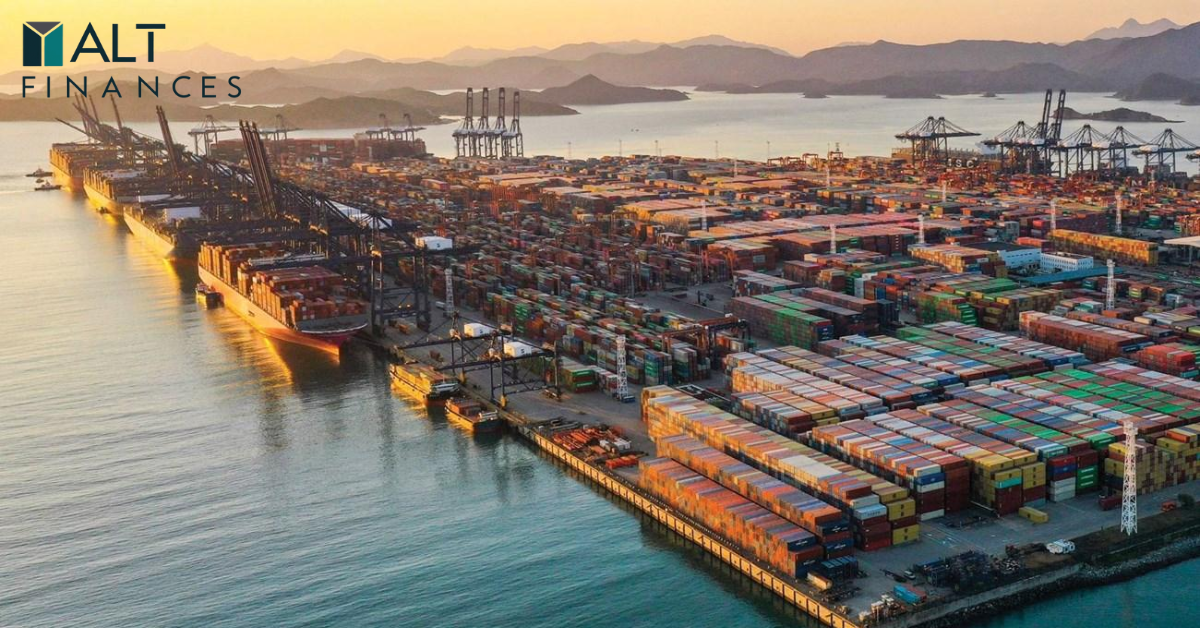
The China economic slowdown has become one of the defining macroeconomic themes shaping financial markets in 2026. As China’s second-quarter GDP expanded by approximately 4.3% year over year, below economists’ expectations according to Reuters and BBC reporting, investors are looking beyond a single quarterly data release to reassess global risk, capital allocation, and long-term portfolio construction. Rather than triggering panic, the latest China GDP figures have reinforced a broader shift in global investment strategy, encouraging institutional investors and multinational corporations to diversify exposure across regions while continuing to recognize China’s importance within the global economy.
China remains the world’s second-largest economy, the largest trading partner for dozens of countries, and a critical hub for global manufacturing and supply chains. Consequently, even modest changes in Chinese growth influence commodity demand, corporate earnings, trade flows, and investor sentiment worldwide. Yet today’s investment landscape differs markedly from a decade ago. Geopolitical tensions, evolving trade policy, technological competition, and supply chain resilience now carry as much weight as traditional economic indicators.
Instead of viewing the China economic slowdown solely as a challenge, professional investors increasingly interpret it as a catalyst for broader portfolio diversification, renewed attention to emerging markets, and more disciplined asset allocation. The result is not an exodus from China but a more balanced global investment framework designed to navigate an increasingly fragmented world economy.
Understanding China’s Latest Economic Slowdown
China’s latest economic data illustrate an economy navigating multiple structural headwinds simultaneously. Official figures show second-quarter 2026 China GDP growth of around 4.3% year over year, reflecting weaker-than-expected domestic demand, continued stress within the property sector, subdued consumer spending, and uneven industrial activity. While manufacturing remains an important pillar of economic output, demand across several sectors has failed to recover as quickly as policymakers anticipated.
The property market continues to represent one of the most significant constraints on economic growth. Years of adjustment following tighter financing conditions have affected household wealth, construction activity, and local government revenues. Because real estate has historically accounted for a substantial share of China’s economy, prolonged weakness inevitably influences broader business confidence and consumption.
Consumer demand also remains softer than many investors expected following earlier reopening phases. Households continue to prioritize savings over discretionary spending, limiting momentum across retail, hospitality, and services. Meanwhile, exporters face a more challenging international environment as slower global demand combines with rising geopolitical uncertainty.
Manufacturing tells a more nuanced story. Advanced manufacturing, electric vehicles, renewable energy equipment, and selected technology industries continue attracting investment. However, traditional industrial sectors face pressure from weaker domestic orders and changing international demand patterns.
Chinese policymakers have responded with targeted measures intended to support lending, stabilize housing markets, and encourage investment. Nevertheless, authorities appear committed to balancing near-term stimulus with longer-term structural reforms rather than pursuing large-scale interventions seen during previous downturns.
This distinction matters because investors increasingly recognize that China’s current challenges differ from cyclical slowdowns of the past. Structural factors including demographics, productivity trends, debt levels, and evolving industrial policy now play a larger role in shaping long-term expectations.
Why this matters to investors?
Markets are increasingly separating China’s long-term strategic importance from its short-term economic performance. Investors who understand this distinction can make more informed decisions regarding asset allocation, sector selection, and regional exposure. While economic uncertainty raises volatility, it also creates opportunities for selective investment rather than wholesale retreat.
Why Global Investors Are Rethinking Strategy?
The China economic slowdown has accelerated an investment transition already underway among global asset managers. Rather than concentrating portfolios around a single engine of global growth, investors increasingly emphasize diversification across regions, industries, and supply chains.
This shift reflects multiple forces converging simultaneously. Economic moderation in China coincides with rising geopolitical competition, evolving industrial policies across major economies, and renewed government support for domestic manufacturing in countries ranging from the United States to India.
One visible consequence has been the expansion of supply chain diversification. Many multinational corporations continue operating significant facilities in China while simultaneously building manufacturing capacity elsewhere a strategy commonly known as “China Plus One.” Instead of replacing China entirely, businesses are creating operational flexibility by adding production capabilities across Southeast Asia, India, Mexico, and Eastern Europe.
Foreign direct investment patterns also illustrate changing corporate priorities. Investment decisions increasingly consider political stability, regulatory transparency, labor availability, logistics infrastructure, and resilience alongside production costs. Companies now evaluate supply chains through both economic and geopolitical lenses.
Institutional investors have adopted similar thinking. Pension funds, sovereign wealth funds, insurance companies, and endowments continue allocating capital to Chinese assets but increasingly balance those positions with greater exposure to other emerging markets, developed economies, and thematic investments such as artificial intelligence, digital infrastructure, renewable energy, and healthcare innovation.
Strategic Responses to China’s Slower Growth
| Investment Strategy | Primary Objective | Potential Challenge |
|---|---|---|
| Maintain China exposure | Participate in long-term economic transformation | Short-term growth uncertainty |
| Expand into India and Southeast Asia | Capture faster demographic and manufacturing growth | Infrastructure and execution risks |
| Increase developed market allocation | Improve portfolio stability and policy transparency | Higher valuations may limit returns |
| Diversify global supply chains | Reduce operational concentration risk | Higher implementation costs and complexity |
These approaches illustrate that capital allocation today involves managing resilience as much as maximizing returns. Investors increasingly accept that diversification may modestly reduce efficiency in exchange for greater protection against geopolitical disruptions or regional economic shocks.
Portfolio construction has therefore become less about predicting which single economy will outperform and more about building exposure across complementary growth drivers.
Why this matters to investors?
The evolving global investment strategy emphasizes resilience over concentration. Investors who diversify across geographies, industries, and policy environments may better withstand economic volatility while maintaining exposure to long-term structural growth opportunities. This balanced approach also helps mitigate risks associated with changing trade policy, geopolitical tensions, and supply chain disruptions.
The Sectors and Markets Most Affected
China’s slower growth does not affect every industry equally. Some sectors remain closely tied to Chinese domestic demand, while others benefit from the global reallocation of manufacturing, capital, and production networks.
Commodity producers are among the first to feel the impact. China remains one of the world’s largest consumers of industrial metals, energy, and raw materials. Softer construction activity and weaker property investment can reduce demand for steel, copper, iron ore, and cement, influencing prices across global commodity markets.
Luxury goods companies also monitor Chinese consumer spending closely. For years, affluent Chinese consumers represented a major source of revenue for European luxury brands. More cautious household spending can translate into slower sales growth, prompting companies to broaden their customer base across North America, the Middle East, Southeast Asia, and other high-income markets.
Technology presents a more complex picture. While consumer electronics demand has moderated in some areas, China remains a global leader in electric vehicles, batteries, renewable energy equipment, and advanced manufacturing. Consequently, investors increasingly distinguish between China’s cyclical economic weakness and its continued strength in strategic industries supported by industrial policy and innovation.
Industrial manufacturers likewise face mixed outcomes. Companies heavily dependent on Chinese domestic investment may experience slower order growth. Meanwhile, firms supplying automation, logistics technology, semiconductor equipment, and advanced manufacturing solutions continue finding opportunities as businesses modernize production across multiple regions.
Financial markets have also adapted. Equity investors increasingly evaluate companies based not only on their China exposure but also on the resilience of their global operations. Firms with diversified revenue streams and geographically balanced production networks often receive stronger investor support during periods of macroeconomic uncertainty.
Why this matters to investors?
Sector selection has become just as important as regional allocation. Rather than viewing China’s economy through a single lens, investors increasingly differentiate between industries exposed to domestic consumption and those benefiting from structural transformation, technological upgrading, and global manufacturing shifts.
Comparing Global Investment Responses
Different investors are responding to the changing environment in distinct ways depending on their objectives, risk tolerance, and investment horizon.
China continues to attract long-term investors who believe structural reforms, technological innovation, and domestic consumption upgrades will eventually support sustainable growth. For these investors, periods of slower growth may create attractive valuation opportunities, although patience remains essential.
India has emerged as one of the largest beneficiaries of supply chain diversification. Strong demographics, expanding infrastructure investment, digitalization, and manufacturing incentives have increased its attractiveness for multinational companies seeking alternative production locations. However, investors also recognize challenges related to infrastructure gaps, regulatory complexity, and execution risks.
Southeast Asia including Vietnam, Indonesia, Malaysia, and Thailand continues gaining attention as an important manufacturing and export hub. Competitive labor costs, expanding regional trade agreements, and growing consumer markets make the region increasingly attractive for both foreign direct investment and long-term equity investors.
The United States remains central to institutional portfolios because of its deep capital markets, innovation ecosystem, and leadership in artificial intelligence, cloud computing, and advanced technology. Although valuations are often higher than elsewhere, many investors continue increasing allocations to sectors expected to benefit from productivity gains driven by AI and digital transformation.
Global Investment Themes Emerging from China’s Slower Growth
| Global Investment Theme | Opportunity | Primary Risk |
|---|---|---|
| China Plus One manufacturing | Geographic diversification | Higher operating costs |
| India and Southeast Asia expansion | Long-term manufacturing growth | Infrastructure bottlenecks |
| Developed market technology | AI and innovation leadership | Elevated market valuations |
| Global infrastructure investment | Supply chain resilience | Interest rate sensitivity |
The comparison highlights that today’s investment decisions rarely involve choosing one market over another. Instead, institutional investors increasingly combine exposure across multiple regions to balance growth potential with resilience.
Why this matters to investors?
Regional diversification has become a strategic advantage rather than merely a risk-management tool. Successful portfolios increasingly blend developed markets with carefully selected emerging markets, recognizing that future growth is likely to be distributed across several economic centers rather than concentrated in one country.
The Future of Global Investing Beyond China
Looking ahead, global investing is likely to become more diversified, regionalized, and strategically balanced.
Multinational companies continue redesigning supply chains to improve resilience without abandoning China entirely. Manufacturing networks increasingly span multiple countries, allowing businesses to reduce operational risk while maintaining access to Chinese suppliers and consumers.
Artificial intelligence, automation, and digital manufacturing are also changing how companies evaluate production locations. Lower labor costs remain important, but productivity, technological capability, infrastructure quality, and regulatory stability increasingly influence investment decisions.
Institutional capital is adapting accordingly. Asset managers are placing greater emphasis on resilience, long-term structural themes, and diversified geographic exposure rather than relying on a single source of global growth.
China will almost certainly remain one of the world’s largest economies and an indispensable participant in global trade. However, the world economy is becoming more multipolar, with additional centers of manufacturing, innovation, and consumption emerging alongside China.
Frequently Asked Questions
What is causing China’s economic slowdown?
Several factors contribute to slower growth, including weaker domestic demand, continued challenges in the property sector, cautious consumer spending, demographic pressures, and softer global demand for exports.
Why is China’s GDP growth slowing?
China’s GDP growth has moderated because structural economic adjustments have coincided with weaker consumption, slower property investment, and a more challenging international trade environment.
How does China’s economy affect global markets?
China influences commodity demand, manufacturing, international trade, supply chains, corporate earnings, and investor sentiment. Changes in Chinese growth therefore affect markets across multiple asset classes.
What is the China Plus One strategy?
China Plus One is a business strategy in which companies maintain operations in China while expanding manufacturing or sourcing into additional countries such as India, Vietnam, or Indonesia to improve supply chain resilience.
How are institutional investors responding?
Many institutional investors are maintaining selective exposure to China while increasing portfolio diversification, expanding allocations to other emerging markets, and emphasizing resilient sectors and global themes.
Which countries may benefit from slower Chinese growth?
India, Vietnam, Indonesia, Malaysia, Mexico, and several developed economies may attract additional manufacturing investment, foreign direct investment, and supply chain expansion.
How does China’s slowdown affect supply chains?
Companies increasingly diversify production across multiple countries to reduce concentration risk while preserving access to China’s manufacturing ecosystem.
What sectors are most exposed?
Commodities, luxury goods, industrial manufacturing, transportation, and companies heavily dependent on Chinese consumer demand tend to be more directly affected, while globally diversified technology and infrastructure businesses may prove more resilient.
Is China still attractive for long-term investors?
Many long-term investors continue to view China as strategically important due to its market size, technological capabilities, and manufacturing leadership, although they increasingly balance this exposure with broader geographic diversification.
Why is the China economic slowdown important for global investment strategy?
The China economic slowdown has become a defining consideration for global investment strategy because it influences capital allocation, portfolio diversification, supply chain decisions, foreign direct investment, and long-term risk management across the global economy. Rather than prompting investors to exit China entirely, it encourages a more balanced approach that combines selective China exposure with broader international opportunities.

Contributing Writer for Alt Finances with experience in luxury events, travel, fashion, and the arts. Active investor through her family office across real estate, energy, and private equity. University of Miami – BBA.