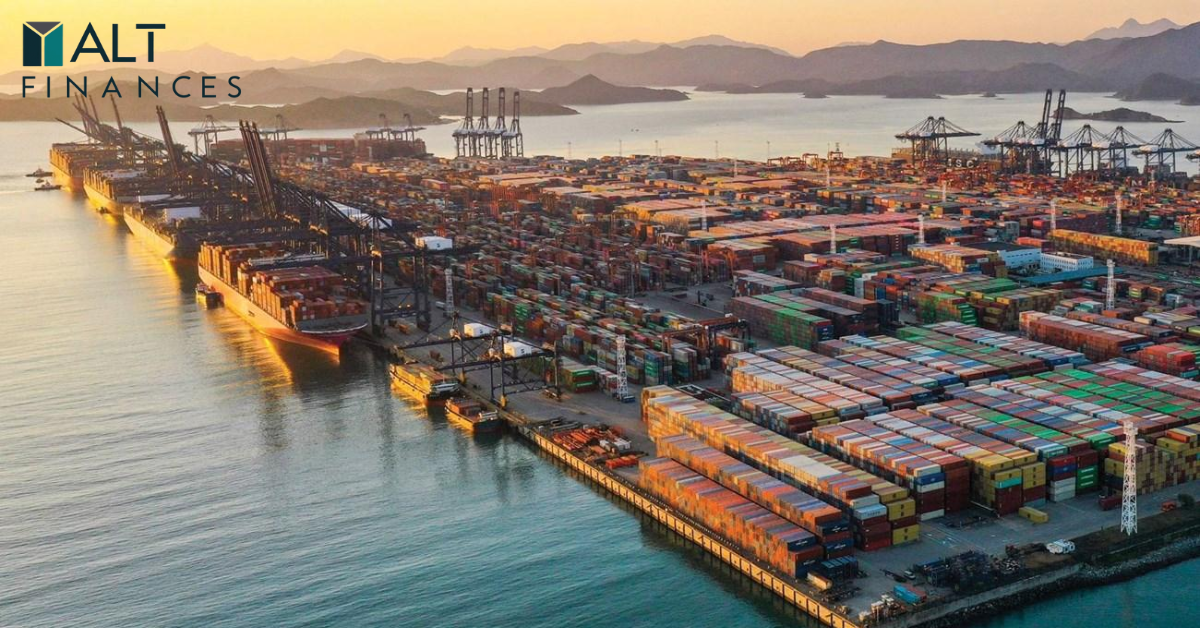
Global capital flows are undergoing one of their most significant transformations in decades. Within the past few years, rising trade tensions, export controls, industrial subsidies, sanctions, and increasingly strategic trade policies have reshaped how businesses, governments, and investors think about cross-border investment. Rather than pursuing efficiency at almost any cost, multinational corporations and institutional investors are placing greater emphasis on resilience, geopolitical stability, and supply chain security. The result is a profound shift in global investment strategy that is influencing where capital moves and how the global economy is evolving.
The changes extend far beyond any single trade dispute. Governments across major economies are introducing policies designed to strengthen domestic industries, secure access to critical technologies, and reduce dependence on concentrated supply chains. At the same time, companies are redesigning manufacturing networks through regional diversification, while institutional investors are reassessing geographic risk alongside traditional financial metrics. Consequently, foreign direct investment patterns increasingly reflect political and strategic considerations in addition to expected returns.
Globalization is not disappearing; it is becoming more selective and regionally diversified. Capital continues to cross borders, but it is increasingly flowing toward economies that combine competitive manufacturing, policy stability, infrastructure development, and access to expanding consumer markets. For investors, understanding these new patterns in Global capital flows has become essential for long-term portfolio construction and strategic asset allocation.
Understanding the New Era of Trade Tensions
Trade has always involved competition, but today’s environment differs in both scale and complexity. Instead of focusing solely on tariffs, governments increasingly use export controls, industrial incentives, investment screening, sanctions, and technology restrictions as instruments of economic policy. National security considerations now influence commercial decisions that were once driven almost entirely by cost and efficiency.
Tariffs remain an important feature of this landscape. They increase the cost of imported goods, alter pricing decisions, and encourage companies to reconsider manufacturing locations. However, tariffs represent only one part of a broader policy framework. Export controls affecting advanced semiconductors, artificial intelligence technologies, and critical minerals have become equally influential in shaping corporate investment decisions.
Industrial policy has also returned to prominence. Governments in North America, Europe, and Asia are introducing subsidies, tax incentives, and strategic funding to encourage domestic production of semiconductors, renewable energy technologies, pharmaceuticals, batteries, and advanced manufacturing equipment. These initiatives aim not only to strengthen economic competitiveness but also to reduce vulnerabilities exposed during recent supply chain disruptions.
Meanwhile, geopolitical competition has become a defining factor in international commerce. Businesses increasingly evaluate the reliability of trading partners, political stability, regulatory consistency, and diplomatic relationships before committing significant capital to new facilities. Decisions that once centered primarily on labor costs now incorporate a broader assessment of operational resilience.
Rather than signaling the end of global trade, these developments point to its transformation. International commerce continues to expand, but companies are redesigning supply chains around flexibility, redundancy, and regional integration rather than maximum efficiency alone.
Why this matters to investors?
Geopolitical developments now influence market valuations, earnings expectations, and sector performance as much as traditional macroeconomic indicators. Investors who integrate trade policy, regulatory trends, and geopolitical analysis into portfolio decisions are often better positioned to manage long-term risks while identifying structural investment opportunities.
Why Global Capital Is Moving?
The evolution of Global capital flows reflects a broader reassessment of economic resilience. Businesses no longer ask only where production costs are lowest; they increasingly ask where operations can remain reliable during geopolitical disruptions, trade disputes, or logistical bottlenecks. This shift is reshaping capital allocation across regions and industries.
One of the clearest examples is the expansion of supply chain diversification. After experiencing disruptions from the pandemic, geopolitical uncertainty, and changing trade relationships, multinational corporations have accelerated efforts to spread production across multiple countries. The objective is not necessarily to replace existing manufacturing hubs but to reduce concentration risk.
The widely discussed China Plus One strategy illustrates this approach. Rather than exiting China, companies maintain a presence there while adding manufacturing capacity in countries such as India, Vietnam, Indonesia, Malaysia, and Thailand. This model enables firms to preserve access to China’s sophisticated industrial ecosystem while increasing operational flexibility.
As a result, foreign direct investment is increasingly directed toward economies capable of supporting advanced manufacturing, efficient logistics, skilled labor, and favorable regulatory environments. Governments seeking to attract investment have responded by expanding infrastructure, simplifying investment rules, and introducing targeted incentives for strategic industries.
Institutional investors are following similar patterns. Pension funds, sovereign wealth funds, insurance companies, and asset managers increasingly evaluate countries based on political stability, legal certainty, infrastructure quality, demographic trends, and long-term competitiveness alongside expected financial returns. Geographic diversification has evolved from a defensive measure into a core strategic principle.
Investment Destinations Attracting Global Capital
| Investment Destination | Primary Advantage | Key Challenge |
|---|---|---|
| United States | Innovation leadership, deep capital markets, industrial incentives | Higher labor costs and elevated asset valuations |
| India | Strong demographics, manufacturing expansion, digital economy | Infrastructure gaps and regulatory complexity |
| Southeast Asia | Competitive manufacturing, regional trade integration | Capacity constraints and varying policy frameworks |
| Europe | Advanced industrial base, green transition investment | Slower economic growth and regulatory fragmentation |
The changing geography of investment does not imply that one destination will dominate the next phase of globalization. Instead, capital is becoming more diversified, with businesses balancing cost efficiency against resilience, market access, and geopolitical considerations. This creates a more distributed global manufacturing network while reducing dependence on a limited number of production centers.
Moreover, emerging markets that combine improving infrastructure, policy reforms, and favorable demographics are attracting increasing attention from multinational corporations seeking long-term expansion opportunities. At the same time, developed economies continue to capture investment through advanced technology ecosystems, research capabilities, and stable legal institutions.
Why this matters to investors?
The movement of Global capital flows offers valuable signals about future economic leadership, sector growth, and regional competitiveness. Investors who monitor shifts in cross-border investment, manufacturing relocation, and institutional capital allocation may identify structural opportunities well before they become fully reflected in market valuations.

The Winners and Losers of Capital Reallocation
The redistribution of Global capital flows is creating a more fragmented but also more diversified investment landscape. Instead of one dominant manufacturing hub attracting the majority of global investment, several regions are emerging as complementary centers for production, innovation, and capital formation.
North America
North America has strengthened its position through large-scale industrial policies supporting semiconductors, clean energy, advanced manufacturing, and critical supply chains. Companies increasingly view the region as an attractive destination for high-value production, supported by deep capital markets, strong research ecosystems, and relatively predictable legal institutions. The trade-off, however, remains higher labor and operating costs.
Europe
Europe continues to attract investment through its advanced industrial capabilities and ambitious energy transition. Public investment in renewable energy, electric vehicles, and digital infrastructure has created opportunities across manufacturing and technology. Nevertheless, slower economic growth and regulatory complexity can influence investment decisions, particularly for businesses seeking rapid expansion.
India
India has become one of the most closely watched destinations for multinational investment. Its expanding workforce, improving infrastructure, digital transformation, and government initiatives aimed at manufacturing have enhanced its appeal. While execution challenges remain, investors increasingly regard India as an important long-term contributor to global supply chain diversification.
Southeast Asia
Southeast Asia has similarly benefited from the reconfiguration of international production networks. Vietnam, Indonesia, Malaysia, and Thailand continue attracting manufacturing investment across electronics, consumer goods, automotive components, and industrial equipment. Competitive labor costs, expanding trade agreements, and proximity to existing Asian supply chains strengthen the region’s strategic importance.
China
China remains a central participant despite changing Global capital flows. It retains world-class manufacturing capabilities, extensive supplier ecosystems, sophisticated logistics, and a vast domestic market. Rather than disappearing from corporate investment strategies, China is increasingly becoming one component within broader regional manufacturing networks.
The industries experiencing the largest structural changes include semiconductors, batteries, renewable energy technologies, pharmaceuticals, industrial automation, logistics, and critical minerals. These sectors increasingly reflect government priorities as much as market demand.
Why this matters to investors?
Capital reallocation rarely creates universal winners or losers. Instead, it redistributes opportunity across regions and industries. Investors who evaluate structural competitiveness rather than short-term headlines may be better positioned to benefit from long-term changes in global investment strategy.
Comparing Global Investment Strategies
The reordering of Global capital flows has encouraged companies and institutional investors to adopt several distinct approaches to managing geopolitical uncertainty and operational resilience.
Geographic diversification remains the broadest strategy. Rather than concentrating production or investments in one country, businesses distribute operations across multiple jurisdictions. This approach can reduce geopolitical concentration risk while preserving access to diverse consumer markets.
Friend-shoring represents a more targeted evolution. Companies prioritize production in countries with stable diplomatic relationships and trusted economic partnerships. While this may improve supply chain security, it can also limit supplier flexibility and increase production costs.
Nearshoring has gained momentum, particularly in North America and Europe. Manufacturers relocate production closer to end markets to shorten supply chains, reduce transportation risks, and improve responsiveness. Although nearshoring often enhances operational resilience, companies may sacrifice some cost advantages associated with distant manufacturing hubs.
Domestic reshoring goes one step further by returning selected production to home markets. Governments frequently support these initiatives through industrial incentives designed to strengthen strategic industries. However, higher operating expenses and labor shortages may reduce economic efficiency for certain sectors.
Strategic Investment Approaches
| Investment Theme | Opportunity | Primary Risk |
|---|---|---|
| Geographic diversification | Reduced concentration risk across multiple markets | Greater operational complexity |
| Friend-shoring | Improved geopolitical stability and trusted partnerships | Higher production costs |
| Nearshoring | Faster delivery, stronger regional supply chains | Limited manufacturing capacity |
| Domestic reshoring | Greater economic security and policy support | Higher labor and capital expenses |
No single strategy is universally superior. Technology manufacturers may prioritize geopolitical stability, while consumer goods companies continue emphasizing cost efficiency. Institutional investors similarly balance expected returns with resilience, liquidity, and policy certainty.
Increasingly, successful organizations combine multiple strategies rather than relying exclusively on one model. A diversified manufacturing footprint, supported by regional suppliers and balanced investment exposure, often provides greater flexibility during periods of economic uncertainty.
Why this matters to investors?
Investment strategy has expanded beyond traditional financial analysis. Geographic resilience, regulatory stability, and supply chain flexibility increasingly influence long-term valuations, making geopolitical assessment an essential component of modern asset allocation.
The Future of Global Capital Allocation
The future of Global capital flows is likely to be defined by diversification rather than deglobalization. Cross-border investment continues to expand, but its direction increasingly reflects strategic priorities alongside commercial considerations.
Regional trade agreements, industrial policy, and technological competition are reshaping investment decisions across manufacturing, digital infrastructure, artificial intelligence, renewable energy, and critical supply chains. Governments are competing not only for investment but also for leadership in strategically important industries.
Artificial intelligence and advanced automation could further transform manufacturing location decisions. As productivity becomes increasingly technology-driven, factors such as engineering talent, digital infrastructure, energy reliability, and regulatory quality may outweigh purely labor-cost advantages.
Institutional investors are adapting accordingly. Long-term portfolios increasingly emphasize geographic balance, resilient infrastructure, technological leadership, and exposure to multiple sources of economic growth. Rather than assuming globalization will reverse, investors increasingly expect it to evolve into a more regional, interconnected, and strategically diversified system.
This transformation also reflects broader changes in the global economy. Capital is becoming more selective, governments are more active participants in shaping investment decisions, and businesses are designing operating models capable of adapting to future geopolitical uncertainty.
Why this matters to investors?
Long-term investment success will increasingly depend on identifying structural trends rather than reacting to short-term geopolitical events. Diversification across regions, industries, and policy environments remains one of the most effective ways to navigate an increasingly complex investment landscape.
Conclusion
The reconfiguration of Global capital flows reflects one of the defining economic transitions of the decade. Rising trade tensions, evolving trade policy, supply chain diversification, and geopolitical competition are reshaping how multinational corporations, governments, and institutional investors allocate capital across the world.
Rather than signaling the collapse of globalization, these developments point toward a more diversified model of international commerce. Manufacturing is becoming more distributed, foreign direct investment is reaching a broader range of destinations, and investors are placing greater emphasis on resilience, flexibility, and disciplined capital allocation.
For sophisticated investors, the central question is no longer whether globalization will continue. Instead, it is how to position portfolios for a world in which economic opportunity is increasingly shared across multiple regions rather than concentrated in a handful of markets. Those who adapt to this new geography of investment may be best placed to benefit from the next chapter of the global economy.
Frequently Asked Questions
What are global capital flows?
Global capital flows refer to the movement of money across international borders through foreign direct investment, portfolio investment, lending, infrastructure projects, and other forms of cross-border financing.
How do trade tensions affect investment?
Trade tensions increase uncertainty around tariffs, regulations, and supply chains, prompting businesses and investors to diversify operations and reassess geographic risk.
What is the China Plus One strategy?
China Plus One is a strategy in which companies maintain operations in China while expanding production into additional countries to improve resilience and reduce concentration risk.
Why are supply chains moving?
Companies seek greater flexibility, improved risk management, and reduced dependence on single-country production networks in response to geopolitical and operational challenges.
How do tariffs influence foreign investment?
Tariffs can alter production costs and encourage businesses to relocate manufacturing or establish facilities in alternative markets to maintain competitiveness.
Which countries are benefiting from trade diversification?
India, Vietnam, Indonesia, Malaysia, Mexico, and several developed economies have attracted increased investment due to manufacturing expansion, infrastructure improvements, and favorable policy environments.
How are institutional investors responding?
Institutional investors increasingly emphasize geographic diversification, resilient sectors, and balanced asset allocation while incorporating geopolitical analysis into long-term investment decisions.
What industries are most affected?
Semiconductors, clean energy, advanced manufacturing, pharmaceuticals, logistics, automotive supply chains, and critical minerals are among the sectors most influenced by changing trade patterns.
Will globalization continue despite trade tensions?
Most evidence suggests globalization is evolving rather than ending. Investment, trade, and production networks are becoming more diversified and regionally balanced instead of disappearing.
Why are Global capital flows changing?
Global capital flows are changing because governments, businesses, and investors increasingly prioritize geopolitical stability, supply chain resilience, economic resilience, and strategic capital allocation alongside financial returns. These forces are reshaping cross-border investment and creating a more diversified global investment landscape.

Contributing Writer for Alt Finances with experience in luxury events, travel, fashion, and the arts. Active investor through her family office across real estate, energy, and private equity. University of Miami – BBA.