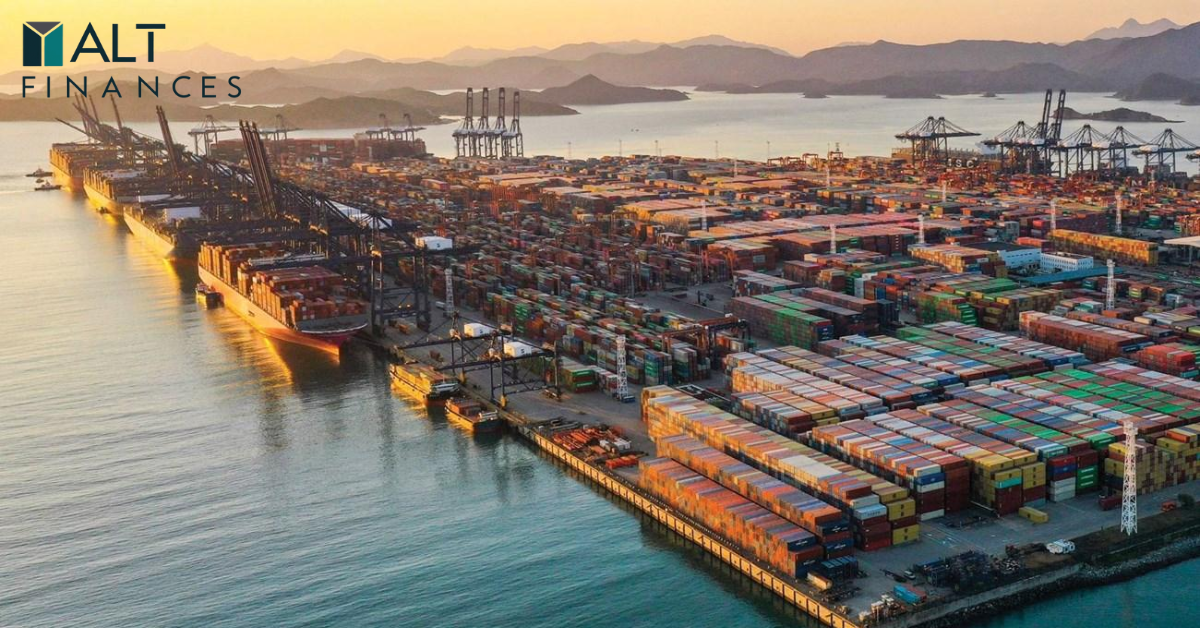
For decades, institutional capital investment followed a familiar geographic playbook. Pension funds, sovereign wealth funds, insurance companies, university endowments, and family offices concentrated the bulk of their portfolios in North America, Western Europe, and other mature financial markets that offered deep liquidity, regulatory stability, and predictable returns. Yet the global investment landscape is changing. Slower economic expansion in developed economies, demographic headwinds, and shifting geopolitical dynamics are encouraging institutional investors to broaden their search for long-term growth beyond traditional destinations.
Rather than abandoning developed markets, sophisticated investors are increasingly complementing them with exposure to emerging markets, frontier markets, private markets, and alternative investments that benefit from structural economic transformation. Infrastructure modernization, digitalization, energy transition, and rising consumer demand are creating investment themes that extend well beyond listed equities. These trends are also reshaping global diversification strategies as investors seek opportunities capable of generating returns over decades rather than quarters.
This evolution should not be mistaken for a simple chase for higher returns. Institutional investors operate under rigorous risk frameworks, balancing growth potential against political uncertainty, governance standards, regulatory quality, market liquidity, and currency stability. As research from organizations including the IMF, World Bank, OECD, BlackRock Investment Institute, McKinsey & Company, and major investment banks consistently highlights, long-term capital increasingly flows toward economies demonstrating durable structural reforms rather than short-term market momentum.
Why Institutional Capital Is Expanding Beyond Developed Markets?
Developed economies remain indispensable components of institutional portfolios. Their legal systems, transparent capital markets, and mature corporate governance continue to provide stability during periods of global volatility. However, many of these economies now face slower productivity growth, aging populations, elevated public debt, and relatively modest long-term GDP expansion compared with faster-growing regions. These structural realities are encouraging investors to reconsider how future capital should be allocated.
At the same time, many developing economies have undergone profound transformations. Financial market reforms, improvements in regulatory frameworks, expanding middle classes, urbanization, and increasing integration into global supply chains have altered the investment landscape. While these countries still face considerable challenges, several now offer investment environments that are markedly different from those of previous decades.
Demographic trends are perhaps the strongest long-term catalyst. According to projections from international institutions including the United Nations and the World Bank, much of future population growth will occur across Asia, Africa, and parts of Latin America. Younger populations translate into expanding labor forces, rising consumption, greater housing demand, and increasing requirements for transportation, healthcare, education, and digital infrastructure. These long-duration trends align naturally with institutional investors that manage liabilities measured over decades rather than years.
Another important factor is the evolution of capital allocation itself. Traditional portfolios dominated by public equities and government bonds have become more difficult to optimize as bond yields, inflation cycles, and equity valuations fluctuate. Consequently, investors increasingly look toward alternative investments that provide differentiated return drivers, lower correlations, and exposure to real economic activity.
Infrastructure projects, renewable energy assets, logistics facilities, data centers, ports, telecommunications networks, and digital infrastructure all represent investments linked to long-term economic development rather than daily market sentiment. These assets often generate stable cash flows over extended periods, making them attractive for pension funds and insurance companies seeking predictable income streams.
Geopolitical developments also play a growing role. Supply chain diversification, regional manufacturing strategies, critical mineral investment, and national industrial policies are encouraging capital to flow into countries positioned to benefit from evolving trade relationships. Rather than concentrating exposure within a handful of developed economies, institutional investors increasingly view geographic diversification as an essential component of risk management.
Why this matters to investors?
For institutional investors, expanding beyond developed markets is not about replacing established holdings but improving portfolio resilience. Broader geographic exposure may enhance long-term return potential while reducing concentration risk. However, success depends on disciplined due diligence, governance assessment, and selective investment rather than broad regional optimism.
Where the Next Investment Opportunities Are Emerging?
The next phase of institutional investing is increasingly defined by identifying structural growth rather than simply following economic cycles. Several investment destinations stand out because they combine long-term demand with significant capital requirements.
Emerging Markets
Emerging markets continue to attract substantial institutional attention due to expanding domestic consumption, industrial upgrading, manufacturing relocation, and technology adoption. Countries across Asia, Latin America, Eastern Europe, and parts of the Middle East have become increasingly important contributors to global economic growth.
Institutional investors typically focus less on short-term market volatility and more on structural drivers such as productivity improvements, education, financial inclusion, and infrastructure expansion. Growing consumer markets also support sectors ranging from financial services and healthcare to e-commerce and industrial manufacturing.
Foreign capital increasingly enters these markets through public equities, infrastructure partnerships, private equity, venture capital, and foreign direct investment, depending on regulatory frameworks and local market maturity.
Frontier Markets
Frontier markets represent an earlier stage of economic development than traditional emerging markets. While generally smaller and less liquid, they often possess favorable demographics, underpenetrated financial systems, abundant natural resources, or rapidly expanding urban populations.
These markets typically attract specialist investors capable of accepting higher uncertainty in exchange for potential long-term growth. Institutional participation often occurs gradually through development finance institutions, infrastructure partnerships, and selective private investments rather than broad public market exposure.
Political stability, legal reforms, and institutional capacity remain critical considerations before large-scale capital commitments can occur.
Infrastructure Investment
Global infrastructure needs continue to expand across transportation, electricity generation, water systems, telecommunications, ports, airports, and digital connectivity.
Governments alone frequently lack sufficient fiscal capacity to finance these projects, increasing opportunities for private institutional participation. Long-duration assets with predictable revenue streams align particularly well with pension funds, insurers, and sovereign wealth funds.
Infrastructure also sits at the intersection of several structural trends, including urbanization, decarbonization, energy transition, and digital transformation. Investment opportunities increasingly include renewable power generation, electricity transmission networks, battery storage, smart grids, hyperscale data centers, fiber networks, and logistics infrastructure supporting global trade.
Private Equity and Private Markets
Private markets have become an increasingly important destination for institutional portfolios. Rather than investing exclusively through listed companies, investors seek exposure to privately owned businesses capable of delivering operational improvements and long-term value creation.
Private equity managers often focus on sectors experiencing structural growth, including healthcare, software, industrial technology, renewable energy, financial technology, and advanced manufacturing.
Private markets also provide access to investment opportunities unavailable in public exchanges, particularly as many companies remain private longer than in previous decades.
Meanwhile, expanding markets for private credit create additional financing options for businesses while offering institutions diversified income opportunities beyond traditional fixed income securities.
Sovereign Wealth Funds and Family Offices
Some of the world’s largest sovereign wealth funds increasingly pursue globally diversified strategies spanning infrastructure, real estate, technology, renewable energy, healthcare, logistics, and private equity.
Rather than pursuing tactical trades, many sovereign funds invest with multidecade horizons, allowing them to tolerate temporary market volatility while capturing structural economic growth.
Similarly, large family offices have become more sophisticated global investors. Many now allocate capital directly into private companies, venture capital, infrastructure, and thematic investment strategies that complement traditional public market portfolios.
Comparing Major Institutional Investment Destinations
| Investment Destination | Primary Growth Driver | Key Challenge |
|---|---|---|
| Emerging Markets | Rising consumption, industrialization, expanding middle class | Currency volatility, regulatory change |
| Frontier Markets | Demographic growth, early-stage economic development | Limited liquidity, political uncertainty |
| Private Markets | Operational value creation, innovation, long-term ownership | Lower transparency, longer investment horizons |
| Infrastructure Assets | Essential services, urbanization, energy transition | High capital intensity, regulatory complexity |
The comparison illustrates that institutional investors are not pursuing a single investment theme. Instead, each destination serves a distinct strategic purpose within diversified portfolios. Emerging markets may offer scale and consumer growth, frontier economies provide optionality tied to long-term development, private markets enable active value creation, and infrastructure assets generate relatively stable cash flows linked to essential economic activity.
Why this matters to investors?
Choosing among these destinations requires more than comparing expected returns. Institutional investors increasingly evaluate governance quality, legal protections, capital deployment timelines, and operational expertise before committing funds. The most resilient portfolios combine complementary exposures rather than relying on any single geography or asset class.
Investment Opportunities and Risks
The expansion of institutional capital into developing economies inevitably increases exposure to a broader range of risks. Unlike mature financial markets, many emerging and frontier economies continue to experience greater political uncertainty, evolving regulatory systems, and periods of market illiquidity’s.
Currency risk remains one of the most significant considerations. Even when underlying investments perform well operationally, exchange-rate movements can materially influence returns for international investors. As a result, sophisticated institutions often incorporate hedging strategies or diversify across multiple regions to reduce concentrated currency exposure.
Governance standards also vary considerably across jurisdictions. Investors carefully assess legal protections, shareholder rights, accounting transparency, anti-corruption measures, and the independence of regulatory institutions before allocating significant capital. Markets with improving governance frameworks generally attract more sustained institutional participation than those where policy direction remains unpredictable.
Liquidity is another defining consideration. While listed equities in developed markets can typically be bought and sold quickly, many investments in private markets, infrastructure, and frontier markets require capital to remain committed for years. That illiquidity is not necessarily a drawback for institutions with long-term liabilities, but it demands rigorous planning and disciplined portfolio construction.
Political developments can also reshape investment outcomes. Elections, policy reversals, trade restrictions, taxation changes, sanctions, and shifts in foreign investment rules may affect returns or alter project economics. Consequently, institutional investors increasingly supplement traditional financial analysis with geopolitical risk assessments, scenario planning, and environmental, social, and governance (ESG) due diligence.
Importantly, the most successful investors rarely approach developing economies as a single asset class. Instead, they distinguish between countries implementing credible reforms, strengthening institutions, and improving investment climates, and those where governance weaknesses or macroeconomic instability continue to limit long-term capital formation.
Why this matters to investors?
Institutional investing is fundamentally about balancing opportunity with resilience. Higher-growth regions can improve portfolio returns over long investment horizons, but only when accompanied by disciplined risk management, careful jurisdiction selection, and continuous monitoring of political, regulatory, and currency developments.
Comparing Institutional Investment Themes
Different investment destinations serve different strategic objectives within institutional portfolios. Rather than competing with one another, they often complement broader asset allocation strategies designed to balance growth, income, inflation protection, and diversification.
Institutional Investment Themes
| Asset/Region | Investment Opportunity | Primary Risk |
|---|---|---|
| Emerging Markets | Consumer growth, manufacturing expansion, technology adoption | Currency and policy volatility |
| Frontier Markets | Early-stage economic development and demographic expansion | Political instability and limited liquidity |
| Infrastructure Assets | Stable long-term cash flows, inflation-linked revenues | Regulatory changes and execution risk |
| Private Markets | Operational improvement, innovation, long-term value creation | Illiquidity and valuation uncertainty |
The comparison highlights why institutional portfolios increasingly blend multiple investment themes rather than relying exclusively on public equities. Infrastructure can provide relatively predictable cash flows, while private equity offers exposure to business transformation and innovation. Emerging markets contribute access to expanding economies, whereas frontier markets may provide selective opportunities tied to structural development over decades.
For investors, the objective is not to maximize exposure to the highest-growth region but to build portfolios capable of performing across different economic environments. This increasingly involves combining public and private assets, developed and developing economies, and liquid and illiquid investments.
Why this matters to investors
Institutional portfolio construction has become more multidimensional. Return potential remains important, but diversification across regions, sectors, and asset classes has become equally critical in managing long-term uncertainty. Investors able to integrate complementary investment themes are often better positioned to navigate changing global market conditions.
The Future of Global Institutional Investing
The global economy is becoming increasingly multipolar. While developed economies will continue to anchor international financial markets, future growth is expected to be distributed across a wider range of countries and regions. This shift is reshaping global investment trends and influencing how institutional investors deploy capital.
Infrastructure modernization remains one of the strongest long-term investment themes. Governments worldwide continue to prioritize transportation networks, clean energy systems, electricity grids, water infrastructure, digital connectivity, and logistics corridors. Because public finances alone are often insufficient to meet these investment needs, institutional capital is expected to remain an essential funding source.
The energy transition represents another structural opportunity. Investments in renewable generation, transmission infrastructure, battery storage, and critical supply chains require substantial long-term financing. Institutional investors, particularly pension funds and sovereign wealth funds, are well positioned to support projects whose investment horizons extend over decades.
Digital transformation is equally influential. Demand for artificial intelligence infrastructure, cloud computing facilities, fiber networks, semiconductor ecosystems, and hyperscale data centers continues to expand globally. These capital-intensive sectors increasingly intersect with infrastructure investment, creating opportunities that combine technology growth with long-duration assets.
Geopolitical realignment is also altering capital allocation. Companies are diversifying manufacturing locations, governments are strengthening industrial strategies, and supply chains are becoming more regionally distributed. Countries capable of maintaining policy stability, improving governance, and attracting foreign direct investment may benefit from this evolving investment landscape.
These developments also reinforce the growing importance of Alternative Investments as a strategic portfolio allocation rather than a tactical addition. Institutional investors increasingly integrate exposure across Private Markets, Infrastructure Investing, Private Credit, Tokenized Real-World Assets (RWAs), AI Infrastructure Investment, and Global Diversification Strategies to capture structural sources of return that complement traditional public market investments.
Why this matters to investors?
The future of institutional investing is likely to depend less on identifying the next short-term market rally and more on understanding structural economic change. Investors who recognize how demographics, infrastructure, technology, and geopolitical developments interact may build portfolios that remain resilient across multiple market cycles.
Ultimately, institutional capital investment reflects a broader structural transition in global finance. Capital is increasingly flowing toward economies positioned to benefit from long-term productivity gains, infrastructure modernization, demographic expansion, and technological advancement rather than short-lived market cycles. Success, however, will continue to depend on balancing opportunity with governance quality, regulatory certainty, currency stability, and disciplined execution.
Frequently Asked Questions
What is institutional capital investment?
Institutional capital investment refers to investments made by organizations such as pension funds, insurance companies, sovereign wealth funds, endowments, and family offices. These investors typically allocate large pools of capital across public and private assets with long-term objectives such as income generation, capital appreciation, and portfolio diversification.
Why are institutional investors looking beyond developed markets?
Many developed economies face slower growth and aging populations. In contrast, selected developing economies offer stronger demographic trends, infrastructure needs, expanding consumer markets, and long-term economic development opportunities, although they also present higher risks.
What are emerging markets?
Emerging markets are economies experiencing industrialization, expanding financial markets, and rising income levels. They typically offer greater growth potential than mature economies but often involve higher market volatility and regulatory risk.
What are frontier markets?
Frontier markets are less developed than emerging markets and generally feature smaller capital markets, lower liquidity, and earlier-stage economic development. They may offer significant long-term potential but require careful risk assessment.
Why are infrastructure investments attracting institutional capital?
Infrastructure assets often generate predictable long-term cash flows while benefiting from urbanization, digital transformation, energy transition, and economic modernization. These characteristics align well with institutional investors managing long-duration liabilities.
How do sovereign wealth funds invest globally?
Sovereign wealth funds typically diversify across public equities, fixed income, infrastructure, private equity, real estate, technology, and other alternative assets to preserve and grow national wealth over long investment horizons.
What risks exist when investing in developing economies?
Key risks include currency volatility, political instability, changing regulations, governance standards, liquidity constraints, and execution challenges. Institutions mitigate these risks through diversification, due diligence, and active portfolio management.
How does private equity fit into institutional portfolios?
Private equity provides exposure to privately owned businesses where investors can create value through operational improvements, strategic growth initiatives, and long-term ownership, complementing traditional public equity allocations.
Why is diversification important for institutional investors?
Diversification helps reduce concentration risk by spreading investments across regions, sectors, asset classes, and investment strategies, improving portfolio resilience during changing market conditions.
Why is institutional capital investment considered a long-term strategy?
Institutional investors often manage liabilities extending decades into the future. As a result, institutional capital investment emphasizes long-term economic trends, disciplined capital allocation, and sustainable value creation rather than short-term market movements.

Contributing Editor for Alt Finances, vision-driven with 20+ years in family office, asset management, and corporate development. Holds UN Special Consultative Status and is 100 Women in Finance Board Chair. Tulane University – A.B. Freeman School of Business.