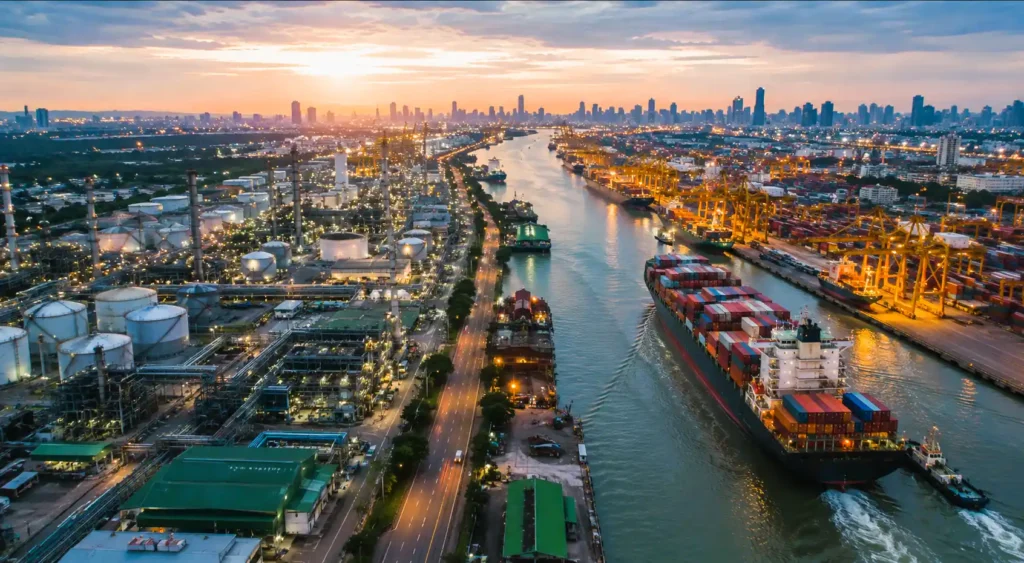
Capital is rarely indifferent to incentives. When the economics of building a factory, data center, power plant, or semiconductor facility can change because of a tax credit, tariff, subsidy, procurement decision, or national-security priority, investment decisions are no longer shaped by market forces alone. Industrial policy is becoming an increasingly important variable in that equation, altering where companies deploy capital and where institutional investors look for long-term opportunities.
The shift matters because private capital is enormous, mobile, and increasingly tied to infrastructure-heavy sectors. Governments do not need to own an industry to influence it; they can change its economics. As a result, investors evaluating manufacturing, energy, AI infrastructure, defense, or critical minerals increasingly need to understand not only demand and competition, but also the policy environment surrounding them.
This does not make government-supported investment automatically attractive. Instead, it creates a more complicated capital-allocation landscape in which incentives can accelerate investment while also introducing political, regulatory, and valuation risks.
Why Governments Are Becoming Active Participants in Capital Allocation
For decades, investors often viewed government intervention as a secondary consideration. Companies primarily evaluated markets through demand, production costs, competition, taxes, labor availability, and expected returns. Government policy mattered, but it was rarely the central variable in corporate capital allocation.
That framework is becoming less complete.
The strategic importance of semiconductors, energy systems, artificial intelligence, defense technologies, critical minerals, and advanced manufacturing has pushed governments toward a more active role. The motivation varies by country, but the common thread is that certain industries are increasingly viewed as important to economic resilience or national security.
Industrial policy can influence investment through several channels.
Subsidies and tax incentives can reduce the upfront cost of projects that might otherwise struggle to compete globally. Tariffs and trade restrictions can alter the economics of importing components and encourage companies to establish domestic or regional production. Government-backed financing can reduce funding barriers for strategically important infrastructure. Meanwhile, procurement programs can create demand for industries that serve national priorities.
The result is a different relationship between governments and private capital.
A semiconductor manufacturer may evaluate not only labor costs and access to customers, but also whether a country provides incentives for domestic production. An energy developer may consider not only electricity demand but also permitting rules and government support. Likewise, an infrastructure investor may increasingly assess whether a project benefits from long-term policy commitments.
That creates an important distinction for investors: government involvement can change the risk-return equation without eliminating risk.
An incentive can improve project economics, but it can also create dependence on political decisions. A tariff can protect domestic producers, but it may raise input costs. A subsidy can accelerate investment, yet it can also encourage too much capital to chase the same opportunity.
For institutional investors, policy analysis is therefore becoming part of fundamental investment analysis rather than a separate geopolitical exercise.
Investor perspective: The capital-allocation implication is straightforward: investors increasingly need to evaluate the durability of policy support alongside market fundamentals. The strongest opportunities may emerge where government priorities reinforce genuine commercial demand, while the greatest risks may appear where investment depends excessively on temporary incentives.
Where Industrial Policy Is Redirecting Capital?
The most visible effects are appearing in industries where infrastructure requirements are enormous and strategic importance is high.
Semiconductors
Semiconductors sit at the center of modern manufacturing, artificial intelligence, communications, automobiles, and defense systems. Their strategic importance has encouraged governments to support domestic and regional production capacity.
That changes the geography of manufacturing investment.
Instead of locating facilities purely according to historical cost advantages, companies increasingly weigh supply-chain resilience, export controls, government incentives, proximity to customers, and geopolitical relationships.
For investors, the significance extends beyond chip manufacturers. New semiconductor capacity requires specialized facilities, construction, utilities, advanced equipment, logistics networks, and reliable electricity. Industrial policy can therefore create secondary demand throughout an infrastructure ecosystem.
AI Infrastructure
Artificial intelligence has created another major capital-intensive investment cycle.
Large-scale AI systems require data centers, computing equipment, electricity generation, cooling systems, transmission capacity, and increasingly sophisticated digital infrastructure. As governments view AI as strategically important, policy can influence where this infrastructure gets built.
The investment implications extend beyond technology companies. Infrastructure funds, utilities, private equity investors, and institutional capital can participate in the physical layer supporting AI adoption.
However, the economics remain dependent on actual computing demand, energy availability, financing costs, technology changes, and the ability to secure suitable infrastructure.
Energy
Industrial policy is also reshaping energy investment.
Electricity demand from data centers, manufacturing facilities, electrification, and industrial expansion is increasing the importance of generation and transmission infrastructure. At the same time, governments are balancing energy security with decarbonization objectives.
That creates competing investment signals.
Natural gas infrastructure may benefit from reliability requirements in some markets, while renewable generation, storage, transmission, and grid modernization can benefit from other policy priorities. Investors therefore face a more complex energy landscape in which regulation and strategic priorities can materially influence project economics.
Defense
Defense investment represents another area where government spending directly affects private-sector capital allocation.
Defense contractors, technology companies, cybersecurity firms, aerospace manufacturers, and specialized suppliers can benefit from long-term procurement priorities. However, investors must distinguish between increased government spending and durable commercial value.
A company can operate in a strategically important industry without generating attractive investment returns. Execution, valuation, contract concentration, technological change, and political priorities still matter.
Critical Minerals and Manufacturing
Critical minerals sit at the intersection of energy transition, technology, manufacturing, and national security. Governments increasingly want more resilient access to materials required for batteries, electronics, defense systems, and advanced manufacturing.
That can encourage investment in mining, processing, refining, recycling, and related infrastructure.
Manufacturing investment is similarly being reshaped by supply-chain concerns. Companies that once optimized primarily for lowest-cost production are increasingly considering resilience and geopolitical exposure.
The result is not necessarily a reversal of globalization. Instead, global production can become more regionalized, with companies building additional capacity across multiple locations rather than relying excessively on a single manufacturing hub.
The investment consequences differ by sector:
| Strategic Sector | Industrial Policy Driver | Capital Flow Impact |
|---|---|---|
| Semiconductors | Domestic production incentives and export controls | Encourages regional manufacturing and supporting infrastructure |
| AI Infrastructure | Technology competition and digital sovereignty | Drives data-center, power, and network investment |
| Energy | Energy security and strategic transition | Redirects capital toward generation, grids, and storage |
| Defense | National-security priorities and procurement | Supports specialized manufacturing and technology investment |
| Critical Minerals | Resource security and supply-chain resilience | Encourages mining, processing, recycling, and regional sourcing |
| Manufacturing | Reshoring and strategic production | Promotes new factories and industrial infrastructure |
The broader lesson is that industrial policy can have a multiplier effect on capital flows. Government support aimed at one strategic industry can generate investment demand across construction, energy, transportation, technology, and raw-material supply chains.
For investors, this means the most important opportunity may not always sit in the company receiving the incentive. It can emerge one or two layers further down the infrastructure and supply chain.
Investor perspective: Capital is increasingly following strategic priorities into sectors that require substantial physical investment. That creates opportunities for private capital and institutional investors, but investors should distinguish between genuine long-term demand and projects whose economics depend primarily on policy support.
Reshoring, Nearshoring, and the New Geography of Capital
Industrial policy becomes particularly significant when combined with the restructuring of global supply chains.
For decades, companies optimized production networks around efficiency, low costs, specialized labor, and access to global markets. That model created highly integrated supply chains, but it also exposed companies to disruptions when trade relationships deteriorated or transportation networks became strained.
Now, resilience has become a competing objective.
Supply-chain reshoring brings certain production activities closer to domestic markets, while nearshoring moves manufacturing toward politically or geographically aligned neighboring economies. Neither trend necessarily means that global trade is disappearing. Instead, companies are increasingly building redundancy into their production networks.
This creates demand for factories, ports, roads, warehouses, electricity systems, telecommunications, and logistics infrastructure.
It also changes the relative attractiveness of different regions.
A country with higher labor costs may still attract manufacturing investment if it offers reliable infrastructure, political stability, strategic trade relationships, skilled workers, and strong government incentives. Conversely, a low-cost production location may become less attractive if investors perceive high geopolitical or supply-chain risk.
For emerging markets, this creates both an opportunity and a challenge. Companies seeking geographic diversification could bring new manufacturing investment to developing economies. However, countries that lack reliable infrastructure, trade access, political stability, or sufficient energy capacity may struggle to capture the next wave of investment.
The result is a more fragmented global investment map.
Capital allocation increasingly depends on a combination of economics, resilience, and geopolitical alignment.
Investor perspective: Reshoring and nearshoring can create long-duration opportunities in industrial real estate, logistics, energy, transportation, and manufacturing infrastructure. Yet investors should assess whether new capacity reflects durable demand or simply duplication created by geopolitical uncertainty.
Comparing the New Investment Landscape
The investment implications become clearer when the major sectors are viewed together. Government involvement does not automatically make an industry attractive. Instead, it changes the variables investors must evaluate: the availability of incentives, regulatory certainty, infrastructure capacity, strategic importance, and the durability of demand.
| Investment Theme | Opportunity | Primary Risk |
|---|---|---|
| Semiconductors | Domestic manufacturing capacity and strategic technology demand | High capital intensity and technology obsolescence |
| AI Infrastructure | Data centers, power systems and digital infrastructure | Energy constraints, financing and rapid technology change |
| Energy | Generation, transmission and grid modernization | Regulation, permitting and commodity exposure |
| Defense | Long-term procurement and national-security spending | Political cycles and procurement uncertainty |
| Critical Minerals | Supply-chain diversification and resource security | Commodity volatility and geopolitical concentration |
| Manufacturing | Reshoring, automation and regional production | Higher operating costs and subsidy dependence |
| Infrastructure | Logistics, utilities and strategic networks | Long construction timelines and regulatory risk |
For investors, the important distinction is between policy-supported demand and policy-dependent demand. A semiconductor facility may benefit from government incentives while still relying on genuine global demand for chips. Similarly, AI infrastructure may receive strategic support, but its economics ultimately depend on computing demand, electricity availability and customer commitments.
That distinction matters because incentives can improve project economics without eliminating fundamental business risk. Investors therefore need to examine whether government support is accelerating an economically viable trend or compensating for a structurally weak investment case.
Investor perspective: The strongest opportunities may emerge where policy support reinforces an existing economic trend rather than creating demand from scratch. Investors should therefore assess government incentives alongside underlying cash flows, competitive positioning and long-term demand.
The Risks of a Government-Driven Capital Cycle
The return of industrial policy also introduces a different type of investment risk: policy risk.
Traditional investment analysis often focuses on market demand, competition, operating costs, and financial leverage. However, companies operating in strategically important industries increasingly face another variable: the durability of government support.
A change in political leadership can alter subsidies, tax incentives, tariffs or procurement priorities. A project that appears attractive under one policy framework may look considerably different if incentives disappear.
This creates several risks.
Policy Reversals
Government programs can change. Investors committing capital to projects with long construction periods must consider whether today’s incentives will remain relevant throughout the investment lifecycle.
That is particularly important for infrastructure and manufacturing projects because capital becomes difficult to redeploy once construction begins.
Subsidy Dependence
Government support can improve investment economics, but excessive dependence can create fragile business models.
If a project requires continuous subsidies to remain competitive, investors may face significant risks when fiscal priorities change.
Protectionism and Trade Retaliation
Tariffs can encourage domestic production, but they can also increase input costs and provoke retaliation from trading partners.
As a result, companies may gain supply-chain resilience while simultaneously losing some cost efficiency.
Inefficient Capital Allocation
Government objectives do not always align with market efficiency.
A strategically important project may receive capital because of national-security considerations even when another investment could generate stronger commercial returns. That can produce overcapacity, excess competition or asset valuations disconnected from underlying economics.
Stranded Assets
Technology and policy can change faster than infrastructure.
For example, a manufacturing facility designed around a particular technology may become less competitive if production methods evolve rapidly. Similarly, energy infrastructure built under one regulatory framework may face different economics after policy changes.
The broader lesson is that industrial policy creates both an opportunity premium and a policy-risk premium.
Investor perspective: Government involvement should become another variable in due diligence rather than a substitute for it. Investors should examine subsidy durability, political exposure, regulatory dependence, project economics and alternative uses of capital before committing to policy-supported sectors.
The Future of Global Capital Flows
The return of industrial policy could represent more than a temporary increase in government intervention. It may reflect a deeper restructuring of the global economy.
For decades, companies often optimized supply chains around cost, efficiency and access to global markets. Increasingly, however, businesses must also consider resilience, strategic alliances, energy security and geopolitical exposure.
That shift is encouraging investment in regional production networks.
Manufacturing capacity is moving closer to major consumer markets in some industries. Semiconductor production is becoming a national-security priority. Energy infrastructure is being reassessed through the lens of both economic growth and security. Critical minerals have become strategic assets because access to resources can influence the competitiveness of entire industries.
At the same time, sovereign investment is becoming more closely connected to strategic economic objectives.
Sovereign wealth funds and other large institutional investors can provide capital for infrastructure, technology, energy and manufacturing while governments use policy to create favorable conditions around those investments.
This does not mean global capital flows will become entirely regional. Global markets remain deeply interconnected. Instead, the emerging system may combine global investment with increasingly regional strategic priorities.
For institutional investors, that means geography itself is becoming a more complex investment variable.
A country with strong infrastructure, reliable energy, favorable industrial incentives and access to strategic markets may attract capital even when another location offers lower labor costs.
Investor perspective: The long-term significance lies in the changing definition of investment competitiveness. Capital may increasingly favor jurisdictions that combine economic efficiency with geopolitical resilience, infrastructure capacity and strategic policy support.
Unique Insight: Industrial Policy Is Becoming a New Investment Variable
The most important change may not be the amount governments spend. It is the growing influence government decisions have on the direction of private capital.
Historically, investors could often structure their analysis around a relatively familiar sequence:
Market demand → costs → competition → returns
That framework remains essential. Yet it increasingly needs another layer:
Government incentives → national security → strategic policy → supply-chain resilience → geopolitical alignment
This does not mean government policy will determine every investment outcome. Instead, it means policy increasingly shapes the starting conditions under which businesses compete.
A semiconductor manufacturer may evaluate labor, electricity and logistics costs, but it may also consider export controls and government incentives. An AI infrastructure developer must examine data-center demand alongside power availability and grid policy. An energy investor may assess project economics while also considering national energy-security objectives.
This is why industrial policy has become an increasingly important variable in institutional investment analysis.
The winners may not simply be companies operating in sectors receiving government support. They may be companies capable of converting that support into durable competitive advantages.
That distinction is critical.
A subsidy can accelerate construction. It cannot guarantee efficient operations. A tariff can protect domestic producers. It cannot guarantee global competitiveness. Government-backed infrastructure can unlock private investment. It cannot eliminate execution risk.
For investors, therefore, the emerging framework is not government versus markets. It is an increasingly interconnected system in which public policy influences private-market economics.
Investor perspective: The strategic opportunity is to identify where government priorities intersect with genuine commercial demand. The key risk is confusing political support with sustainable economic value.
Frequently Asked Questions
What is industrial policy?
Industrial policy refers to government actions designed to influence the development, competitiveness or strategic position of particular industries. These actions can include subsidies, tax incentives, tariffs, procurement programs, financing and regulatory measures.
Why is industrial policy returning?
Governments increasingly view sectors such as semiconductors, energy, defense, critical minerals and advanced technology as strategically important. Supply-chain disruptions and geopolitical competition have strengthened that focus.
How does industrial policy affect global capital flows?
Industrial policy can change the relative attractiveness of different countries and sectors by altering project economics, investment incentives, trade conditions and infrastructure availability.
How do subsidies influence private investment?
Subsidies can reduce project costs, improve expected economics and encourage companies to invest in locations or industries that might otherwise receive less capital. However, investors must consider whether projects remain viable without continued support.
How are tariffs changing capital allocation?
Tariffs can make imported goods more expensive and encourage companies to establish domestic or regional production. However, they can also raise input costs and trigger trade retaliation.
Why are semiconductors a major industrial-policy priority?
Semiconductors underpin modern computing, telecommunications, artificial intelligence, automobiles and defense systems. Their strategic importance has encouraged governments to support domestic manufacturing and supply-chain resilience.
How is AI infrastructure affected by industrial policy?
AI infrastructure requires substantial investment in data centers, electricity generation, transmission networks and digital infrastructure. Government incentives and energy policies can therefore influence where this capacity is developed.
Why are governments investing in critical minerals?
Critical minerals are important inputs for technologies ranging from batteries and electronics to defense systems. Governments increasingly seek diversified supply chains to reduce dependence on concentrated sources.
How are institutional investors responding to industrial policy?
Institutional investors are increasingly incorporating government incentives, regulatory exposure, geopolitical risk, supply-chain resilience and national-security priorities into capital-allocation decisions.

Contributing Editor for Alt Finances, vision-driven with 20+ years in family office, asset management, and corporate development. Holds UN Special Consultative Status and is 100 Women in Finance Board Chair. Tulane University – A.B. Freeman School of Business.