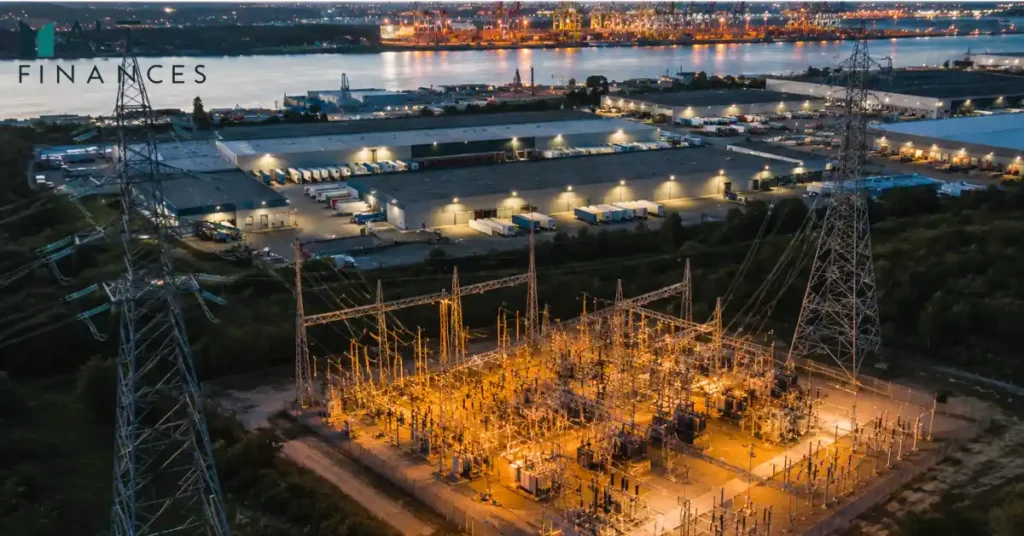
In modern markets, scarcity can be more valuable than scale. Economic systems increasingly depend on infrastructure that consumers rarely notice until capacity becomes constrained, creating what can be described as the bottleneck economy. When a power connection, transmission line, port, fiber network, water system or data center becomes difficult to bypass, its economic importance can rise sharply.
The investment question is therefore moving beyond how large an infrastructure asset is. It is increasingly about where that asset sits within an economic network and whether businesses and consumers can realistically operate around it.
The basic chain is straightforward:
Scarcity → Bottleneck → Dependency → Pricing Power → Cash Flow → Strategic Value
But the economics are more complicated than the formula suggests.
What the Bottleneck Economy Means for Investors
An infrastructure bottleneck exists when a particular asset, network or economic node becomes difficult to replace or bypass without significant cost, delay or disruption.
Several forces can create that position: limited physical capacity, geographic constraints, high replacement costs, regulatory barriers, network effects, specialized equipment, long development timelines and growing demand.
A transmission line connecting a constrained region is different from an ordinary piece of infrastructure. A port with strong connections to inland rail and road networks is different from a warehouse that can easily be replaced. A data center with available power and connectivity can occupy a more strategically important position than another facility with similar physical characteristics but no access to additional electricity.
This creates an important distinction between owning infrastructure and controlling a critical economic bottleneck.
Ownership provides exposure to an asset. Control over a bottleneck can provide influence over an essential connection within a broader economic system.
That does not automatically produce superior returns. Regulation, competition, capital expenditure, customer concentration and technological change can all weaken the economics.
Where Infrastructure Scarcity Is Emerging
The bottleneck economy is appearing across several infrastructure categories, but each has different economics.
Energy infrastructure is one of the clearest examples. The International Energy Agency says grid capacity is emerging as a bottleneck for connecting new electricity generation, storage and demand. Grid connection queues have reached record levels in many regions.
The constraint extends beyond transmission lines. Transformers, cables, substations and other components can also become limiting factors. The IEA reported in 2025 that prices and procurement times for essential grid components had nearly doubled over four years. The U.S. Department of Energy has separately identified long lead times and limited domestic production capacity for critical grid equipment.
Digital infrastructure presents another form of scarcity. Data centers require electricity, cooling, fiber connectivity and suitable sites. The IEA reported in 2026 that grid connection constraints could delay around 20% of planned global data-center capacity through 2030 under its analysis.
The important point is not simply that data centers are growing. It is that their development can be constrained by infrastructure outside the data-center building itself particularly power availability and grid connections.
Transportation and logistics create bottlenecks differently. Ports, rail connections, highways, warehouses and inland distribution hubs operate as interconnected networks. The World Bank’s 2025 logistics analysis found persistent connectivity gaps and significant unpredictability concentrated at ports, transshipment hubs and inland checkpoints.
A strategically positioned logistics asset can therefore derive value from its position within a network rather than from its physical size alone.
Water infrastructure has another characteristic: established networks can be difficult and expensive to replace. The U.S. Environmental Protection Agency‘s latest drinking water infrastructure assessment estimates $625 billion of needs over 20 years across pipe replacement, treatment, storage and other infrastructure. User fees typically support ongoing operations, maintenance and long-term capital investment.
The Economics Behind a Bottleneck
The potential economic value of a bottleneck comes from the interaction of capacity and demand.
Infrastructure revenue can be generated through long-term contracts, regulated returns, usage-based charges, capacity payments, connection fees or service fees. Some contracts may also contain inflation-linked provisions.
But these models vary substantially by asset and jurisdiction.
A scarce infrastructure asset can have strong demand and still deliver weak investment performance if operating costs, financing costs or required capital expenditure consume too much of the revenue.
For investors, the relevant equation is therefore closer to:
Revenue Stability + Demand + Scarcity − Operating Costs − Capital Expenditure − Financing Costs − Regulatory Risk
This is why scarcity alone is insufficient.
The more durable opportunity may exist where high demand combines with expensive replacement, limited substitution and a long development timeline.
The New Digital Bottlenecks
Technology is creating a new layer of infrastructure dependency.
Artificial intelligence is an obvious example because advanced computing requires physical infrastructure: data centers, electricity generation, transmission capacity, cooling systems, fiber networks and semiconductor equipment.
The IEA says electricity demand from data centers increased 17% in 2025, while AI-focused data centers grew faster. It also identified tightening supply chains for transformers, gas turbines, advanced chips and IT components as constraints on expansion.
Yet technological progress cuts both ways.
The same technology that creates a bottleneck can eventually eliminate it. More efficient chips can reduce computing requirements. Grid-enhancing technologies can unlock existing transmission capacity. New data-center locations can reduce dependence on constrained regions. Alternative transportation routes can weaken a logistics bottleneck.
Investors therefore need to distinguish between a structural bottleneck and a temporary shortage.
Infrastructure as a Strategic Asset
Some infrastructure has value beyond its commercial revenue because governments and corporations depend on it for economic security.
Energy infrastructure affects electricity reliability and energy security. Telecommunications networks support digital connectivity. Ports and logistics networks influence trade. Water systems underpin public health and industrial activity.
This strategic importance can also attract government intervention.
Regulators may impose pricing rules, ownership restrictions, permitting requirements or operating standards. Governments may support new capacity through public investment or public-private partnerships. Foreign investment rules can become more restrictive around infrastructure considered strategically sensitive.
The result is a fundamental tension.
The more strategically important an infrastructure asset becomes, the more attention it may attract from competitors, regulators and governments.
That can protect an asset from some competitive threats while simultaneously limiting an owner’s freedom to maximize commercial returns.
Who Benefits and Who Faces Pressure?
Potential beneficiaries of infrastructure scarcity can include infrastructure owners, private infrastructure funds, asset managers, data-center operators, power infrastructure companies, logistics operators, telecommunications providers and engineering firms.
But the strongest position is not necessarily held by the company with the largest asset base.
A more attractive position may combine:
Scarcity + Essential Demand + High Replacement Cost + Limited Substitution + Durable Revenue
Pressure points can be just as important.
Highly leveraged operators may struggle when interest costs rise or major capital expenditures arrive. Infrastructure dependent on one customer can face concentration risk. Regulated assets can face political intervention. Technology-dependent infrastructure can become obsolete. And a bottleneck can disappear when competitors build new capacity.
The Risks of Owning the Bottleneck
Bottleneck economics create risks as well as opportunities.
Regulatory and political risk can be substantial, particularly where infrastructure provides essential public services. Customer concentration can weaken negotiating power. Heavy capital expenditure can reduce free cash flow. Cybersecurity incidents can disrupt digital and physical infrastructure.
Environmental risks can also matter. Infrastructure may face exposure to extreme weather, water constraints, changing environmental standards or physical climate risks.
There is another risk that is easier to overlook: success can attract competition.
If an infrastructure bottleneck produces attractive economics, investors and businesses have an incentive to build alternatives. Governments may accelerate permitting. Customers may redesign operations. Technology may create substitutes.
Capital can therefore destroy scarcity.
The Deeper Bottleneck Economy Thesis
The deeper bottleneck economy thesis is not simply that infrastructure is valuable because it is essential.
The more important insight is that infrastructure becomes strategically valuable when economic activity cannot easily move around it.
A large asset is not necessarily a bottleneck. A profitable company is not necessarily a bottleneck. A critical infrastructure asset becomes a bottleneck when demand is high, alternatives are limited, replacement is expensive and switching is difficult.
That creates a form of economic control.
For investors, the central question is therefore not:
“Is this important infrastructure?”
It is:
“Does this asset occupy a position that other participants cannot easily bypass?”
That distinction can reveal strategic value that conventional asset-size analysis misses.
Conclusion
The emerging bottleneck economy is changing how infrastructure can be viewed as an investment category.
Scarcity creates dependence.
Dependence can create strategic value.
Strategic value can support pricing power.
Pricing power can support cash flow.
Cash flow can create investment value.
But bottlenecks are not permanent.
Technology can create substitutes. Competitors can build new capacity. Governments can regulate strategically important assets. Customers can change behavior. And new investment can eliminate scarcity altogether.
The most important questions for infrastructure investors are therefore practical:
How difficult is the asset to replace?
How strong is underlying demand?
Who controls access?
Can competitors build around it?
How much capital is required to maintain it?
How exposed is it to regulation?
Will the bottleneck still exist a decade from now?
The most valuable infrastructure may not be the infrastructure everyone can see. It may be the infrastructure the economy cannot easily operate without.
Frequently Asked Questions
What is the bottleneck economy?
The bottleneck economy describes an economic environment in which scarce infrastructure, capacity or network access becomes strategically important because businesses cannot easily bypass or replace it.
How do infrastructure bottlenecks create economic value?
When capacity is limited and demand is essential, infrastructure operators may benefit from contractual revenue, regulated returns, usage fees or other forms of payment. However, pricing power depends on competition, regulation and the availability of alternatives.
What types of infrastructure can become bottlenecks?
Potential examples include power transmission, transformers, data centers, fiber networks, ports, rail connections, logistics hubs, telecommunications systems and water infrastructure.
How can investors gain exposure to infrastructure assets?
Exposure can come through direct ownership, private infrastructure funds, infrastructure-focused investment vehicles and publicly traded infrastructure companies. The risk, liquidity, leverage and governance characteristics vary considerably.
What is the difference between infrastructure ownership and infrastructure control?
Ownership means holding an infrastructure asset. Control refers more specifically to occupying a critical position within an economic network where users have limited alternatives.
Can technology eliminate infrastructure bottlenecks?
Yes. Technology can increase capacity, improve efficiency or create substitutes. This is why investors should distinguish durable infrastructure scarcity from temporary supply constraints.
Why is digital infrastructure becoming strategically important?
Digital services depend on physical infrastructure including electricity, data centers, fiber, telecommunications networks and semiconductor capacity. Constraints in any one of these areas can affect the ability to expand digital services.
How does regulation affect critical infrastructure investments?
Regulation can influence pricing, ownership, permitted activities, capital requirements, environmental standards and investment decisions. Strategically important infrastructure can face particularly significant regulatory scrutiny.
Why is the bottleneck economy important for institutional investors?
Institutional investors examining infrastructure need to evaluate not only the asset itself but also its position within the wider economic network. Scarcity, demand, substitutability, regulation, capital requirements and long-term durability can all affect investment outcomes.
Investment & Infrastructure Disclaimer
This article provides general informational content and does not constitute financial, investment, legal, tax, infrastructure or strategic advice. Infrastructure investments can involve significant regulatory, political, operational, financing, technological, environmental, liquidity and concentration risks. The strategic importance of an infrastructure asset does not guarantee investment performance or pricing power. Investors should conduct independent due diligence and consult qualified professional advisers before making investment decisions.

Contributing Editor for Alt Finances, vision-driven with 20+ years in family office, asset management, and corporate development. Holds UN Special Consultative Status and is 100 Women in Finance Board Chair. Tulane University – A.B. Freeman School of Business.