Some of the most consequential investment opportunities of the next decade may sit behind the systems economies cannot function without. Roads, power grids, data networks and energy infrastructure have long attracted institutional capital; water is increasingly entering the same conversation. Water investment sits at the intersection of infrastructure renewal, industrial expansion, agriculture, climate risk and resource scarcity.
The investment case, however, is not as simple as owning a scarce resource. Water remains heavily regulated, geographically fragmented and politically sensitive. Instead, the emerging opportunity may lie in the assets required to capture, treat, move, recycle and manage it. For institutional investors, that distinction is crucial. It determines whether water becomes another real-asset allocation or remains a collection of specialized opportunities across utilities, infrastructure, technology and alternative investments.
The question, therefore, is not whether water matters economically. It is whether the water economy can develop enough predictable cash flows, regulatory clarity and investable structures to attract institutional capital at scale.
Why Water Is Becoming an Institutional Investment Theme
Water demand is tied to economic activity that is difficult to substitute. Agriculture depends on irrigation, cities depend on reliable supply and industries require water for processing, cooling and manufacturing. In the United States, crop irrigation, thermoelectric power and public supply accounted for about 90% of water withdrawals in the USGS‘s 2010–20 assessment.
The demand picture is also becoming more complicated. Climate change is making rainfall and water availability less predictable in many regions, while aging infrastructure increases the cost of maintaining reliable systems. UN-Water’s 2025 assessment highlighted how glacier loss is altering water cycles and intensifying risks from droughts, floods and other extremes.
Industrial expansion adds another layer. Semiconductor manufacturing, energy infrastructure and data centers all require reliable water systems. Recent data-center developments have already generated disputes over local water consumption, showing that access to water can become a constraint on new economic capacity rather than simply an environmental consideration.
For investors, scarcity alone is not an investment thesis. The opportunity emerges only when scarcity translates into infrastructure spending, contractual revenues, technology demand or economically valuable services. That makes the water theme increasingly relevant to long-term capital, but not automatically attractive at every valuation.
The Infrastructure Behind the Water Investment Opportunity
The most scalable route into water investment may be the infrastructure layer rather than direct ownership of water.
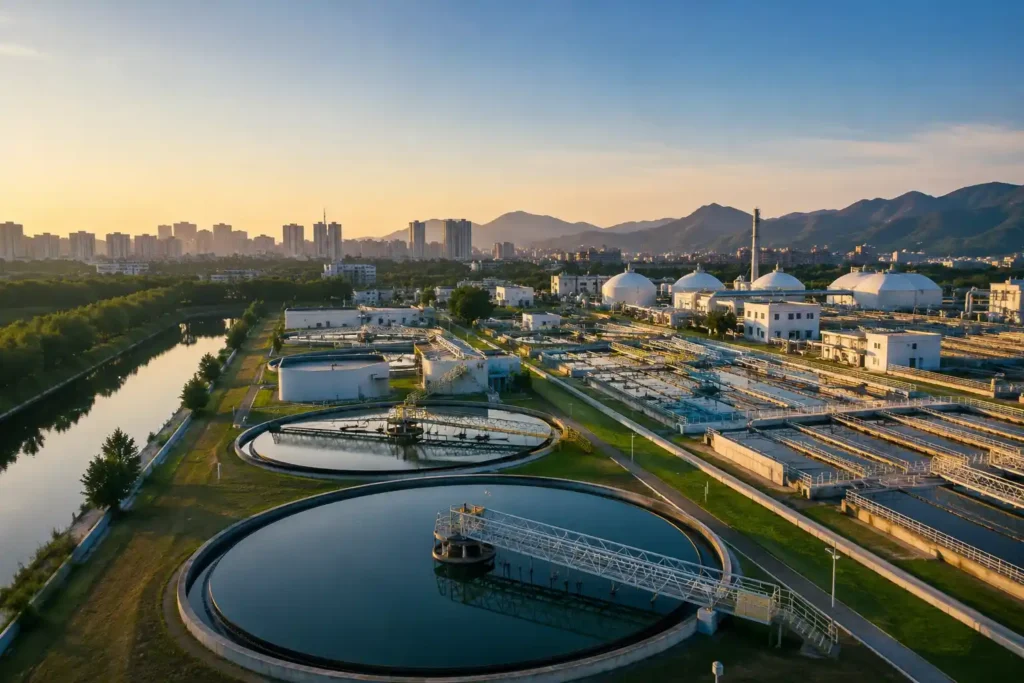
That layer includes treatment plants, pipelines, reservoirs, desalination facilities, wastewater recycling systems, irrigation networks and industrial water-management systems. It also includes the technologies that detect leaks, improve efficiency and reduce the amount of freshwater required by industrial users.
The financing challenge is substantial. In 2024, multilateral development banks approved $19.6 billion of water-related financing, with $14.4 billion directed toward low- and middle-income countries, according to the World Bank. The institution has also launched a 2026 initiative aimed at improving water security for 1 billion people by 2030 and explicitly identifying stronger financing and private-sector participation as priorities.
Goldman Sachs Asset Management has similarly argued that aging infrastructure and new infrastructure requirements create opportunities for private capital, including in traditional infrastructure such as water.
| Water Investment Theme | Primary Institutional Appeal | Key Challenge |
|---|---|---|
| Water infrastructure | Long-lived assets and essential demand | High capital requirements |
| Water utilities | Potentially recurring regulated revenues | Tariff and political risk |
| Water technology | Efficiency and secular demand growth | Technology and adoption risk |
| Desalination | Expands supply in water-stressed regions | Energy intensity and cost |
| Wastewater recycling | Creates alternative supply | Regulation and public acceptance |
The investor implication is important: water infrastructure can resemble other real assets, but its economics depend heavily on jurisdiction and structure. A regulated utility, a desalination plant and a water-efficiency technology company should not receive the same risk premium simply because all operate within the water economy.
Why Institutional Investors Are Paying Attention
Pension funds, insurers, sovereign wealth funds, infrastructure managers and family offices generally value assets that can support long-duration investment strategies. Water infrastructure can fit that framework where demand is essential and revenue mechanisms are sufficiently predictable.
The OECD has identified this potential directly: long-lived water assets with relatively inelastic demand can, in principle, generate cash flows compatible with institutional liabilities. Yet the same research shows why private investment remains limited. Water supply infrastructure represented only 1.6% of the institutional infrastructure holdings mapped in one OECD analysis, while public ownership, weak cost recovery and tariff restrictions reduce the sector’s attractiveness relative to other infrastructure categories.
That tension remains central. Water may have defensive characteristics, but investors cannot assume that essential demand automatically produces attractive returns. Regulators may restrict tariffs, governments may prioritize affordability, and operators may face large environmental and maintenance obligations.
For institutional capital, the opportunity is therefore highly selective: the strongest assets may be those with transparent regulation, ring-fenced revenues, credible capital plans and a clear mechanism for recovering investment costs.
Comparing Water Investment Opportunities
Different parts of the water economy offer very different investment profiles. Water utilities can provide exposure to regulated networks, while water technology companies may offer higher growth but greater operating and valuation risk. Desalination and wastewater recycling can address supply constraints, but both require substantial capital and careful project economics.
Water rights are different again. Unlike a conventional commodity, rights depend on jurisdiction, legal priority, allocation rules and environmental restrictions. A water right in one basin cannot simply be treated as equivalent to a financial claim on water elsewhere.
| Water Asset | Investment Opportunity | Primary Risk |
| Water utilities | Regulated infrastructure and recurring demand | Tariffs, regulation and leverage |
| Water infrastructure | Long-duration essential assets | Capital intensity and political risk |
| Water technology | Efficiency, monitoring and demand growth | Technology and adoption risk |
| Water rights | Potential scarcity-linked economic value | Legal and geographic complexity |
| Desalination | New supply in water-stressed markets | Energy and operating costs |
| Wastewater recycling | Alternative supply and circularity | Regulation and public acceptance |
This fragmentation is precisely why water has not yet become a conventional asset class. Investors can obtain exposure, but there is no single standardized water product with uniform liquidity, valuation methodology or risk characteristics.
For portfolio construction, that means water should currently be viewed as a theme spanning several asset classes, rather than as a homogeneous allocation.
The Role of Water Rights and Water Markets
Water rights can attract attention because scarcity can increase their economic value. However, the market structure varies dramatically by jurisdiction.
In some regions, water can be allocated through tradable rights or permits. In others, governments retain extensive control over allocation. Agricultural water can also have different legal and economic characteristics from municipal or industrial supply.
The distinction matters for investors. A water right is not simply a barrel of oil with a different physical composition. Its value depends on legal enforceability, location, priority, transferability, hydrology and environmental rules.
That makes water markets potentially investable in selected jurisdictions but difficult to scale globally. The investment case also carries reputational considerations: transferring water toward higher-value industrial or urban uses can create economic benefits while generating legitimate concerns about agriculture, ecosystems and affordability.
For investors, the lesson is clear: water rights require jurisdiction-specific legal and hydrological due diligence. They should not be generalized into a global commodity thesis.
The Risks That Could Keep Water From Becoming a Mainstream Asset Class
The biggest obstacle to broader water investment may be the same feature that makes water economically indispensable: governments cannot treat it like an ordinary commercial product.
Tariff increases can become politically difficult when affordability is at stake. The OECD notes that water tariffs often fail to cover even operating and maintenance costs, while political and affordability constraints can prevent cost-reflective pricing.
Public ownership also limits the role of private capital in many markets. Even where private investment is permitted, environmental requirements, drought risk and infrastructure obligations can alter projected returns.
Recent UK developments illustrate the complexity. Ofwat has been consulting on regulatory changes while the sector faces major investment and governance pressures. Its current framework also includes mechanisms designed to encourage innovation and new water-efficiency technologies.
The investor implication is that water requires a different underwriting framework from conventional infrastructure. Regulatory stability, affordability, environmental obligations, financing structure and community acceptance can matter as much as projected demand.
The Future of Institutional Water Investment
The next phase of the sector is likely to involve more than traditional water utilities. Desalination, wastewater recycling, smart-metering, leakage detection, industrial water treatment and efficiency technologies could attract capital as governments seek to stretch existing supplies.
The connection with digital infrastructure is becoming particularly important. AI-driven data-center development is increasing scrutiny of water requirements, while new projects increasingly need to demonstrate that energy, land and water systems can support their operations. Reuters reported in June that UN researchers expect data-center water consumption to rise sharply alongside AI expansion, underscoring the physical-resource dimension of digital infrastructure.
The World Water Council has also emphasized the need to make water infrastructure more “bankable” and has developed frameworks for understanding how institutional investors, corporations and development financiers can participate.
For capital allocators, this suggests a gradual expansion of opportunities rather than an immediate new asset class. The investable universe could grow as financing structures, public-private partnerships and technology markets become more sophisticated.
Unique Insight: Water Investment May Be About Economic Capacity, Not Water Ownership
The deeper case for water investment is not that water itself will suddenly behave like gold, oil or another globally traded commodity.
It is that reliable water is becoming an increasingly important constraint on economic capacity.
The chain is increasingly visible:
Water Scarcity → Infrastructure Investment → Industrial Capacity → Economic Growth → Institutional Capital
A semiconductor plant needs water. A city needs treatment and distribution networks. Agriculture needs irrigation. Data centers need cooling systems. Energy production needs water management. Real estate development depends on reliable municipal supply.
That means the investment opportunity can extend far beyond utilities or water rights. It can encompass the infrastructure and technology required to make water reliable, efficient and economically usable.
The most important transition may therefore be from viewing water purely as a public service to recognizing the infrastructure surrounding it as a strategic component of the real economy.
Whether that ultimately creates a distinct institutional asset class will depend on whether investors can find sufficient risk-adjusted returns, liquidity, governance and regulatory clarity. The water theme is compelling; the investable structures are still developing.
Conclusion
Water investment is unlikely to become a conventional asset class simply because water is scarce. Its institutional potential lies deeper in the infrastructure, utilities, technology and services required to maintain reliable access as economies become more urbanized, industrialized and climate-exposed.
For institutional capital, that creates a developing investment frontier rather than a guaranteed opportunity. The winners will depend on regulation, valuation, financing structures, technology, governance and the ability of individual assets to generate durable risk-adjusted returns.
Water may therefore become a major institutional investment theme before it becomes a fully standardized asset class. That distinction could define the next stage of natural resources investing: not owning the scarce resource itself, but financing the infrastructure that keeps the modern economy supplied.
Frequently Asked Questions
What is water investment?
Water investment refers to exposure to assets and businesses connected with water supply, treatment, infrastructure, utilities, technology, recycling, desalination and, in specific jurisdictions, water rights.
Can water become an institutional asset class?
Potentially, but probably through infrastructure and specialized investment vehicles rather than direct ownership of water. Standardization, regulation, liquidity and predictable cash flows will determine how far the market develops.
Why are institutional investors interested in water?
Essential demand, infrastructure renewal and long-duration capital requirements can make selected water assets relevant to institutional portfolios. However, regulation and political risk remain significant constraints.
How can investors gain exposure to water infrastructure?
Potential channels include regulated water utilities, infrastructure funds, private capital projects, listed companies, technology providers, desalination and wastewater-recycling businesses.
Are water rights a good investment?
They can have economic value in specific jurisdictions, but their suitability depends on legal rights, location, hydrology, transferability and regulation. They should not be treated as a globally standardized commodity.
What makes water different from traditional commodities?
Water markets are geographically fragmented and heavily shaped by law, regulation and public policy. Unlike oil or metals, water’s value often depends on where, when and under what legal framework it can be used.
How does climate change affect water investment?
Climate change can increase drought, flood and supply variability, potentially increasing demand for resilient infrastructure. It can also increase operating and physical risks for existing assets.
What role does desalination play in water investment?
Desalination can create additional supply in water-stressed regions, particularly where conventional freshwater sources are limited. Its economics depend heavily on energy costs, technology and local regulation.
Why is wastewater recycling becoming an investment opportunity?
Recycling can provide an alternative source of supply while reducing pressure on freshwater resources. Its commercial potential depends on treatment costs, regulation, infrastructure and public acceptance.
What are the biggest risks of investing in water?
Key risks include regulation, tariff restrictions, political intervention, environmental requirements, drought, high capital expenditure, valuation uncertainty, liquidity and reputational concerns.
Can private equity invest in water infrastructure?
Yes. Private capital can participate through utilities, infrastructure projects, technology businesses and public-private structures. The World Bank and World Water Council are among the institutions examining ways to increase private-sector participation.
Why might institutional investors consider water a long-term real asset?
Selected water infrastructure can combine essential demand with long asset lives and potentially recurring revenues. However, the OECD stresses that those characteristics translate into investable returns only when regulatory and financial structures support sustainable cost recovery.

Ana Goldenberg is a Contributing Editor at Alt Finances with a career rooted in the high-stakes worlds of banking and private placements. From profiling global philanthropists to managing complex financial operations at Wells Fargo, she bridges the gap between editorial storytelling and disciplined financial expertise.