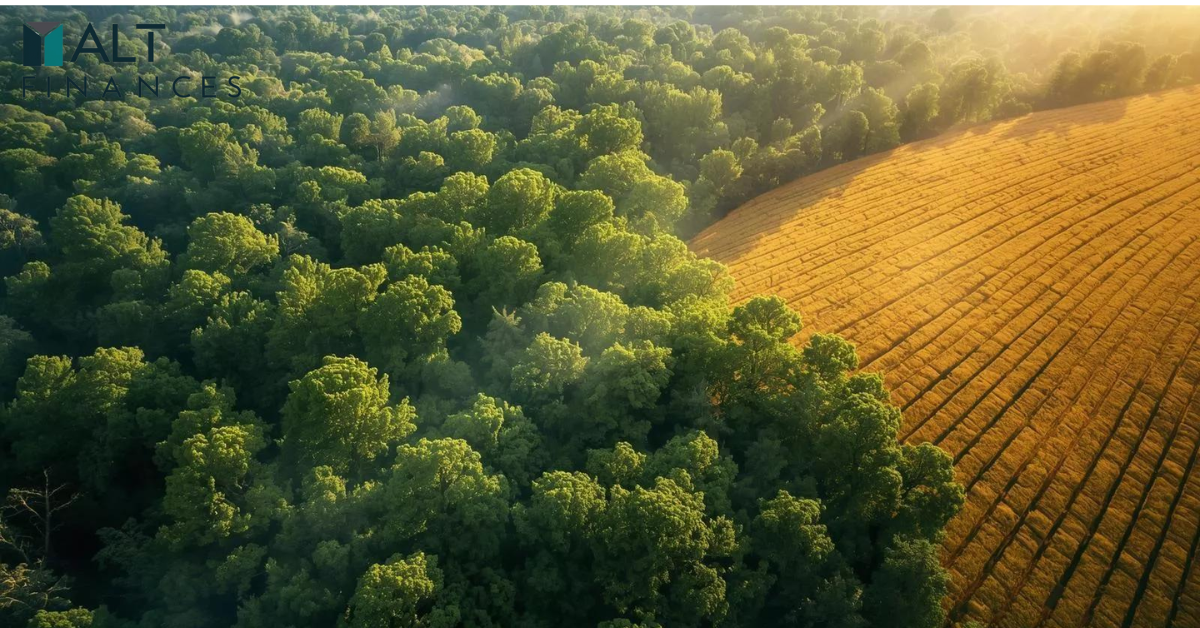
Forests and farmland are attracting growing interest from institutional investors seeking long-term exposure to tangible assets, agricultural production and natural resources. Pension funds, asset managers, family offices and specialist investment firms are exploring how land-based assets can complement traditional portfolios of stocks, bonds and real estate.
The appeal is not entirely new. Timberland and farmland have been investment assets for decades. What is changing is the broader investment framework: natural capital is increasingly discussed not only as land that produces timber or crops, but also as an asset connected to carbon storage, water, biodiversity and ecosystem services.
Natural capital investment brings together established land-based strategies and newer approaches to financing nature. While some investments have a long operating history, others particularly biodiversity markets and certain carbon-credit models remain relatively early-stage.
For investors, the opportunity lies in understanding which assets have established revenue streams, which depend on developing markets and what risks could undermine their financial or environmental value.
What Is Natural Capital?
Natural capital refers to the stocks of natural resources and ecosystems that provide benefits to people and the economy. These include forests, soils, freshwater, wetlands, agricultural land and biodiversity.
As an investment category, natural capital can include several distinct strategies:
Timberland: Forests managed for timber production, land value and potentially other ecosystem-related revenue.
Farmland: Agricultural land generating income through crop production, leases or related operations.
Carbon projects: Projects that seek to generate revenue by reducing emissions or removing carbon, often through verified credits.
Biodiversity and ecosystem projects: Investments intended to protect or restore habitats and potentially generate payments for environmental outcomes.
These strategies should not be treated as interchangeable. Timberland and farmland can generate income from physical products or leases. Carbon and biodiversity projects may depend on environmental measurement, verification, market demand and specific regulatory frameworks.
The distinction matters because financial performance and environmental outcomes are not automatically aligned. An asset may generate agricultural income without producing a measurable biodiversity benefit, while a conservation project may deliver environmental value but have limited dependable revenue.
Why Institutional Investors Are Buying Land
Institutional investors often look for assets that can provide diversification, income and exposure to long-term economic needs.
Portfolio diversification
Farmland and timberland can behave differently from publicly traded stocks and bonds. Their performance may depend on crop prices, timber demand, land values, management decisions and local conditions.
That can offer diversification, but it does not eliminate risk. Land assets remain exposed to economic cycles, financing conditions and environmental shocks.
Inflation and tangible assets
Land-based investments may have some ability to respond to inflation over time. Agricultural commodities, timber and land values can rise in certain inflationary environments.
However, the relationship is not guaranteed. Commodity prices can fall even as other prices rise, and operating costs such as labor, fertilizer, fuel and insurance can increase faster than revenue.
Long-term resource demand
Food, timber and other biological resources are essential to the global economy. Population growth, changing diets, construction demand and supply-chain pressures can influence the value of productive land.
Investors may view farmland and timberland as long-duration assets linked to these needs. But demand forecasts do not automatically translate into attractive investment returns at any purchase price.
Forests and Farmland as Investment Opportunities
Forests and farmland are among the most established natural capital investments. Their financial characteristics differ, but both can combine productive assets with long-term land ownership.
Timberland
Timberland investments can generate returns through timber harvesting, biological growth and changes in land value. Forest owners may harvest trees according to a management plan, while the remaining forest continues to grow.
This flexibility can allow managers to adjust harvest timing to market conditions, subject to environmental, contractual and operational limits.
However, timber prices are influenced by construction demand, mill capacity, transportation costs, regional supply and broader economic conditions. Wildfires, drought, disease and storms can also damage forest assets.
Investors interested in this strategy can explore timberland investing as an alternative asset, which examines how forest growth, timber production and land ownership contribute to its investment economics.
Farmland
Farmland can generate income through leasing arrangements or agricultural operations. Its value is influenced by land quality, water availability, crop economics, location and access to markets.
A landowner leasing farmland may receive rental income without managing daily agricultural operations. An investor operating a farm faces additional exposure to crop prices, labor, fertilizer, equipment, weather and management.
These differences matter when comparing farmland funds or investment vehicles. Investors should examine whether a strategy primarily owns land, operates farms or combines both approaches.
The farmland investing guide provides further context on the economics of productive agricultural land as a real asset.
The Expanding Natural Capital Market
The natural capital market extends beyond traditional forestry and farmland. Investors are also examining whether environmental benefits can create additional revenue streams.
These include:
Carbon credits: Credits generated by eligible emissions reductions or removals, subject to project standards and verification.
Biodiversity projects: Initiatives that seek to protect or restore ecosystems and may be financed through emerging biodiversity-related markets.
Regenerative agriculture: Agricultural practices intended to improve soil health, water management and resilience, potentially affecting long-term productivity.
Ecosystem services: Projects involving benefits such as watershed protection, flood management or habitat conservation.
The Nature Conservancy and Forest Trends’ 2026 report Gaining Ground: State of Private Investment in Nature found that private investment in nature-oriented activities reached more than $14 billion in 2025, approximately five times the annual amount recorded in 2016. The report analyzed 1,731 transactions from 2016–2025 and surveyed 70 institutions representing $207 trillion in assets under management.
More than half of the tracked investment went toward working landscapes such as sustainable agriculture and forestry. That suggests investors are often more comfortable financing nature when it is connected to established economic activity.
The $14 billion figure represents investment flows, not the total value of nature or a standardized natural capital asset class.
The emerging market is also discussed in AltFinances’ article on the $14 billion nature investment market, which examines how private capital is moving into natural assets.
Who Is Investing and Where Is Capital Flowing?
Institutional investors can access natural capital through direct ownership, specialist funds, private-market partnerships and managed portfolios.
Specialist asset managers may acquire and operate farmland or timberland on behalf of pension funds, insurers, family offices and other investors. Some strategies focus on established land-based assets, while others invest in restoration, sustainable agriculture or projects with multiple revenue streams.
The geography of investment matters. Land rights, political stability, property laws, water access, environmental regulation and local markets can all influence investment outcomes.
The 2026 TNC and Forest Trends research found private investment concentrated in the Americas, with Latin America receiving more than $15 billion over the decade covered by the report. Other regions remain comparatively underfunded, despite their ecological importance.
The Nature Conservancy+1
That distribution does not necessarily mean that less-funded regions offer better returns. It may reflect differences in investability, property rights, infrastructure, regulatory certainty and access to financing.
The Risks of Investing in Nature
Natural capital is not a risk-free alternative to conventional investments.
Climate exposure: Drought, wildfire, flooding, pests and changing growing conditions can damage assets or reduce productivity.
Commodity volatility: Timber and agricultural prices fluctuate with supply, demand, trade and economic cycles.
Liquidity constraints: Direct land ownership and private funds may be difficult to sell quickly. Investors may have to hold assets for extended periods.
Ownership and community rights: Land tenure, Indigenous rights, local communities and legal disputes can create substantial operational and reputational risks.
Valuation challenges: Properties vary significantly in productivity, location, water access and environmental condition. Emerging environmental markets can also involve uncertain pricing.
Environmental measurement: Carbon and biodiversity outcomes require credible measurement and verification. Investors should be cautious about claims that are not supported by reliable evidence.
The risks vary considerably by strategy. Established farmland and timberland investments have different risk profiles from early-stage biodiversity projects or carbon-credit developments.
Conclusion
Natural capital investment is attracting institutional interest because forests and farmland combine tangible assets, productive capacity and potential long-term income. Timberland and farmland offer established investment models, while carbon, biodiversity and ecosystem-service markets are creating additional but less mature opportunities.
The market’s expansion does not guarantee attractive returns. Investors still need to evaluate asset quality, management, cash flows, pricing, liquidity, environmental exposure and legal rights.
Natural capital may become a more established component of institutional portfolios, but its development will depend on disciplined investment practices and reliable evidence of both financial performance and environmental outcomes.
FAQs
1. What is natural capital investment?
It is investment in natural assets or businesses connected to natural resources and ecosystem services, including forests, farmland, water and biodiversity.
2. Why are institutional investors buying forests and farmland?
They may seek diversification, tangible assets, potential income, long-term resource exposure and opportunities connected to food and timber production.
3. How do timberland and farmland investments generate returns?
Potential returns can come from timber harvesting, agricultural income, leasing, biological growth and changes in land value.
4. Can natural capital investments protect portfolios against inflation?
Some natural assets may have inflation-sensitive characteristics, but returns depend on asset prices, operating costs, market conditions and management. Inflation protection is not guaranteed.
5. What role do carbon credits play in natural capital investing?
Carbon credits can potentially create additional revenue for qualifying projects, but their value depends on verification, integrity, regulation and market demand.
6. What are the main risks of investing in forests and farmland?
Risks include climate damage, drought, wildfire, commodity volatility, liquidity constraints, land disputes, operating costs and uncertain valuations.
7. Can natural capital become a mainstream institutional investment category?
It may become more widely adopted as investment structures and measurement standards develop. However, natural capital remains a broad category of different assets and strategies rather than one standardized investment.

Contributing Writer for Alt Finances with experience in luxury events, travel, fashion, and the arts. Active investor through her family office across real estate, energy, and private equity. University of Miami – BBA.