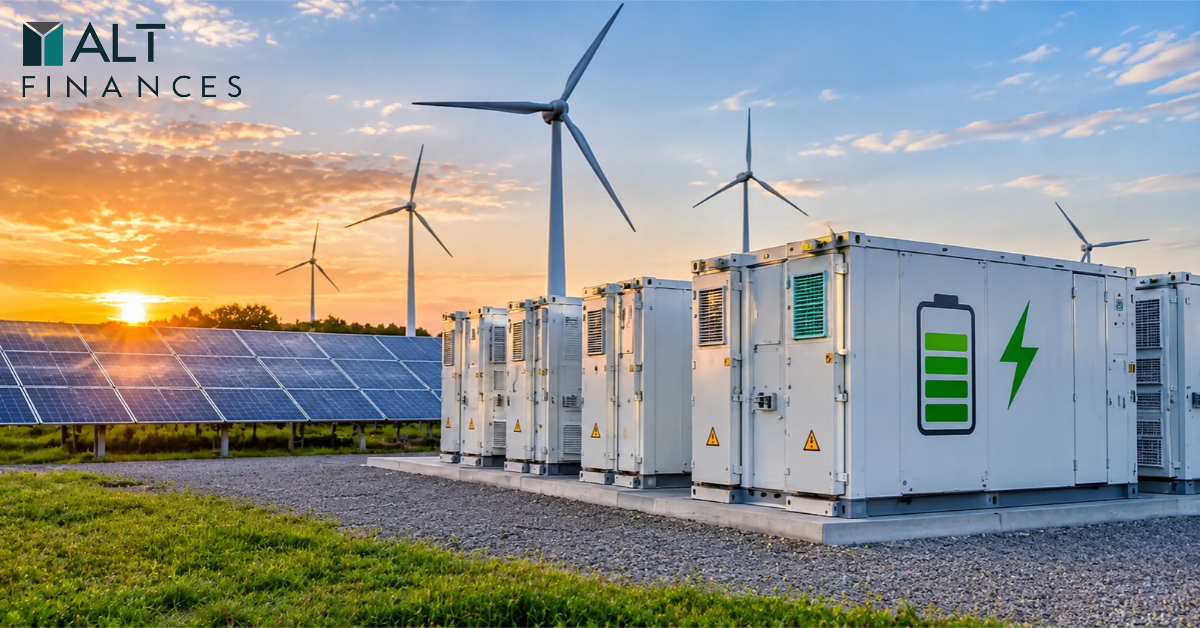
Energy storage investment is set for another record year in 2027, led by lithium-ion batteries but increasingly shaped by sodium-ion cells, heat batteries and virtual power plants. Growth is strong, but trade policy, supply-chain concentration and technology risk are just as important to watch.
As wind and solar spread, the hours when power is nearly free are becoming common, and the hours when it is scarce are becoming expensive. Storage sits in the middle, capturing cheap electricity and releasing it when it is needed. That is why energy storage investment has become one of the fastest-growing parts of the clean power market. This guide looks at the market outlook, the technologies attracting capital, the policy backdrop and the risks. It builds on our coverage of grid infrastructure investment, where storage and transmission increasingly work together.
Energy Storage Investment in 2027: The Big Picture
BloombergNEF’s latest energy storage outlook expects global additions of 188 GW (535 GWh) in 2026, up 45% on 2025, followed by 209 GW (638 GWh) in 2027, an 11% rise. For context, the world installed a record 112 GW in 2025, according to BNEF’s earlier outlook. BNEF expects cumulative capacity to grow roughly tenfold by 2036 to about 3.1 TW.
Growth is also spreading. China, the US and Australia are expected to account for 62% of 2026 additions, while India is forecast to deploy more than 6 GW in 2026, up from a few hundred megawatts. BNEF notes that US growth is supported by tax credits and by on-site storage demand from data centres.
For investors, the takeaway is that demand is broadening beyond a few markets, which reduces dependence on any single country, though the largest markets still set the pace.
Lithium-Ion Remains the Core of the Market
Before looking at newer technologies, it helps to be clear about the incumbent. Wood Mackenzie describes lithium iron phosphate (LFP) as the bankable choice for storage projects designed to discharge for two to four hours, which covers most of today’s grid batteries. It estimates LFP systems cost about $200 per kWh upfront.
That dominance gives lithium-ion storage a major advantage: lenders understand it. For many investors, the question is not whether other chemistries will replace LFP overnight but where they will find a niche.
Sodium-Ion: The Lithium Challenger
Sodium-ion is the technology moving fastest from lab to market. The World Economic Forum’s 10 emerging technologies list, published November 18, 2026, highlights batteries made from sodium, zinc and iron as a way to ease storage’s reliance on lithium.
Wood Mackenzie’s sodium-ion analysis gives a balanced picture:
- Commercial traction: More than 70 GWh of supply agreements have been signed, and leading makers are expected to match LFP on cell costs by the end of 2026.
- Not yet cheaper overall: Module and system-level cost parity is expected after 2030. Wood Mackenzie puts sodium-ion systems at about $229 per kWh upfront versus $200 for LFP, though it estimates they could cost about 21% less to own and operate over 20 years.
- Policy tailwinds: China introduced a 2% levy on lithium-ion batteries on September 1, 2026, rising to 4% in September 2027, while qualifying sodium-ion batteries are exempt through the end of 2028. Tariffs of around 58% on Chinese storage cells in the US also favor domestic alternatives.
- Supplier concentration: The WEF warns that almost all sodium-ion cells are still made in China, so dependence can shift rather than disappear.
In short, sodium-ion is a credible diversification story, but investors should treat it as an early-stage technology with a long runway rather than a near-term lithium replacement.
Heat Batteries and Long-Duration Storage
Not all storage is electrochemical. The WEF highlights industrial heat batteries such as the Heatcube, a tank of molten salt that stores electricity as heat when power is cheap and releases it as steam when needed. At a Hungarian corn-processing plant, the system is designed to supply more than 30 GWh of heat and cut up to 8,000 tonnes of carbon dioxide a year. For industrial users, this offers a cheaper alternative to gas without changing their processes.
Other long-duration technologies, such as iron-air and flow batteries, are targeting multi-day or daily cycling. Developers have published ambitious cost goals, but these remain targets rather than proven results at scale, so they suit investors comfortable with technology risk.
Virtual Power Plants and the Data Centre Factor
Virtual power plants link batteries, electric vehicle chargers and smart thermostats so grid operators can use them collectively, rather than building extra power stations. The WEF notes that US company Voltus has agreed to supply Google with up to a gigawatt of capacity this way, and Octopus Energy runs a prominent example in Britain.
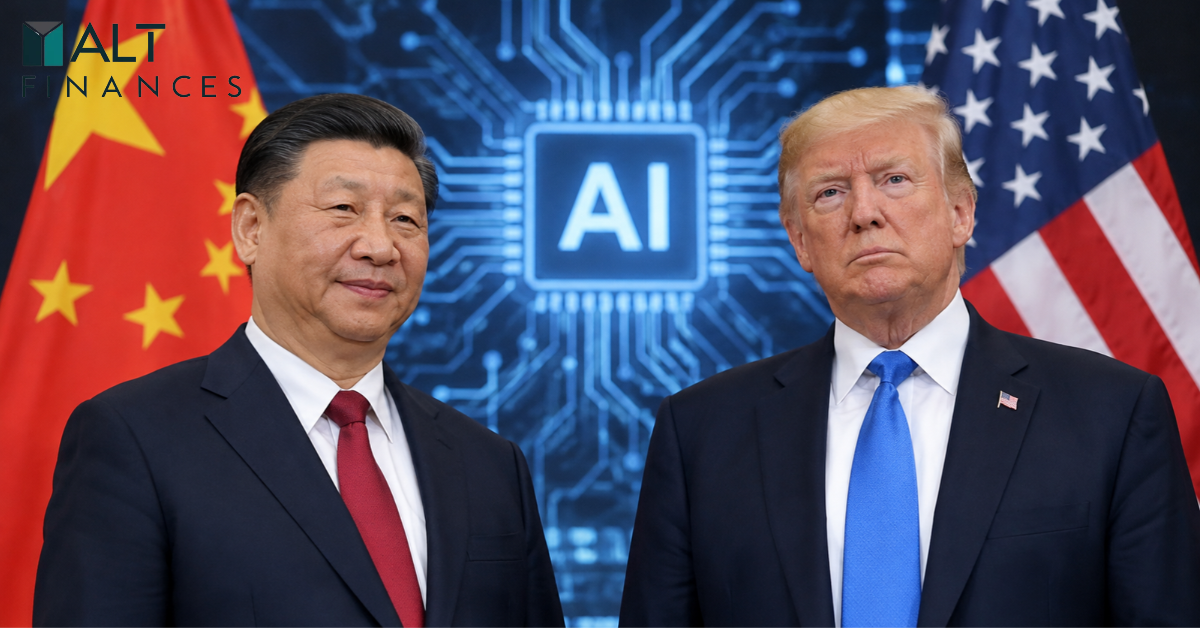
Data centres add another layer. BNEF tracked on-site storage at data centres rising from 0.5 GW in 2025 to a forecast 4.9 GW in 2026 and 6.3 GW in 2027, although it expects 2027 to mark a peak. That link to AI power demand also appears in our coverage of US-China AI competition, where electricity is becoming a strategic constraint.
Policy and Trade: The Rules Shape the Returns
Storage economics depend heavily on policy. In the US, law-firm summaries of the 2025 budget law note that its accelerated deadlines for wind and solar tax credits do not apply to energy storage, which helps explain BNEF’s expectation of continued US growth. However, restrictions on materials from prohibited foreign entities apply to projects beginning construction after December 31, 2025, and BNEF describes the US as the most aggressive government in pursuing protectionist and supply-chain policies.
China’s battery tax changes and US tariffs mean project costs can differ sharply by country and by chemistry. Investors should read the policy fine print as carefully as the technology claims.
How Investors Can Get Exposure
Common routes include:
- Battery and cell makers, which carry manufacturing, commodity and trade-policy risk.
- Storage developers and independent power producers, where returns depend on contracts and market prices.
- Utilities with storage in their plans, which offer steadier but slower growth.
- Infrastructure and renewable funds, which spread risk across projects.
Storage also pairs naturally with generation, so many investors consider it alongside the themes in our guides to renewable energy investment opportunities and wind energy investment opportunities. Check holdings, fees and country exposure before buying any fund.
Key Risks to Weigh
- Technology risk: Newer chemistries must prove lifespan, safety and cost at scale.
- Supply-chain concentration: China dominates battery manufacturing, including most sodium-ion output.
- Trade and policy risk: Tariffs, levies and domestic-content rules can change project economics quickly.
- Price pressure: Rapid deployment can lower returns as more capacity competes for the same grid services.
- Demand timing: BNEF expects data-centre storage to peak in 2027, so growth in that niche may slow afterward.
Your 2027 Watchlist
- Sodium-ion cost trends as makers approach cell-level parity with LFP.
- US trade and tax rules affecting imported cells and materials.
- China’s battery levy and its next-step increase in September 2027.
- Data-centre storage deployments and whether BNEF’s 2027 peak call holds.
- Virtual power plant contracts between grid-service providers and large customers.
- Emerging markets such as India, the Middle East and Africa.
Bottom Line
Energy storage investment is moving from a niche to core infrastructure, with BNEF forecasting records in both 2026 and 2027. Lithium-ion will remain the workhorse, while sodium-ion, heat batteries and virtual power plants add new ways to diversify. The opportunity is real, but returns will depend on trade policy, supply chains and execution. Investors should diversify across the storage value chain, favor visible cash flows and avoid assuming that rapid growth guarantees profits.
Frequently Asked Questions
Is energy storage a good investment in 2027?
It offers strong growth, with BNEF forecasting 209 GW of additions in 2027. But returns depend on policy, technology and competition, and none are guaranteed.
What are the main energy storage technologies?
Lithium-ion (especially LFP) dominates today. Newer options include sodium-ion batteries, industrial heat batteries, iron-air and flow batteries, and virtual power plants that coordinate many small devices.
Is sodium-ion cheaper than lithium-ion?
Not yet at the system level. Wood Mackenzie expects cell-level parity with LFP among leaders by the end of 2026 and module and system parity after 2030, though sodium-ion could cost less to own over 20 years.
How can I invest in energy storage?
Options include battery makers, storage developers, utilities and infrastructure or renewable funds. Review each investment’s holdings, fees and country exposure first.
What are the biggest risks of energy storage investing?
The main risks are technology maturity, concentrated supply chains, changing trade and tax rules, price pressure from rapid deployment and uneven demand timing.
This article is for general information only and is not financial, investment, legal or tax advice. Figures reflect public reports as of November 28, 2026 and may change. Investments can lose value.

Contributing Editor for Alt Finances, vision-driven with 20+ years in family office, asset management, and corporate development. Holds UN Special Consultative Status and is 100 Women in Finance Board Chair. Tulane University – A.B. Freeman School of Business.