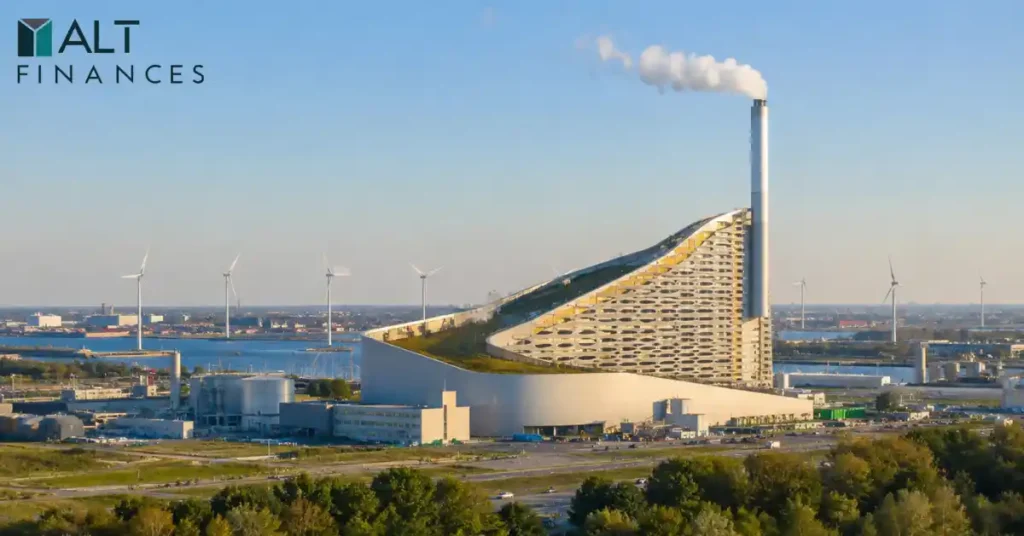
Europe has two problems that increasingly intersect: it needs to reduce the amount of waste going to landfill while building a more resilient and diversified energy system. That convergence is creating a new infrastructure opportunity. Waste-to-energy investment is moving beyond the narrow idea of incineration and into a broader real-assets thesis involving electricity, heat, biogas, waste infrastructure and energy security.
The shift is already visible in European policy. The EU’s landfill rules target a reduction in municipal waste sent to landfill to 10% by 2035, while policymakers are increasingly examining how energy recovery can fit alongside recycling and waste prevention.
The investment question is therefore changing. Instead of treating waste purely as a disposal liability, investors can examine whether certain waste streams can become contracted feedstock for infrastructure that produces useful energy and generates multiple sources of revenue.
Why Europe’s Waste Stream Is Becoming an Energy Resource
Waste is not a single commodity. Different waste streams have different calorific values, moisture levels, organic content and treatment requirements. That makes technology selection central to the economics of waste-to-energy investment.
Europe already has a substantial energy-from-waste infrastructure base. The World Economic Forum reported in August 2026 that Europe has roughly 500 waste-to-energy plants and estimated that they generated energy equivalent to 15.7 billion cubic metres of natural gas in 2024.
The underlying models vary considerably:
| Waste-to-Energy Model | Energy Output | Key Economic Driver |
|---|---|---|
| Incineration with energy recovery | Electricity and heat | Waste contracts, tipping fees and energy sales |
| Anaerobic digestion | Biogas and biomethane | Organic feedstock and gas pricing |
| Landfill gas recovery | Methane-based electricity or gas | Existing landfill volumes and gas capture |
| Biomass-related waste recovery | Heat, electricity or fuels | Feedstock availability and sustainability rules |
| Advanced waste conversion | Fuels, gas or electricity | Technology performance and project scale |
Incineration with combined heat and power can generate both electricity and useful thermal energy. Anaerobic digestion targets organic waste and can produce biogas that is upgraded into biomethane. Landfill-gas projects capture methane from existing disposal sites rather than processing waste in a new combustion facility.
That distinction matters for investors. A waste-to-energy asset is not simply an energy generator. It is a waste-treatment infrastructure asset whose energy output creates an additional revenue stream.
The Economics Behind Waste-to-Energy Infrastructure
The core model can be reduced to four stages:
Feedstock → Processing → Energy → Revenue
The first economic advantage is that waste can carry a disposal value. Municipalities and businesses need reliable waste treatment, creating potential gate or tipping fees for facilities that accept contracted volumes.
The second comes from energy recovery. Electricity can be sold into power markets or under contractual arrangements, while heat can become particularly valuable where a facility is connected to a district-heating network.
The third is infrastructure scarcity. Building a modern waste-treatment plant requires substantial capital, permitting, environmental controls, grid connections and long-term municipal relationships. Once established, the facility may operate over a long asset life.
This creates characteristics familiar to infrastructure investors: relatively visible physical demand, contractual relationships and potentially diversified revenue.
But visibility should not be confused with guaranteed returns.
Capital expenditure can be substantial, operating costs can rise, and revenue depends on the local regulatory and energy environment. Investors therefore need to examine the entire chain rather than valuing a plant solely on its electricity output.
Why District Heating Could Change the Economics
One of the most interesting parts of the European opportunity is heat.
Electricity can be transported over long distances. Heat generally cannot. That makes the location of a waste-to-energy plant strategically important.
A facility close to a large district-heating network can potentially sell thermal energy that might otherwise be wasted. The economics can therefore shift from a single-output electricity project toward a combined waste-treatment and heat-infrastructure platform.
The broader European heating transition reinforces this possibility. The EIB says heating and cooling account for almost half of EU energy demand, while European cities are investing in modern district-heating systems to improve efficiency, affordability and energy security.
Recent EIB financing illustrates the scale of capital flowing into this infrastructure. In July 2026, the EIB signed €250 million of financing for Berlin’s district-heating and heat-supply infrastructure, while other European projects are combining low-carbon heat generation with network modernization.
For waste-to-energy investors, the implication is straightforward: a plant with access to a strong heat market can have a fundamentally different economics from an isolated electricity-only facility.
Europe’s Energy Transition Is Creating a New Role for Waste Infrastructure
Waste-to-energy sits at the intersection of several European policy priorities: landfill reduction, energy security, resource efficiency, decarbonization and the circular economy.
The EU already restricts the landfilling of waste suitable for recycling or energy recovery from 2030 and targets a 10% municipal-landfill share by 2035.
Yet the environmental case requires nuance.
Waste-to-energy is not automatically renewable energy. Its emissions profile depends on the composition of the waste stream, technology, energy efficiency and the treatment of fossil-derived materials. Incineration also creates emissions that remain subject to increasingly stringent environmental regulation. The EEA maintains specific emissions guidance for municipal-waste incineration, reflecting the importance of controlling pollutants and accurately accounting for heat recovery.
The strongest investment thesis therefore isn’t that burning waste is inherently green. It is that certain unavoidable and non-recyclable waste streams may have greater economic and environmental value when treated in controlled infrastructure rather than buried in landfill.
Who Is Investing in Waste-to-Energy?
The capital structure around European waste infrastructure is broader than the traditional waste-management industry.
Infrastructure funds can pursue operating facilities with established contracts. Utilities can integrate waste treatment with electricity and heat networks. Private-equity firms can target fragmented operators or modernization opportunities. Pension funds may find the long-duration characteristics of infrastructure compatible with their investment horizons. Municipalities remain essential counterparties because waste collection and treatment are often closely connected to public services.
Project-finance lenders can also play a critical role because the bankability of a facility depends heavily on contracted waste volumes, power or heat revenues and the credibility of the project sponsors.
This is where waste-to-energy begins to resemble other alternative infrastructure investments.
The asset is valuable not merely because it produces energy, but because it performs an essential service while monetizing a physical resource.
The Investment Market Behind Europe’s Waste Infrastructure
Europe’s waste market is highly fragmented, creating potential opportunities for consolidation, modernization and operational improvement.
Investors can look beyond the headline facility to the surrounding ecosystem: waste collection networks, transfer stations, sorting infrastructure, anaerobic-digestion facilities, landfill-gas systems, district-heating connections, grid infrastructure and technology providers.
| Investment Factor | Potential Opportunity | Key Risk |
| Feedstock security | Long-term municipal or commercial contracts | Waste volumes decline or composition changes |
| Contract duration | Greater revenue visibility | Counterparty or renegotiation risk |
| Energy pricing | Additional revenue from power and heat | Wholesale-price volatility |
| Technology | Efficiency and emissions improvements | Underperformance or obsolescence |
| District heating | Higher-value heat monetization | Location and network constraints |
| Regulation | Landfill restrictions can support demand | Policy changes can alter economics |
| Consolidation | Fragmented operators may offer scale opportunities | Integration and capital requirements |
The most attractive opportunities may not necessarily involve constructing entirely new incinerators. They could involve upgrading existing facilities, adding heat recovery, connecting plants to district-heating networks, expanding anaerobic digestion or consolidating regional waste platforms.
That distinction is important because infrastructure investment is ultimately about cash-flow durability, not simply growth in waste volumes.
The Risks Behind the Waste-to-Energy Opportunity
The biggest risk is that policy can change the underlying feedstock.
Europe wants less landfill, but it also wants more recycling and waste prevention. A facility that depends on a large volume of combustible waste could eventually face pressure if recycling rates rise faster than expected.
Regulation presents another challenge. Carbon pricing, emissions standards and permitting requirements can materially alter project economics. The WEF reports that EU policymakers are currently considering how and when waste incineration should be incorporated into the European carbon market.
Energy prices introduce another layer of uncertainty. A project designed around strong power prices may look different when wholesale markets weaken. Conversely, access to a district-heating network can provide an alternative source of value.
Then there are construction costs, technology risk, financing costs and public opposition.
Investors must also consider stranded-asset risk. A facility built around today’s waste flows and regulations may have a long economic life, but Europe’s waste policy is deliberately moving toward prevention, reuse and recycling.
The best projects will therefore need to remain economically useful as the waste hierarchy evolves.
The Unique Investment Insight
The deeper waste-to-energy investment thesis is not simply:
Europe has a lot of waste.
It is this:
Waste becomes economically valuable when an unpredictable disposal liability is converted into contracted feedstock for infrastructure that produces useful energy.
The chain is:
Waste Stream → Contracted Feedstock → Processing Infrastructure → Energy Output → Long-Term Revenue
That changes how investors should evaluate the opportunity.
The absolute quantity of waste matters less than the quality and durability of the feedstock. Contract duration matters. So does location, because heat demand can transform project economics. Technology determines efficiency and environmental performance, while regulation ultimately determines whether the asset remains viable.
The most interesting assets may therefore be those that sit at the intersection of several infrastructure systems rather than belonging neatly to one sector.
Conclusion
Europe’s waste challenge is increasingly becoming part of its energy and infrastructure strategy.
Waste is a resource. Infrastructure creates the conversion mechanism. Energy creates additional economic value. Contracts can improve revenue visibility. Regulation determines long-term viability. Technology determines efficiency and environmental performance.
That combination makes waste-to-energy particularly interesting as an alternative-investment theme.
But the question for investors is not simply how much waste Europe produces.
It is which parts of Europe’s waste infrastructure can turn unavoidable waste streams into durable energy and infrastructure cash flows.
That is the real opportunity behind waste-to-energy investment: not betting on garbage, but identifying the infrastructure capable of transforming a difficult public-service problem into a long-duration economic asset.
Frequently Asked Questions
What is waste-to-energy investment?
Waste-to-energy investment involves providing capital to infrastructure, companies or projects that process suitable waste streams and recover value through electricity, heat, biogas or other useful energy outputs.
How does waste-to-energy work?
Different technologies process different waste streams. Incineration can recover electricity and heat, anaerobic digestion converts organic material into biogas, and landfill-gas systems capture methane from existing landfill sites.
Why is waste becoming an energy asset in Europe?
EU landfill restrictions, energy-security concerns and the need to reduce emissions are increasing the value of infrastructure capable of treating waste while recovering useful energy.
Is waste-to-energy renewable energy?
Not necessarily. Its renewable classification and environmental performance depend on the composition of the feedstock, the technology and applicable regulations.
How do waste-to-energy facilities generate revenue?
Potential revenue sources include waste-treatment fees, electricity sales, heat sales, gas or biomethane revenues and, depending on the project and jurisdiction, other contractual or environmental-value mechanisms.
Why is district heating important?
District heating provides a local market for recovered heat. Where sufficient demand exists, selling heat can add another revenue stream beyond electricity generation.
What are the main risks of waste-to-energy investment?
Key risks include regulation, emissions requirements, feedstock availability, energy-price volatility, construction costs, technology performance, public opposition, recycling-policy changes and stranded-asset risk.
How does waste-to-energy fit into the circular economy?
It occupies a lower position than prevention, reuse and material recycling, but can provide a treatment route for residual waste that cannot economically or technically be recycled while recovering energy from it.

Contributing Editor for Alt Finances, vision-driven with 20+ years in family office, asset management, and corporate development. Holds UN Special Consultative Status and is 100 Women in Finance Board Chair. Tulane University – A.B. Freeman School of Business.