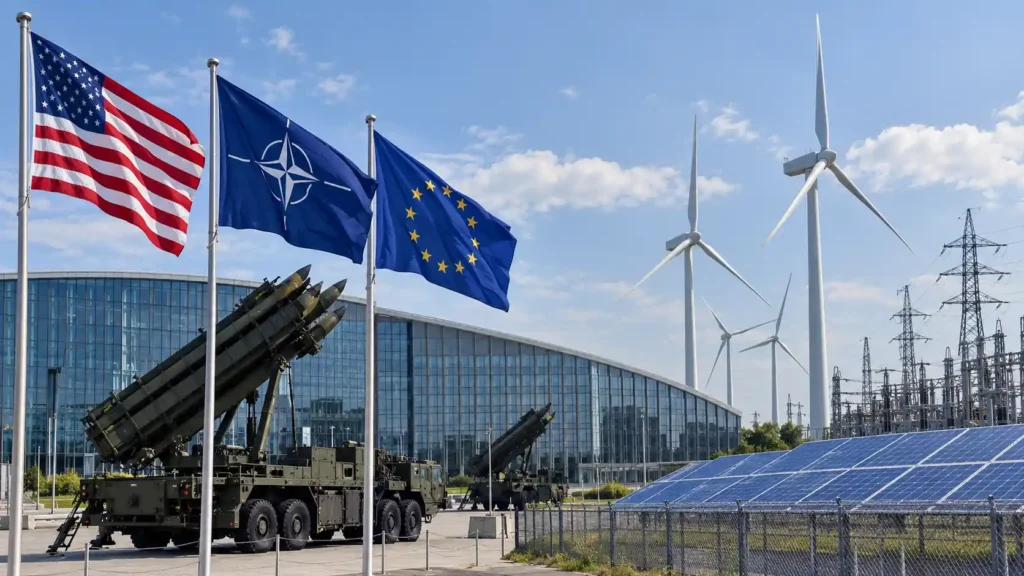
National security investment has evolved from a government budgeting concern into a defining theme in global capital allocation. Within the first few years of the decade, geopolitical tensions, supply chain disruptions, cyberattacks, and energy market volatility have fundamentally changed how governments, corporations, and institutional investors assess long-term economic resilience. Increasingly, capital is flowing not only toward traditional defense spending, but also into critical infrastructure, cybersecurity investment, semiconductor manufacturing, energy systems, and strategic industrial capabilities.
This transformation reflects a broader shift in economic priorities. National resilience is no longer measured solely by military capability; it also depends on secure supply chains, reliable digital infrastructure, domestic manufacturing capacity, and access to critical technologies. Governments are responding with industrial policies, public-private partnerships, and long-term infrastructure programs designed to strengthen economic security while encouraging private investment.
For investors, the implications are significant. National security-related investment themes increasingly intersect with alternative investments, infrastructure, technology, and private markets. However, these opportunities are shaped by policy decisions, geopolitical developments, regulation, technological innovation, and market competition not guaranteed returns. Understanding these structural forces is therefore more valuable than reacting to short-term geopolitical headlines.
Why National Security Is Reshaping Capital Allocation?
For decades, national security was largely viewed through the lens of military readiness. Today, governments define security far more broadly, encompassing energy independence, digital infrastructure, semiconductor production, logistics networks, and resilient manufacturing. Consequently, investors have begun evaluating resilience alongside traditional financial metrics when making long-term allocation decisions.
Several forces are driving this evolution.
First, geopolitical fragmentation has encouraged many countries to reduce dependence on concentrated global supply chains. Trade disputes, regional conflicts, and strategic competition have exposed vulnerabilities in industries once optimized purely for efficiency. As a result, governments increasingly support domestic manufacturing and regional production networks through subsidies, tax incentives, and industrial policy.
Second, cybersecurity has become a strategic priority. As governments, financial institutions, healthcare providers, and manufacturers digitize operations, cyber threats have grown in sophistication. Digital resilience now represents both a national security objective and a commercial necessity, encouraging sustained investment in security infrastructure, software, and specialized technology.
Energy policy has also moved to the center of economic planning. The disruption of global energy markets has highlighted the strategic importance of diversified energy sources, modern electricity grids, and resilient infrastructure. Investment increasingly supports both conventional energy security and the broader energy transition, reflecting the need for reliable and affordable power regardless of geopolitical uncertainty.
Institutional investors have adapted accordingly. Pension funds, sovereign wealth funds, insurance companies, and infrastructure managers increasingly assess assets based not only on projected returns but also on their contribution to long-term economic resilience. Infrastructure assets with stable cash flows, essential services, and strategic importance often align well with these objectives.
Governments are reinforcing these trends through industrial policy. Across major economies, policymakers have introduced initiatives designed to strengthen domestic production, encourage research and development, and secure access to strategic technologies. Semiconductor manufacturing, advanced manufacturing, artificial intelligence infrastructure, and transportation networks have all become priorities for public and private investment.
Rather than replacing globalization, these developments represent a recalibration of global economic relationships. Companies continue operating internationally, yet many now diversify production, suppliers, and logistics to improve resilience against future disruptions.
Why this matters to investors?
National security has become an economic framework rather than a narrow policy issue. For long-term investors, understanding how governments prioritize resilience provides insight into sectors that may benefit from sustained public investment, regulatory support, and structural demand. At the same time, policy shifts, budget constraints, and geopolitical developments can materially influence investment outcomes, making diversification and disciplined analysis essential.
The Strategic Industries Driving Investment
The expansion of national security investment extends far beyond defense procurement. Today, strategic capital increasingly targets industries that strengthen economic resilience, technological leadership, and critical infrastructure.
Among these sectors, infrastructure remains foundational. Modern transportation networks, ports, telecommunications systems, electricity grids, and water facilities underpin economic productivity while enhancing national resilience. Governments increasingly view these assets as strategic priorities because disruptions can have far-reaching economic consequences.
Cybersecurity represents another rapidly expanding investment theme. As digital transformation accelerates across industries, organizations require sophisticated protection against ransomware, data breaches, and attacks targeting critical infrastructure. Cyber resilience has therefore become an operational necessity rather than a discretionary technology expense.
Energy security has also broadened considerably. Beyond traditional fuel supplies, governments increasingly invest in grid modernization, renewable energy integration, energy storage, and diversified supply networks. Reliable energy infrastructure supports industrial competitiveness while reducing exposure to geopolitical shocks.
Semiconductor manufacturing occupies a particularly important position within this evolving landscape. Advanced chips power artificial intelligence, telecommunications, defense systems, healthcare equipment, and consumer electronics. Consequently, governments worldwide are encouraging domestic semiconductor production through industrial incentives and strategic investment programs.
Supply chain resilience complements these priorities. Rather than concentrating manufacturing in a limited number of regions, corporations increasingly diversify suppliers, establish regional production hubs, and invest in advanced logistics technologies. These measures improve operational continuity while reducing exposure to geopolitical disruptions.
Advanced manufacturing further reinforces national competitiveness. Automation, robotics, precision engineering, and digital production technologies enhance productivity while supporting domestic industrial capacity. As governments seek to strengthen strategic industries, private capital increasingly participates through infrastructure funds, private markets, and long-term industrial investment vehicles.
Strategic Investment Themes
| Investment Theme | Primary Growth Driver | Key Challenge |
|---|---|---|
| Critical Infrastructure | Government modernization programs and essential services demand | Large capital requirements and lengthy project timelines |
| Cybersecurity | Rising digital threats and expanding cloud adoption | Rapid technological change and evolving threat landscape |
| Energy Security | Diversified energy systems and grid modernization | Policy uncertainty and commodity price volatility |
| Semiconductor Manufacturing | Technological sovereignty and AI-driven demand | High capital intensity and global supply chain complexity |
The common thread across these sectors is resilience. Each supports broader economic stability while addressing vulnerabilities exposed by geopolitical fragmentation and technological dependence. Nevertheless, investors should recognize that long-term demand does not eliminate execution risk. Policy changes, regulation, project delays, competitive dynamics, and valuation discipline remain critical considerations.
Why this matters to investors?
Strategic industries increasingly combine characteristics that appeal to long-term capital: durable demand, government support, infrastructure-like cash flows, and structural economic importance. For investors seeking exposure to alternative investments, private markets, or infrastructure investing, these sectors may offer opportunities linked to long-term economic transformation rather than short-term market cycles.
Investment Opportunities and Risks
As national security investment expands beyond conventional defense programs, investors are evaluating a broader range of sectors where public policy and private capital increasingly intersect. Infrastructure operators, cybersecurity providers, energy developers, semiconductor manufacturers, and logistics companies all stand to benefit from long-term strategic priorities. Yet these opportunities require careful analysis because policy support alone does not guarantee attractive investment outcomes.
One of the most significant drivers is government spending. Large-scale infrastructure modernization, semiconductor incentives, and digital security initiatives can create multi-year investment pipelines for private companies. However, fiscal priorities evolve over time. Budget negotiations, changing political leadership, and economic conditions may alter funding levels or delay projects, affecting revenue visibility.
Geopolitical uncertainty also introduces complexity. While heightened international competition can accelerate investment in strategic industries, it may simultaneously disrupt supply chains, increase input costs, or reshape international trade relationships. Companies operating across multiple jurisdictions must therefore navigate sanctions, export controls, and regulatory changes alongside commercial considerations.
Technology disruption presents another important risk. Cybersecurity platforms, semiconductor manufacturing processes, and advanced industrial systems evolve rapidly. Businesses that fail to innovate may lose competitiveness despite operating in strategically important sectors.
Valuation deserves equal attention. As investors increasingly recognize the long-term importance of resilient infrastructure and strategic industries, market valuations can rise ahead of underlying earnings growth. Paying excessive prices for quality assets may reduce future returns even when long-term demand remains favorable.
Finally, regulation influences virtually every strategic industry. Environmental approvals, national security reviews, procurement requirements, and industrial policy frameworks all shape investment outcomes. Understanding regulatory dynamics has therefore become as important as analyzing financial statements.
Why this matters to investors?
The expansion of national security-related sectors creates structural opportunities, but successful investing depends on disciplined capital allocation rather than thematic enthusiasm. Investors should evaluate competitive advantages, policy durability, balance sheet strength, and valuation before committing capital.
Comparing National Security Investment Themes
Strategic investing encompasses several interconnected industries, each with distinct characteristics. Although they contribute to broader economic resilience, they differ significantly in capital requirements, operational complexity, policy dependence, and long-term demand.
Comparing Strategic Investment Themes
| Strategic Sector | Investment Opportunity | Primary Risk |
|---|---|---|
| Critical Infrastructure | Stable long-term demand supported by modernization programs | Regulatory delays and high capital intensity |
| Cybersecurity | Growing demand driven by digital transformation and rising cyber threats | Rapid technological change and intense competition |
| Energy Security | Infrastructure expansion, grid modernization, and diversified energy systems | Commodity price volatility and policy changes |
| Semiconductor Manufacturing | Strategic domestic production and AI-driven technology demand | Capital-intensive facilities and cyclical industry conditions |
Critical infrastructure generally attracts pension funds, sovereign wealth funds, and infrastructure managers seeking predictable cash flows over extended periods. Its long asset life and strategic importance often align with institutional investment horizons.
Cybersecurity offers a different profile. Growth potential remains strong as organizations continue strengthening digital resilience. However, technology evolves quickly, requiring continuous innovation and research investment.
Energy security combines traditional infrastructure with the ongoing energy transition. Investors increasingly examine transmission networks, storage systems, renewable integration, and resilient energy supply chains as part of broader economic security.
Semiconductor manufacturing occupies perhaps the most strategically sensitive position. Governments worldwide increasingly support domestic production through industrial incentives, reflecting the importance of advanced chips for artificial intelligence, communications, healthcare, transportation, and defense technologies.
Why this matters to investors?
Each strategic sector offers different risk-return characteristics. Diversification across multiple themes may prove more effective than concentrating capital within a single industry, particularly as government priorities and technological developments continue evolving.
The Future of Strategic Capital Allocation
The next decade will likely redefine how governments and private investors cooperate to strengthen economic resilience. Public-private partnerships are expected to play a larger role in financing transportation networks, digital infrastructure, clean energy systems, and advanced manufacturing facilities.
Technological sovereignty is becoming a central objective for many economies. Rather than relying exclusively on global production networks, governments increasingly encourage domestic capabilities in semiconductors, artificial intelligence infrastructure, biotechnology, and strategic manufacturing.
Energy independence will remain another major investment priority. Countries continue seeking diversified energy sources while modernizing electricity grids capable of supporting growing industrial demand and digital infrastructure.
Institutional investors are adapting accordingly. Infrastructure funds, private equity firms, pension funds, and sovereign wealth funds increasingly evaluate investments based on resilience alongside financial performance. Strategic assets capable of supporting long-term productivity growth may become increasingly attractive components of diversified portfolios.
Nevertheless, long-term success depends on balancing innovation with fiscal responsibility. Governments must prioritize projects that strengthen competitiveness without creating unsustainable public debt, while private investors must remain disciplined regarding valuation and execution risk.
Why this matters to investors?
Strategic capital allocation increasingly reflects structural economic change rather than temporary geopolitical events. Investors who understand these long-term drivers may be better positioned to identify sustainable opportunities while managing policy and market uncertainty.
Frequently Asked Questions
What is national security investment?
National security investment refers to capital allocated toward industries and assets that strengthen a country’s resilience, including critical infrastructure, cybersecurity, energy systems, semiconductor manufacturing, and strategic technologies.
Why has national security become an investment theme?
Growing geopolitical uncertainty, supply chain disruptions, cyber threats, and industrial policy initiatives have encouraged governments and investors to prioritize resilient infrastructure and strategic industries.
How does defense spending affect capital markets?
Defense spending can stimulate demand for manufacturing, technology, infrastructure, and related supply chains, although investment outcomes depend on government budgets and policy priorities.
Why is cybersecurity considered part of national security?
Modern economies rely heavily on digital infrastructure. Protecting financial systems, healthcare networks, utilities, and government services has therefore become a core national security objective.
What role does energy security play in investment?
Energy security supports economic stability by ensuring reliable and diversified energy supplies. Investment increasingly focuses on grid modernization, storage, transmission, and resilient infrastructure.
How are semiconductors linked to national security?
Semiconductors power critical technologies ranging from artificial intelligence and communications to healthcare and transportation, making domestic manufacturing strategically important.
Why are institutional investors focusing on critical infrastructure?
Infrastructure assets often provide stable, long-term cash flows while supporting essential services and economic resilience, making them attractive for long-duration investment portfolios.
What risks accompany national security-related investments?
Key risks include policy changes, budget constraints, geopolitical developments, technology disruption, regulatory uncertainty, project delays, and elevated market valuations.
How does industrial policy influence capital allocation?
Industrial policy can encourage private investment through incentives, subsidies, tax benefits, and research funding, although outcomes depend on execution and long-term policy consistency.
Why is national security investment considered a long-term trend?
Because governments increasingly view resilient infrastructure, secure technology, energy independence, and strategic manufacturing as foundations of economic competitiveness, national security investment extends beyond short-term geopolitical events into long-term capital planning.

Contributing Editor for Alt Finances, vision-driven with 20+ years in family office, asset management, and corporate development. Holds UN Special Consultative Status and is 100 Women in Finance Board Chair. Tulane University – A.B. Freeman School of Business.