For years, a trillion dollars was a thought experiment. Analysts would run the numbers on the world’s wealthiest people, project their stock holdings forward at various growth rates, and arrive at a hypothetical date when someone, somewhere, might cross a threshold so large it barely registered as a real number. It felt abstract. Distant. The kind of milestone that belongs to future generations.
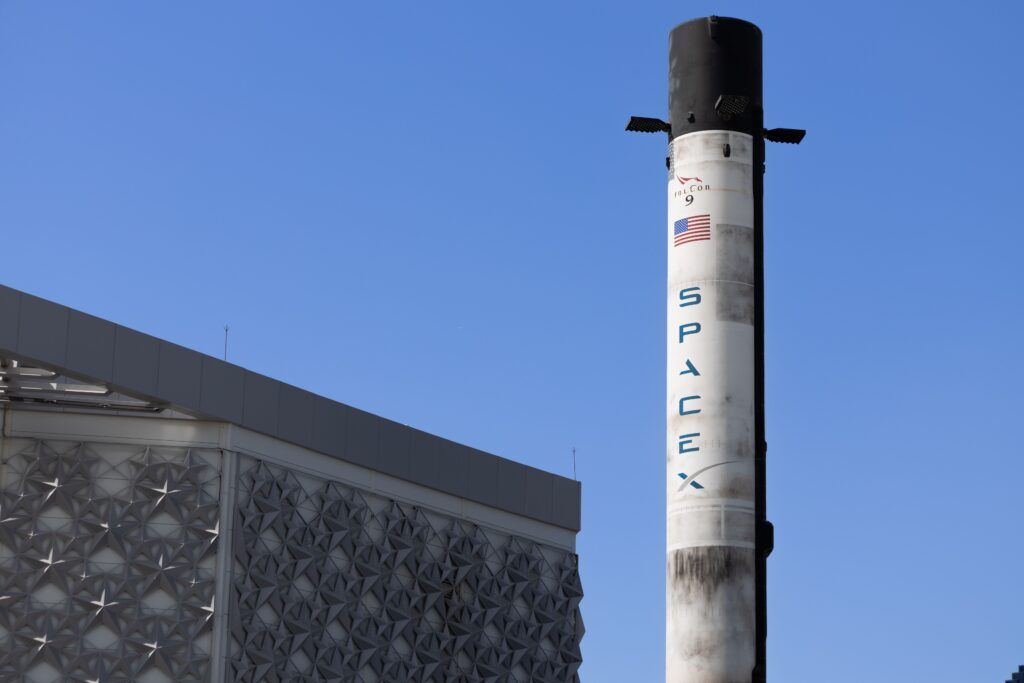
It arrived on June 12, 2026, at noon, when SpaceX opened for trading on the Nasdaq.
Elon Musk became the world’s first trillionaire after shares of his rocket and AI company SpaceX soared in Wall Street’s biggest initial public offering in history. Between his holdings in SpaceX and Tesla, where he is also CEO, Musk’s estimated net worth reached $1.1 trillion according to Forbes. A number that, until that Friday afternoon, had never existed in the hands of a single private individual.
How We Got Here
The path to a trillion dollars was not a straight line. It ran through electric vehicles, reusable rockets, a controversial social media acquisition, and a bet on artificial intelligence that dramatically reshaped Musk’s empire in the months leading up to the IPO.
The acceleration began in earnest when SpaceX acquired Musk’s AI startup xAI in a deal that valued the combined entity at $1.25 trillion, pushing his net worth past $800 billion and making SpaceX the dominant source of his wealth, accounting for nearly two-thirds of his total fortune.
Tesla, once the primary engine of his wealth, had seen its brand value and core auto sales weaken, with the stock down roughly 9% on the year. Even Tesla’s own proxy filing acknowledged that a majority of Musk’s wealth was now derived from other ventures. The center of gravity in his financial empire had shifted decisively toward space.
When the SpaceX IPO finally landed, it did so at a scale that made everything before it look modest. The company priced more than 555 million shares at $135 each, valuing SpaceX at just under $1.8 trillion. Shares climbed as high as $176 in the first session before closing at $161.50, pushing the market value above $2 trillion. By the time trading settled, Musk had crossed a threshold that no human being in the history of organized commerce had ever reached.
What $1 Trillion Actually Means
The number requires context because the human brain is simply not wired to process it intuitively.
If Musk spent $1 million every single day, it would still take him 2,740 years to exhaust $1 trillion, according to estimates from the charity Oxfam. Spending $1 million every hour, every day, would still take more than a century to reach zero.
The comparisons to other forms of wealth are equally staggering. Only 20 countries in the world have economies larger than $1.1 trillion. Nations including Taiwan, Ireland, Sweden, and Singapore, each with tens of millions of people and decades of economic development, have entire annual outputs that fall below Musk’s personal net worth.
Even combining the fortunes of the next four richest people in the world, Google founders Larry Page and Sergey Brin, Oracle’s Larry Ellison, and Amazon’s Jeff Bezos, their combined estimated wealth of $1.09 trillion falls just short of what Musk now holds alone.
Historians of wealth have taken note. Guido Alfani, a professor of economic history at Bocconi University, argued that one way to compare wealth across eras is to consider how much human labor a fortune could command. By that measure, Musk could have employed roughly 557,800 people with his 2025 wealth, compared to 116,000 for John D. Rockefeller in 1937 and 48,000 for Andrew Carnegie in 1901, suggesting Musk may be the wealthiest private individual who has ever lived.
The Empire Behind the Number
Understanding how Musk reached a trillion dollars requires understanding the businesses that got him there, and how unusual the combination is.
SpaceX itself is a business losing significant sums of money. Between the start of 2025 and March 2026, the company lost $8.7 billion. Its Starlink satellite internet division is the one profitable segment, generating steady subscription revenue from customers in markets with limited connectivity. The rocket launch business, for all its technical achievements, runs at a loss. The AI infrastructure ambitions are capital-intensive and early stage.
Investors are looking past the losses and betting instead that massive investments in satellites, orbital data centers, and artificial intelligence will pay off substantially in the future. That is a bet on Musk personally as much as on any specific financial model. He holds 82% interest in a special class of shares, giving him sweeping control over the company even though his ownership stake is roughly half that.
Experts cautioned that Musk’s wealth, unlike tangible assets such as gold or real estate, is almost entirely tied to stock holdings, making it far more volatile than the headline number suggests. Selling even a meaningful fraction of those holdings would itself drive down the stock price, triggering a cascade that would erode the very fortune being liquidated. A trillion dollars on paper and a trillion dollars in hand are very different things.
Who Could Follow
Musk’s crossing of the threshold does not mean he will be alone there forever. The same forces that built his fortune, technology, artificial intelligence, and the compounding effect of equity ownership in high-growth businesses, are at work in several other portfolios.
Jensen Huang, CEO of Nvidia, has become one of the most discussed candidates given the extraordinary growth in demand for the company’s AI chips, with his wealth growing faster than almost anyone else’s in recent history. Jeff Bezos, whose Amazon Web Services remains central to the economics of the AI industry, is on a slower but substantial trajectory. Mark Zuckerberg’s Meta has been one of the strongest-performing large-cap technology stocks of the past several years.
None of them are close to where Musk is today. The second-richest person in the world, according to the Bloomberg Billionaires Index, holds a fortune of $304 billion, less than a third of Musk’s current estimated wealth. The gap is not narrowing quickly.
What This Moment Actually Reveals
Musk’s trillionaire status is remarkable as a personal financial achievement. It is also, for many observers, an uncomfortable reflection of how wealth has concentrated at the very top of the global economy during the technology era.
As a trillionaire, Musk commands roughly 3% of US GDP as personal wealth, a concentration that draws direct comparisons to the great industrial magnates of the 19th century, polarizing figures in their own time who accumulated fortunes viewed as both evidence of extraordinary ambition and symptoms of systemic imbalance.
The milestone invites a question that goes beyond any single individual: in an era when one person can accumulate wealth exceeding the economic output of dozens of nations, what does that say about the systems that make it possible, and about what comes next?
That question does not have a tidy answer. But it is the one that Musk’s trillion dollars, more than any rocket launch or stock chart, forces everyone to sit with.
Contributing Editor for Alt Finances, specializing in financial strategy, investment research, and capital markets. Ahmed has extensive experience advising global clients and managing complex financial operations.