
Mortgage rates today and loan options continue to evolve, influenced by economic dynamics, market sentiment, and broader financial conditions. Whether you are preparing to buy a home, refinance an existing loan, or simply educate yourself on mortgage fundamentals, understanding these components can empower you to make strategic financial decisions and potentially save tens of thousands of dollars over time.
This guide breaks down the essential elements of today’s mortgage market, explains why mortgage interest trends matter, highlights key mortgage types, and provides practical tips to strengthen your mortgage application. For a detailed breakdown of today’s mortgage rates, trends, and tips to strengthen your application, check out Bankrate’s mortgage guide.
What Are Mortgage Rates Today and Current Benchmarks?
Mortgage rate benchmarks serve as reference points for borrowers and lenders alike. The most commonly quoted rate is the 30‑year fixed‑rate mortgage, which typically carries a higher interest rate than other options due to the extended loan term and increased risk to the lender. Shorter‑term fixed loans, like the 15‑year mortgage, generally offer lower interest rates but require larger monthly payments due to the faster amortization schedule.
Another prevalent category is adjustable-rate mortgages (ARMs) explained, such as the 5/1 ARM where the interest rate remains fixed for an initial period (usually five years), after which it adjusts annually based on prevailing market conditions. ARMs often launch with lower introductory rates, which can reduce early payments but carry the risk of future payment increases.
Published national averages reflect ideal scenarios, specifically borrowers with strong credit histories, competitive financial profiles, and standard loan structures. Your actual current home loan rates may vary significantly based on personal financial factors and lender policies.
Why Even Small Rate Differences Matter
Even small differences in mortgage rates today can have a big impact on your long-term finances. Understanding and comparing how to compare mortgage rates is crucial before committing to a loan:
- A 1% lower interest rate on a $400,000 mortgage can significantly reduce monthly payments.
- Over a 30-year term, even minor rate differences can save tens of thousands in interest.
- Lower rates improve your overall affordability and monthly cash flow.
- Comparing rates from multiple lenders helps you secure the best deal.
- Preparing your financial profile in advance increases your chances of qualifying for lower rates.
Careful planning and rate comparison can maximize your savings over the life of your mortgage. Even small improvements today can translate into substantial financial benefits tomorrow.
Fixed‑Rate Mortgages vs. Adjustable‑Rate Mortgages
Homebuyers typically choose between two main mortgage types based on financial goals and risk tolerance:
| Feature | Fixed‑Rate Mortgage | Adjustable‑Rate Mortgage (ARM) |
| Interest Rate | Locked in for the entire loan term | Fixed for an initial period, then adjusts periodically |
| Common Terms | 15 or 30 years | 3, 5, or 7 years initial fixed period |
| Monthly Payment | Remains stable throughout the loan | Starts lower but can change after the initial period |
| Budget Predictability | High; easy to plan long-term | Moderate; payments can fluctuate with market rates |
| Best For | Homeowners planning to stay long-term or seeking stability | Borrowers planning to sell or refinance before rate adjusts |
| Risk | Low; protected from rate increases | Higher; future payments may rise if market rates increase |
Understanding fixed vs adjustable mortgage options and 15-year mortgage options can help borrowers decide which plan aligns best with their long-term goals.
What Determines the Rate You Receive?
While national and global economic conditions influence mortgage interest trends, lenders primarily determine the rate you receive based on your personal financial profile. Several key factors include:
- Credit Score: Higher scores signal lower risk, often resulting in significantly lower interest rates.
- Down Payment Amount: Larger down payments reduce lender risk and may help avoid private mortgage insurance (PMI).
- Debt-to-Income Ratio (DTI): Lenders prefer lower DTIs, ideally below 43%, indicating stronger repayment capacity.
- Employment Stability: Consistent employment and income strengthen your mortgage application.
- Taking these steps improves mortgage eligibility, which may qualify you for the best 30-year mortgage rate or shorter-term options.
Why Mortgage Rates Today Fluctuate?
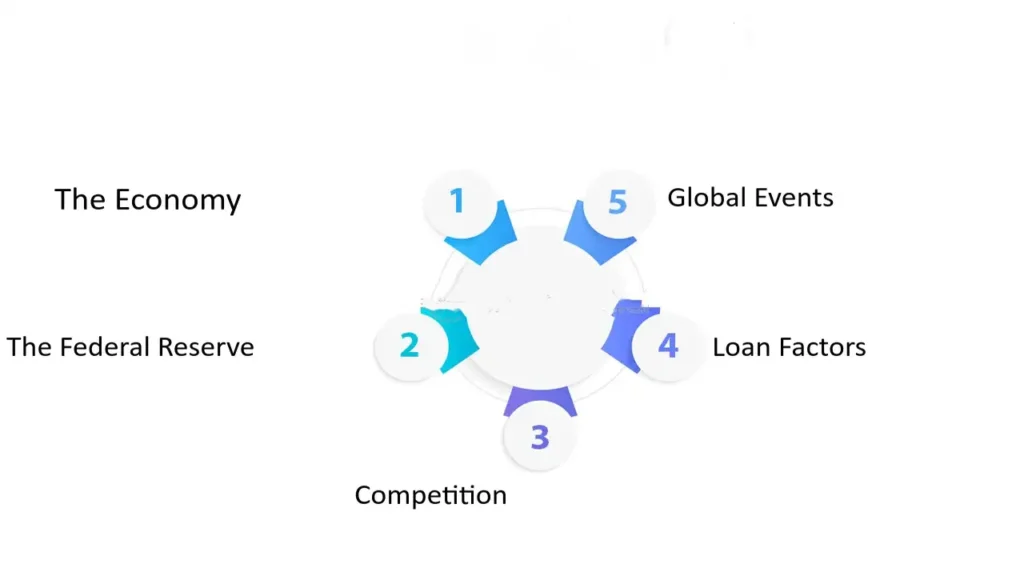
Mortgage rates today fluctuate due to economic factors, especially inflation, monetary policy, and bond market movements. While central banks don’t directly set mortgage rates, their policies influence overall lending costs. When inflation rises, mortgage interest trends often move higher; conversely, rate cuts can reduce them.
Lenders also monitor long-term government bond yields, like the 10-year Treasury note, because mortgages and bonds share similar durations and risk characteristics. Understanding these relationships helps contextualize rate movements, though timing the market is challenging.
Should You Lock in Your Mortgage Rates Today?
A rate lock on a mortgage commits you to a specific interest rate for a defined period, typically 30–60 days, while your loan is processed. This protects you from rising rates during that period. Many borrowers lock rates once a property contract and closing timeline are clear. Some lenders offer a one-time float-down option, letting you switch to a lower rate during the lock if rates fall. Policies vary by lender.
Practical Action Plan
To increase your chances of securing a competitive mortgage rates today:
- Review Your Credit Report: Correct errors and resolve issues that may lower your score.
- Reduce Outstanding Debt: Lower your DTI ratio for better rates and higher loan eligibility.
- Use a Mortgage Calculator: Evaluate different rate scenarios and affordable payment levels.
- Compare Multiple Lenders: Rates, fees, and underwriting vary, so shopping around reduces borrowing costs.
Following these steps helps borrowers navigate adjustable-rate mortgage (ARM) explained options and make informed decisions. For tips on avoiding common pitfalls, see common mistakes in mortgage refinancing.
Conclusion
Understanding mortgage rates today and loan options is about controlling what’s within your reach: building a strong financial profile, comparing offers, and selecting a mortgage aligned with long-term goals. With preparation, patience, and informed decision-making, borrowers can secure financing that balances immediate affordability with lifetime savings.
Frequently Asked Questions (FAQs)
What is the difference between fixed-rate and adjustable-rate mortgages?
Fixed-rate mortgages keep the same interest rate for the loan term, offering predictability, while ARMs start with lower rates that adjust after an initial period.
How can I get the lowest mortgage rate?
Improve your credit score, increase your down payment, lower your debt-to-income ratio, and shop around among multiple lenders to compare current home loan rates.
Are mortgage rates the same for everyone?
No. Individual financial profiles, including credit score, income, down payment, and loan amount influence the rate you receive.
What is a rate lock, and should I use it?
A rate lock on mortgage secures an interest rate for a set period, protecting against market increases. It is generally recommended once you have a clear closing timeline.
How do economic factors affect mortgage rates?
Rates rise when inflation increases or central banks raise interest rates, and often fall when economic growth slows or rates are cut, influencing mortgage interest trends.

Contributing Editor for Alt Finances, vision-driven with 20+ years in family office, asset management, and corporate development. Holds UN Special Consultative Status and is 100 Women in Finance Board Chair. Tulane University – A.B. Freeman School of Business.