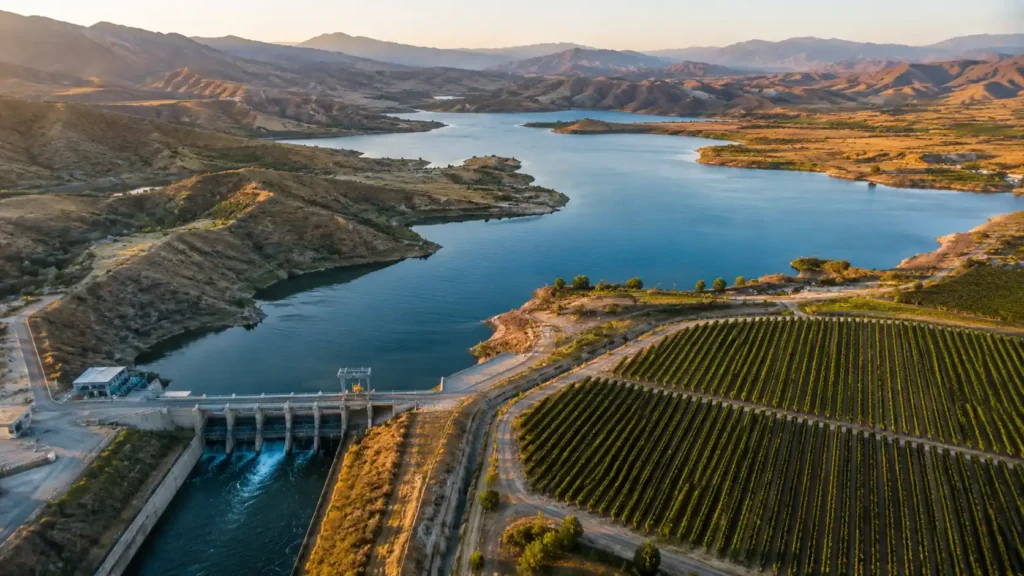
Scarcity is increasingly becoming a capital-allocation issue, not simply an environmental one. Water rights investing sits at the intersection of resource scarcity, real assets and infrastructure, but the opportunity is far more complicated than buying a commodity and waiting for its price to rise. As reliable supplies come under pressure from agriculture, cities, industry and climate volatility, investors are paying closer attention to the systems that determine who can access water, how it moves, and what infrastructure is required to keep it available.
That shift matters because water scarcity does not automatically create an investable asset. Legal rights, geography, regulation, environmental constraints and physical availability all determine economic value. Meanwhile, aging networks, irrigation systems, treatment facilities and new technologies are creating a parallel investment opportunity around the infrastructure that delivers, conserves and recycles water.
For institutional investors and private capital, the emerging thesis is therefore broader than ownership: control, access, efficiency and reliable delivery may prove more important than the resource itself.
Why Water Is Becoming an Investment Issue
Water demand is being pulled in several directions simultaneously. Agriculture remains the dominant user of freshwater globally, accounting for roughly 72% of freshwater withdrawals, according to the FAO.
Population growth and urbanization add municipal demand, while manufacturing, energy production and technology infrastructure create additional industrial requirements. Climate volatility complicates the picture further by making rainfall, groundwater recharge and surface-water availability less predictable.
The World Bank estimates that four billion people experience water scarcity, while its 2026 water initiative argues that weak policies, regulation and financially unsustainable utilities can deter investment in water systems.
For investors, however, physical scarcity and investable scarcity are different concepts. A region can have limited water without offering transferable property rights, dependable pricing mechanisms or commercially viable infrastructure. That distinction is fundamental to water investment.
The opportunity therefore lies in understanding how scarcity translates into economic demand and which assets can legally and sustainably capture that value.
Water Rights Investing: How the Market Works
Water rights investing is fundamentally different from investing in oil, copper or natural gas.
Water rights generally represent legally recognized rights to use water under a particular jurisdiction’s rules. Those rules vary significantly. In parts of the eastern United States, riparian systems generally connect water-use rights to land adjoining a watercourse. In much of the West, prior appropriation has historically emphasized priority of beneficial use.
That means the economic value of a right can depend on factors such as seniority, permitted use, historical usage, transferability, location and environmental restrictions. Actual water availability matters too. A legal entitlement does not necessarily mean the same quantity of water will be physically available every year.
Transfers may also require regulatory approval, and changing an approved use can trigger additional scrutiny. Consequently, investors evaluating agricultural water rights need to examine both the legal document and the watershed supporting it.
This creates a market with potentially valuable scarcity characteristics but unusually high legal and geographic complexity. For sophisticated investors, the due-diligence burden is therefore part of the asset class itself.
The Infrastructure Behind the Water Investment Opportunity
The larger investment opportunity may ultimately sit around the resource rather than in direct ownership of it.
Pipelines, reservoirs, irrigation systems, water utilities, treatment plants, desalination facilities and wastewater-recycling networks all determine whether water can reach economically valuable users. OECD research highlights the persistent financing challenge facing water-related infrastructure and the need to mobilize both public and private sources of capital.
That creates several distinct investment themes:
| Water Investment Theme | Primary Growth Driver | Key Challenge |
|---|---|---|
| Water infrastructure | Aging systems and resilience spending | High capital requirements |
| Wastewater recycling | Urban and industrial water stress | Regulation and technology |
| Desalination | Coastal water scarcity | Energy intensity |
| Irrigation systems | Agricultural productivity | Drought and allocation rules |
| Water technology | Efficiency and conservation | Adoption and scalability |
| Water utilities | Essential service demand | Regulation and pricing |
The World Bank is increasingly emphasizing water reuse, desalination and other “new water” sources as potential responses to growing scarcity. Its 2025 water-reuse research identified substantial potential for investment in treatment and reuse infrastructure, while stressing that supportive regulation remains essential.
For investors, this changes the thesis. Instead of assuming that scarcity itself produces returns, capital can target the systems that help customers manage scarcity. That can include infrastructure investment, technology providers and utilities with predictable long-term demand. Yet each carries different regulatory, operational and financing risks.
The Investment Opportunities and Risks
Several asset categories could attract institutional investors, family offices and private capital as water becomes a more prominent real-asset theme.
Water utilities can provide exposure to essential services, but their revenues and investment plans are often heavily regulated. Water infrastructure can offer long-duration exposure to essential assets, although projects require substantial upfront capital and can face construction delays.
Water technology offers a different profile. Smart metering, leak detection, precision irrigation and treatment technologies can benefit from efficiency requirements without requiring ownership of the underlying resource. However, technology companies face adoption, competition and execution risks.
Specialized water funds and private infrastructure vehicles may offer diversified exposure, although liquidity can be limited and valuations can depend heavily on assumptions about long-term demand.
Direct water rights investing can provide a more concentrated form of exposure, particularly in jurisdictions where rights can legally transfer. However, regulatory changes, environmental requirements, drought and changing physical supply can materially affect valuation.
The key principle is simple: every potential return driver comes with a corresponding constraint.
Comparing Water Investment Assets
These assets should not be treated as interchangeable. Their economic drivers, liquidity profiles and regulatory exposure differ substantially.
| Water Asset | Investment Opportunity | Primary Risk |
|---|---|---|
| Water rights | Scarcity-linked access in eligible jurisdictions | Regulation and physical availability |
| Water utilities | Essential-service demand | Rate regulation |
| Water infrastructure | Long-term essential infrastructure | Capital intensity |
| Desalination | New supply in water-stressed regions | Energy and operating costs |
| Wastewater recycling | Creates additional usable supply | Regulatory acceptance |
| Water technology | Efficiency and conservation growth | Adoption and competition |
The World Bank’s work on desalination and reuse specifically notes that unconventional water sources can require changes to institutional and regulatory frameworks.
For long-term investors, that distinction matters. A utility may offer relatively stable demand, while a technology company may offer greater growth potential but higher execution risk. A water right may have scarcity value but face more direct exposure to legal and environmental constraints.
In other words, water investment is not one asset class. It is an ecosystem of assets with different risk-return characteristics.
Why Agriculture Is Central to Water Economics
Agriculture sits at the center of the water economy because irrigation directly links water availability to food production, land values and regional economic activity.
FAO research shows that irrigation is a major driver of agricultural freshwater use, while groundwater also plays a substantial role in food production.
That makes agricultural water rights economically significant in water-stressed regions. A reliable allocation can support crop production, while changing drought conditions or regulatory restrictions can alter its practical value.
However, the investment case should not be reduced to speculation on water prices. Food security, environmental requirements and competing urban demand can influence allocation decisions. Water transfers can also affect communities and ecosystems.
The more durable investment theme may therefore be improving agricultural water productivity through modern irrigation, conservation technology and better water management. The World Bank estimates that modernizing and expanding irrigation where water is available could require substantial additional investment through 2050, highlighting the scale of the infrastructure challenge.
The Future of Water Markets
Water markets are likely to become more sophisticated as scarcity, technology and infrastructure investment converge.
Wastewater recycling can create additional supply without relying entirely on new freshwater sources. Desalination can expand supply in coastal regions. Smart systems can reduce losses, while precision irrigation can improve agricultural productivity.
The World Bank’s research suggests water reuse could become a much larger source of municipal and industrial supply if investment and regulatory frameworks develop together.
That final condition is crucial. Water remains deeply connected to public policy. Governments determine allocation frameworks, environmental standards, utility pricing and the conditions under which rights can be transferred.
Consequently, regulation is not simply a risk to water-related investments. It is part of the market structure itself.
Unique Insight
The deeper thesis behind water rights investing is not simply that water is scarce. It is that scarcity becomes economically meaningful only when combined with legal rights, infrastructure and demand.
The emerging chain looks like this:
Water Scarcity → Legal Rights → Infrastructure → Economic Activity → Capital Allocation
Unlike oil or copper, water is essential to households, agriculture, ecosystems and industrial production. Governments therefore retain significant authority over how it is allocated and priced.
That makes control over infrastructure, delivery, treatment, recycling, storage and efficiency potentially more important than ownership of the underlying resource.
For institutional investors, this creates a broader natural resources investing thesis. Water-related assets can function as real assets with long-term economic relevance, but their value depends on governance as much as scarcity.
The most durable opportunities may ultimately emerge around water infrastructure, treatment, recycling, efficiency, storage, irrigation and utilities rather than direct ownership alone.
Conclusion
Water rights investing is emerging as a distinctive alternative investment theme because water scarcity is increasingly colliding with agriculture, urbanization, industrial demand and infrastructure constraints.
Yet the investment case is not as simple as treating water like another commodity. Rights are jurisdiction-specific, regulation can limit transfers, drought can reduce physical availability, and infrastructure requires substantial capital.
That complexity is precisely why the broader opportunity deserves attention. Institutional investors, private capital and family offices can potentially gain exposure through utilities, infrastructure, agricultural assets, technology, recycling and desalination alongside carefully evaluated water rights.
The long-term thesis is therefore broader than scarcity: scarcity creates pressure, legal systems determine access, infrastructure determines delivery, and capital determines which solutions scale.
For investors looking beyond conventional commodities, water rights investing may become an increasingly important part of the conversation but the strongest opportunities are likely to belong to those who understand the entire water economy rather than simply the resource itself.
Frequently Asked Questions
What is water rights investing?
Water rights investing involves evaluating legally recognized rights to use water, where such rights can be transferred or otherwise hold economic value under local law. Their value depends on jurisdiction, seniority, permitted use, physical availability and regulation.
How do water rights work?
Water rights operate under jurisdiction-specific systems. Some regions use riparian principles, while others rely on prior appropriation or hybrid frameworks. Rules governing priority, beneficial use and transfers vary considerably.
Can investors buy water rights?
In some jurisdictions, transferable water rights can be acquired or transferred subject to local law and regulatory approval. However, investors are not simply purchasing ownership of water itself.
Why is water becoming a scarce investment resource?
Population growth, agriculture, industrial activity, urbanization and climate volatility are increasing pressure on water systems. Scarcity can create economic value, but it does not automatically create an investable asset.
How does climate change affect water investments?
Climate change can increase drought risk, alter rainfall patterns and make water availability less predictable. It can therefore affect both infrastructure requirements and the practical value of certain water-related assets.
What industries are most exposed to water scarcity?
Agriculture, utilities, energy, manufacturing, food production and some technology operations can face significant water-related risks.
Are water utilities a good alternative investment?
Water utilities can provide exposure to essential services and long-term infrastructure demand, but regulation, capital requirements and pricing controls can materially affect investment outcomes.
What role does agriculture play in water markets?
Agriculture is the world’s largest freshwater user, accounting for roughly 72% of global freshwater withdrawals. Irrigation therefore plays a major role in regional water allocation and infrastructure decisions.
How can investors gain exposure to water infrastructure?
Potential channels include utilities, infrastructure funds, treatment facilities, recycling systems, desalination, irrigation equipment and water technology. Each carries different regulatory, operational and capital risks.
What are the biggest risks of water rights investing?
Major risks include regulatory changes, environmental restrictions, drought, physical water availability, geographic concentration, limited liquidity and uncertainty around valuation.
Why are institutional investors interested in water infrastructure?
Water infrastructure supports essential economic activity while many systems require modernization and additional financing. OECD research highlights the continuing financing gap and the need to mobilize additional public and private capital.
How does water rights investing differ from investing in traditional commodities?
Unlike commodities such as oil or copper, water rights are governed by local legal systems and public policy. Their economic value depends on allocation rules, permitted uses, environmental requirements and actual water availability not simply supply and demand in a global commodity market.

Ana Goldenberg is a Contributing Editor at Alt Finances with a career rooted in the high-stakes worlds of banking and private placements. From profiling global philanthropists to managing complex financial operations at Wells Fargo, she bridges the gap between editorial storytelling and disciplined financial expertise.