
A credit score acts as your financial fingerprint within the United States banking system, representing your overall fiscal reliability. This three-digit number dictates whether you can buy a house, secure an auto loan, or rent a premium apartment. Many consumers fundamentally misunderstand how credit bureaus calculate this critical metric, which often leads to avoidable financial setbacks.
Lenders rely on these scores to assess the statistical probability that you will repay borrowed money according to terms. Higher scores translate directly into lower interest rates and better financial opportunities over the course of your lifetime. Understanding the mechanics of these scoring models allows you to take proactive control of your long-term financial future.
We will examine the mathematical components that determine your credit rating and provide actionable steps for consistent improvement. By implementing proven financial habits, you can steadily build a robust profile that commands the most favorable loan terms. Mastery of your credit profile requires ongoing attention, strategic financial planning, and a commitment to disciplined spending habits.
The major credit bureaus do not assign scores arbitrarily or based on your income level or employment status. They use complex algorithms that analyze your past borrowing behavior to predict future risk for potential lenders. The Fair Isaac Corporation established the standard formula that dominates the modern lending industry across the United States.
According to the official FICO scoring methodology, five distinct categories influence your final number and overall ranking. Each category carries a specific weight in the calculation process, determining your eligibility for various financial products. Understanding these percentages helps you prioritize your financial management efforts effectively to maximize your results.
You cannot improve your standing without addressing the most heavily weighted credit score factors in your profile first. Minor adjustments in highly weighted categories produce significant changes in your overall profile and future borrowing power. Let us examine each component in detail to clarify how lenders evaluate your history and reliability.
Payment History and Your Credit Rating: The Core of Your Credit Score
Your track record of paying bills on time accounts for 35 percent of your total credit rating calculation. This makes payment history the single most critical factor in your financial profile and long-term stability. A single missed payment can drop an excellent score by nearly one hundred points instantly and unexpectedly.
Lenders want absolute confidence that you will honor your financial obligations every single month without fail or delay. Late payments remain on your credit report for seven years, though their impact diminishes over time as you improve. Setting up automatic payments serves as the best defense against accidental delinquencies and subsequent score drops.
Credit Utilization Ratio and Debt Management for a Better Credit Score
The amount of money you owe compared to your total available limits represents 30 percent of your score. Financial institutions call this metric your credit utilization ratio, and they monitor it closely for signs of risk. Maxing out your available cards signals financial distress to potential new lenders, even if you make payments.
Most financial experts recommend keeping your total credit utilization below 30 percent at all times for optimal results. Consumers with the highest scores typically maintain ratios below 10 percent across all active revolving accounts. Paying your balances down multiple times per month helps maintain a low reported ratio to the bureaus.
The Importance of Credit History Length and Account Age
The age of your active accounts contributes 15 percent to your overall evaluation and long-term financial standing. Algorithms calculate the average age of all your accounts and the age of your oldest active account. A longer credit history provides more data points for lenders to assess your reliability over many years.
You should keep your oldest accounts open even if you rarely use them for daily purchases or bills. Closing a mature account reduces your total available limits and lowers your average account age significantly. Use older cards for small, recurring subscriptions to prevent issuers from closing them due to prolonged inactivity.
Diversifying Your Credit Mix and Managing New Credit Applications
Your credit mix of account types makes up 10 percent of the total calculation for your profile. Lenders prefer to see a healthy combination of revolving accounts and installment loans, such as mortgages or autos. Managing different types of debt successfully demonstrates broad financial competence and the ability to handle various obligations.
Recent applications for new accounts represent the final 10 percent of your profile and recent financial activity. Every time you apply for financing, the lender initiates a hard inquiry on your credit report for review. Multiple hard inquiries within a short timeframe suggest you might be desperate for funds or overextending yourself.
- Payment history and utilization ratios control 65 percent of your total rating.
- Late payments cause severe damage and remain on your report for seven years.
- Keeping old accounts open strengthens the average age of your financial history.
Credit Monitoring: How to Check and Monitor Your Credit Report and Score
You have a federal right to review the data that credit bureaus collect about your financial habits. The Fair Credit Reporting Act guarantees free annual access to your files from Equifax, Experian, and TransUnion. Regular credit monitoring helps you detect identity theft early and correct administrative errors before you apply for loans.
Many consumers wait until a bank rejects their application to examine their files and overall standing. Proactive credit monitoring prevents unpleasant surprises during crucial life events like buying a home or starting a business. You can establish a routine for checking your data by following a straightforward and secure process.
The government authorized a specific portal for consumers to claim their statutory reports safely and without hidden fees. You should avoid third-party sites that demand payment for services you can access legally for free each year. Follow these exact steps to review your official documentation and credit report securely and thoroughly.
How to Access and Review Your Reports
1. Visit the Official Government Portal for Your Free Credit Report
Navigate to AnnualCreditReport.com to request your files from the three major bureaus securely.
2. Verify Your Identity
Provide your Social Security Number, date of birth, and previous addresses to authenticate your request.
3. Scan for Inaccuracies
Examine the documents for accounts you do not recognize, incorrect balances, or misspelled personal information.
FICO score vs. VantageScore: Comparing Common Credit Scoring Models
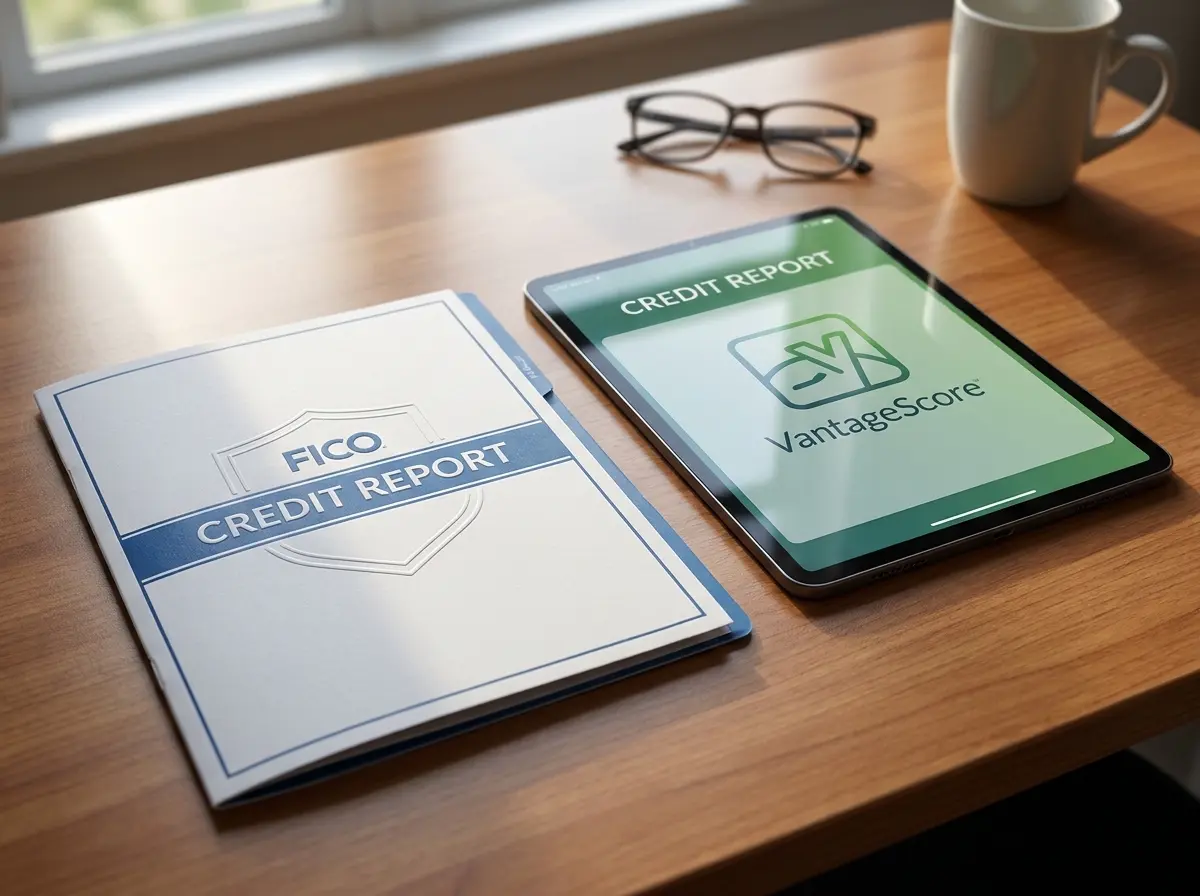
You do not have just one single rating attached to your name in the financial system. Different companies create various algorithms to analyze the data provided by the three major credit bureaus for lenders. The two primary competitors in this market are FICO and VantageScore, each with unique methodologies.
The FICO score algorithm remains the undisputed industry standard for major lending decisions across the country. More than 90 percent of top lenders use FICO variations to evaluate mortgage and auto loan applications today. The company regularly updates its models, resulting in different versions like FICO 8, 9, and 10.
VantageScore emerged as a joint venture created directly by Equifax, Experian, and TransUnion to provide more options. This alternative model emphasizes recent financial behavior and scores consumers with shorter lending histories more favorably than older models. Many free credit monitoring applications provide your VantageScore rather than your actual FICO rating.
Mortgage lenders typically pull older versions of your FICO score (versions 2, 4, and 5) to comply with specific federal housing guidelines. These older models punish unpaid medical collections more harshly than newer algorithms currently in use.
Actionable Tips: Proven Strategies to Improve Your Credit Score and Rating
Building a strong financial reputation requires consistent discipline over an extended period of time. Quick fixes and rapid repair schemes rarely deliver lasting improvements to your profile or your credit rating. You must adopt sustainable habits that demonstrate long-term reliability to prospective lenders and financial institutions.
Focusing on the heavily weighted factors yields the fastest measurable results for most consumers. You should address any past-due accounts immediately to stop further damage to your credit history and reputation. Once you stabilize your payment habits, you can shift your focus to strategic balance management and reduction.
If you carry multiple high-interest balances, consider exploring [INTERNAL_LINK: debt consolidation strategies] to streamline your monthly payments. Consolidating revolving debt into a single installment loan can drastically lower your credit utilization ratio. This specific tactic often produces an immediate positive impact on your FICO score and overall profile.
Managing Balances and Credit Utilization to Improve Your Credit Score
Your statement closing date dictates the balance that banks report to the bureaus each month for scoring. Paying your bill in full on the due date does not prevent high utilization from appearing on your credit report. You must pay the balance down before the statement period actually closes to see the benefit.
You can request limit increases on your existing cards to instantly improve your credit score ratio. If a bank doubles your limit while your balance remains the same, your credit utilization drops by half. Only employ this strategy if you possess the discipline to avoid spending the newly available funds immediately.
Handling Disputed Information on Your Credit Report and Files
Administrative errors drag down the profiles of millions of American consumers unnecessarily every single year. The Consumer Financial Protection Bureau reports that one in five people have confirmed errors on their files. You must challenge these inaccuracies through formal dispute processes with each specific bureau to protect your standing.
Submit your disputes in writing via certified mail to maintain a clear paper trail for your records. Bureaus have 30 days to investigate your claim and verify the information with the original creditor or lender. If the creditor cannot prove the debt belongs to you, the bureau must delete the negative mark entirely.
- Pay balances before the statement closing date to artificially lower your reported utilization.
- Requesting limit increases improves your ratio without requiring you to pay down debt instantly.
- Dispute false information forcefully using certified mail to force investigations by the bureaus.
Financial Freedom: The Long-Term Impact of a High Credit Score Range and Profile
Maintaining a premium rating saves you tens of thousands of dollars over your lifetime in interest alone. Interest rates fluctuate based entirely on the risk bracket that your profile falls into during the application process. A buyer with a 760 credit score range will secure drastically better terms than someone sitting at 650.
Consider the math on a standard 30-year fixed mortgage for a median-priced home in today’s market. A single percentage point difference in your interest rate changes your monthly payment by hundreds of dollars. Over three decades, that minor rate variation compounds into massive wealth lost to banking institutions unnecessarily.
Beyond lending, utility companies, cell phone providers, and landlords review your credit report constantly. Excellent ratings eliminate the need for costly security deposits when establishing new services in your name. Auto insurance providers in most states also use your financial data to determine your monthly premiums.
Conclusion: Mastering Your Credit Score and Financial Future
Your credit score serves as the primary metric that institutions use to judge your financial reliability and risk. Improving this number requires a clear understanding of payment history, credit utilization limits, and account aging factors. You must actively monitor your files to catch errors and prevent identity theft from damaging your future.
Implementing automatic payments and maintaining low balances will steadily drive your numbers higher over time. You possess the power to shape your financial narrative by making calculated borrowing decisions starting today. A strong profile ultimately grants you access to premium financial products and significant lifetime savings for your family.

Contributing Editor for Alt Finances, specializing in financial strategy, investment research, and capital markets. Ahmed has extensive experience advising global clients and managing complex financial operations.