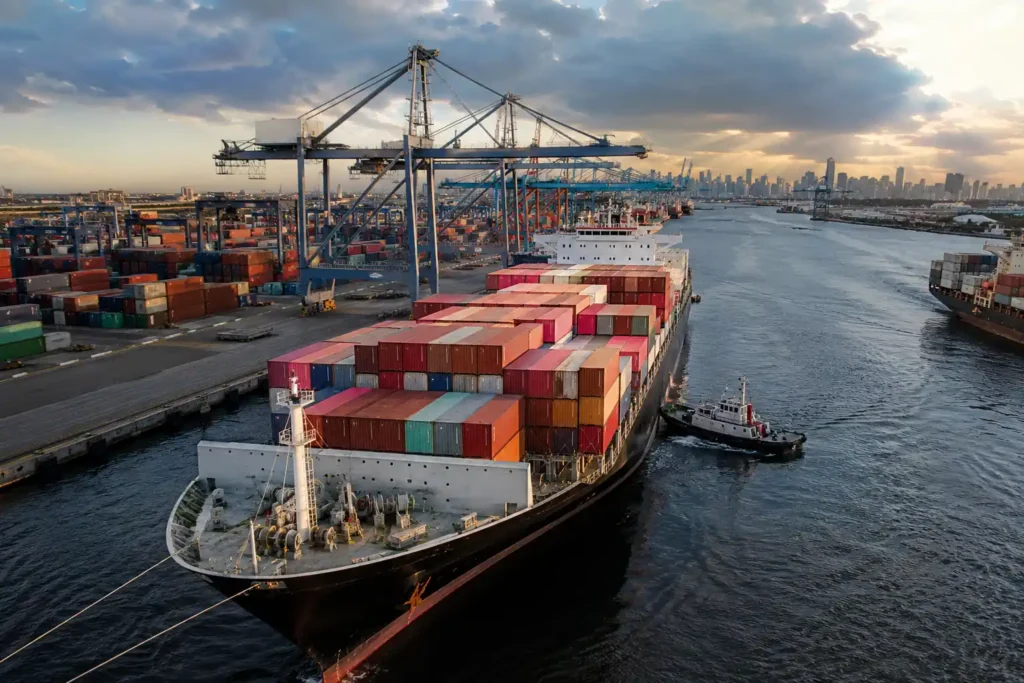
A company can have a willing buyer, a reliable supplier and a profitable cross-border transaction and still be unable to complete it if it cannot finance the period between shipment and payment. That is the problem at the heart of the trade finance gap. As tariffs, regulatory changes and supply-chain disruptions make international commerce harder to predict, access to working capital is becoming a strategic issue rather than simply a banking function.
Trade finance provides the financial bridge between shipment, delivery, invoicing and payment. When that bridge becomes harder to cross, otherwise viable trade can slow. The latest Asian Development Bank (ADB) survey estimates that the global trade finance gap remained at $2.5 trillion in 2025, unchanged from 2023 and equivalent to about 10% of global trade. The estimate is based on data and views from more than 110 trade-finance providers and measures unmet demand for financing.
For investors, the significance extends beyond banks. Tariffs can increase working-capital requirements, policy uncertainty can make lenders more cautious, and supply-chain restructuring can create new demand for financing. Together, these forces are changing where credit is needed and potentially where alternative capital can participate.
Why the Trade Finance Gap Matters to Global Commerce
International trade depends on more than ships, ports, factories and inventories. It also depends on credit.
Importers often need financing before goods generate revenue. Exporters may wait weeks or months for payment. Banks, insurers and other financial institutions bridge those timing differences through instruments including trade loans, letters of credit, receivables financing, invoice financing, guarantees and supply-chain finance.
The problem arises when commercially viable transactions cannot obtain financing on acceptable terms.
ADB defines the trade finance gap as unmet demand the difference between financing requests and approvals. Its 2025 survey found that the gap remained at $2.5 trillion despite continued growth in global trade.
This distinction matters. A stable gap does not mean the underlying problem has disappeared. It means the financing shortfall remains large even as companies continue to trade and reorganize their supply chains.
For investors, this creates a structural credit question: where trade continues to grow but conventional financing does not keep pace, demand for working capital, private credit and specialized financial infrastructure can increase. Yet the opportunity must be evaluated against counterparty, currency, country, documentation and liquidity risks rather than treated as an automatic source of attractive returns.
Tariffs Turn Trade Into a Working-Capital Problem
Tariffs are usually discussed as a cost imposed on imports. Their financial effect can be broader.
A higher tariff can increase the amount of capital an importer must commit before goods are sold. If customs delays or regulatory requirements extend the time between shipment and payment, the financing period becomes longer as well.
The chain can look like this:
Higher trade costs → larger inventory commitment → longer cash-conversion cycle → greater financing requirement
Policy uncertainty can make the problem harder. A business deciding whether to place an order today may not know what tariff or compliance requirements will apply when the goods arrive. A lender faces a similar problem: the transaction it underwrites today may operate under different economics several weeks later.
That can encourage banks to reduce credit limits, demand additional collateral or price transactions more conservatively.
| Trade Finance Challenge | Economic Consequence | Investment Implication |
|---|---|---|
| Higher tariffs | Increased landed costs and working-capital needs | Greater demand for short-duration financing |
| Policy uncertainty | Harder risk assessment | More conservative bank lending |
| Longer payment cycles | Capital tied up for longer | Increased receivables-financing demand |
| Supply-chain diversification | New suppliers and trade corridors | New financing opportunities and risks |
| Regulatory complexity | Higher documentation and compliance costs | Greater value for specialized financial infrastructure |
For investors, tariffs therefore matter not only because they can reduce margins, but because they can change the amount and duration of capital required to complete a transaction. That may support demand for asset-backed and transaction-level financing, while simultaneously increasing credit risk.
Why SMEs Feel the Financing Constraint First
Large multinational companies generally have advantages that smaller businesses lack: stronger balance sheets, diversified banking relationships and access to capital markets.
A smaller exporter may depend on a single bank, a limited number of buyers and a narrow geographic market. If payment terms stretch or a trade route becomes riskier, the company may have few alternatives.
ADB’s latest survey found SME rejection rates for trade finance at 41%, compared with 40% for large and mid-cap corporates suggesting the gap between smaller and larger businesses may have narrowed, although ADB says the finding requires further research.
The broader emerging-market challenge remains significant. The World Trade Organization has noted that inadequate access to trade finance disproportionately affects micro, small and medium-sized enterprises and can function like a prohibitive trade cost.
This creates an important investment distinction. Smaller businesses may offer greater financing demand, but they can also present higher underwriting complexity.
For investors, the attraction is therefore not simply SME exposure. The key questions are whether receivables are genuine, buyers are creditworthy, collateral is enforceable, payment cycles are predictable and the financing structure limits downside. Strong underwriting can matter as much as the headline demand for credit.
Emerging Markets and the New Trade-Finance Geography
The trade finance gap is particularly important in emerging and developing economies, where companies can face weaker banking capacity, higher borrowing costs, currency volatility and greater perceived country risk.
The IFC has described trade and supply-chain finance as particularly important for emerging markets, where businesses can struggle to access affordable financing. It has also emphasized the role of trade finance in connecting local businesses to regional and global value chains.
Supply chains are also being redesigned. Companies are diversifying suppliers, developing regional production networks and reducing dependence on individual markets. That creates financing requirements in places that previously received less trade capital.
The result could be a more fragmented financing map. Instead of one dominant global trade corridor, capital may increasingly follow multiple regional corridors across Asia, the Middle East, Africa and Latin America.
For investors, emerging-market trade finance can provide exposure to real economic activity rather than purely financial engineering. But country risk, currency risk, political instability, collateral enforcement and payment transparency can materially alter outcomes. The most compelling opportunities may therefore require local knowledge as well as financial expertise.
Banks Are Becoming More Selective
Banks remain the foundation of global trade finance, but their risk appetite is not unlimited.
Trade transactions can involve multiple counterparties, jurisdictions, currencies, shipping routes and regulatory regimes. A bank must evaluate not only whether the borrower can repay, but also whether the underlying transaction remains viable.
Higher interest rates can increase the cost of working capital. Geopolitical risks can complicate country assessments. Compliance requirements can increase the operational cost of relatively small transactions.
This helps explain why the trade finance gap can persist even when banks remain active in the market.
Alternative lenders and private-credit managers can potentially address portions of this shortfall, particularly where transactions are short-duration, asset-backed or supported by identifiable receivables.
But specialization is critical. Trade finance requires understanding documentation, payment cycles, buyers, suppliers, shipping arrangements and the underlying goods not simply applying a conventional corporate-credit model.
For investors, this creates a potential niche within private credit. Shorter-duration exposure, asset-backed structures and predictable payment cycles can be attractive characteristics, but they do not eliminate default, fraud, political, currency or liquidity risks.
Technology Can Reduce Friction but Not Risk
Digital trade infrastructure is another part of the solution.
Electronic documentation, automated compliance checks, transaction-level data and digital platforms can reduce processing time and make it easier for lenders to assess individual transactions.
ADB has specifically identified trade digitalization and deeper supply-chain finance as potential ways to address unmet demand. Its recommendations include expanding the Trade Finance Register and using the creditworthiness of major buyers to extend financing deeper into supply chains.
Technology can therefore improve the economics of smaller transactions that might otherwise be too expensive to underwrite manually.
But fintech does not remove credit risk. A digital platform cannot eliminate a weak buyer, a volatile currency, political instability or fraudulent documentation.
For investors, the stronger technology thesis is not “fintech replaces banks.” It is that better data and digital infrastructure can make previously inefficient trade-finance markets more scalable, transparent and investable.
Supply-Chain Restructuring Is Creating New Financing Corridors
Companies are no longer optimizing supply chains purely around the lowest production cost. Resilience, geopolitical alignment, transport reliability and regulatory access increasingly influence sourcing decisions.
That transition itself requires capital.
A company changing suppliers may need to finance new inventories. A manufacturer establishing a second production location may require new working-capital facilities. An exporter entering a new market may need receivables financing before it has an established payment history.
The result is a paradox: trade fragmentation can increase financing complexity while simultaneously creating new financing demand.
| Trade-Finance Opportunity | Potential Beneficiary | Key Risk |
|---|---|---|
| Receivables financing | Private-credit managers | Buyer default |
| Supply-chain finance | Banks and alternative lenders | Concentration risk |
| Emerging-market trade loans | Specialized lenders | Country and currency risk |
| Digital trade platforms | Fintech providers | Technology and fraud risk |
| Asset-backed trade finance | Institutional capital | Collateral and enforcement risk |
| Trade-credit insurance | Insurers and financial institutions | Counterparty and political risk |
For capital allocators, this means supply-chain restructuring should be viewed alongside the physical infrastructure being built around it. New factories, logistics hubs and trade corridors require financial infrastructure to function efficiently.
The Investment Opportunity in the Trade Finance Gap
The trade finance gap ultimately represents more than an economic shortfall. It is also a signal about where capital is failing to reach productive activity.
Private credit, specialist trade lenders, insurers and fintech platforms may all have roles to play. The strongest structures are likely to be those where the underlying transaction is transparent, the payment cycle is relatively short and the lender has meaningful visibility over the assets or receivables supporting repayment.
That does not mean investors should simply pursue the highest financing demand. High demand can reflect high risk.
A disciplined approach should examine:
- Counterparty quality
- Country and political risk
- Currency exposure
- Collateral
- Payment cycles
- Liquidity
- Trade documentation
- Supply-chain concentration
- Interest-rate sensitivity
The distinction between genuine opportunity and poorly structured credit is particularly important in emerging markets, where attractive yields can sometimes compensate for risks that are difficult to measure.
The long-term significance is broader than private credit. If global commerce becomes more regional and diversified, financial institutions capable of evaluating transactions across multiple corridors could become increasingly important to capital allocation.
Unique Insight: Trade Finance Is Part of Global Trade Infrastructure
The most important point about the trade finance gap is that financial infrastructure deserves the same attention as physical infrastructure.
A port can expand capacity, but exporters still need working capital. A factory can increase production, but suppliers may need financing before receiving payment. A new trade corridor can open a market, but businesses still require credit, guarantees and insurance to use it.
That makes trade finance a connective layer between physical commerce and financial markets.
The investment opportunity therefore lies not simply in financing more trade, but in identifying where capital can be deployed with sufficient visibility, protection and diversification.
As supply chains become more regional, the financing architecture supporting them may also become more diversified. That could create opportunities across private debt, bank partnerships, fintech, insurance, receivables finance and trade infrastructure.
But the fundamental discipline remains unchanged: a financing opportunity is only as strong as the underlying transaction and the protections surrounding it.
Conclusion
The trade finance gap is not simply a banking problem. It is a constraint on the ability of businesses to participate in global commerce.
The latest ADB estimate puts unmet global demand at $2.5 trillion in 2025, unchanged from 2023 and equal to roughly 10% of global trade. The persistence of that gap matters because tariffs, supply-chain restructuring, higher financing costs and policy uncertainty can increase the amount of capital businesses need while making lenders more cautious.
For investors, the emerging opportunity is not a simple bet on trade finance. It is a question of capital allocation: which lenders, platforms and financial structures can efficiently finance commercially viable transactions while controlling counterparty, country, currency, collateral and liquidity risks?
As global supply chains evolve, the companies moving goods will remain important. So will the financial infrastructure that allows those goods to move.
Frequently Asked Questions
What is the trade finance gap?
The trade finance gap is the difference between demand for trade financing and the financing actually approved. ADB estimates the global gap at $2.5 trillion for 2025.
Why is the trade finance gap important?
Without adequate financing, businesses may struggle to purchase inventory, fulfill export orders or bridge the period between shipment and payment.
How do tariffs affect trade finance?
Tariffs can increase landed costs and working-capital requirements. They can also create uncertainty that makes lenders more cautious when evaluating transactions.
Why are SMEs particularly important?
Smaller businesses often have fewer banking relationships and less access to capital markets, making disruptions in working capital more difficult to absorb.
Can private credit help close the trade finance gap?
Private-credit managers and alternative lenders can potentially finance transactions that banks cannot or choose not to support, although specialized underwriting and risk controls remain essential.
How does technology affect trade finance?
Digital documentation, transaction-level data and automated processes can reduce friction and improve underwriting efficiency, but technology does not eliminate credit, political or currency risk.

Contributing Editor for Alt Finances, vision-driven with 20+ years in family office, asset management, and corporate development. Holds UN Special Consultative Status and is 100 Women in Finance Board Chair. Tulane University – A.B. Freeman School of Business.