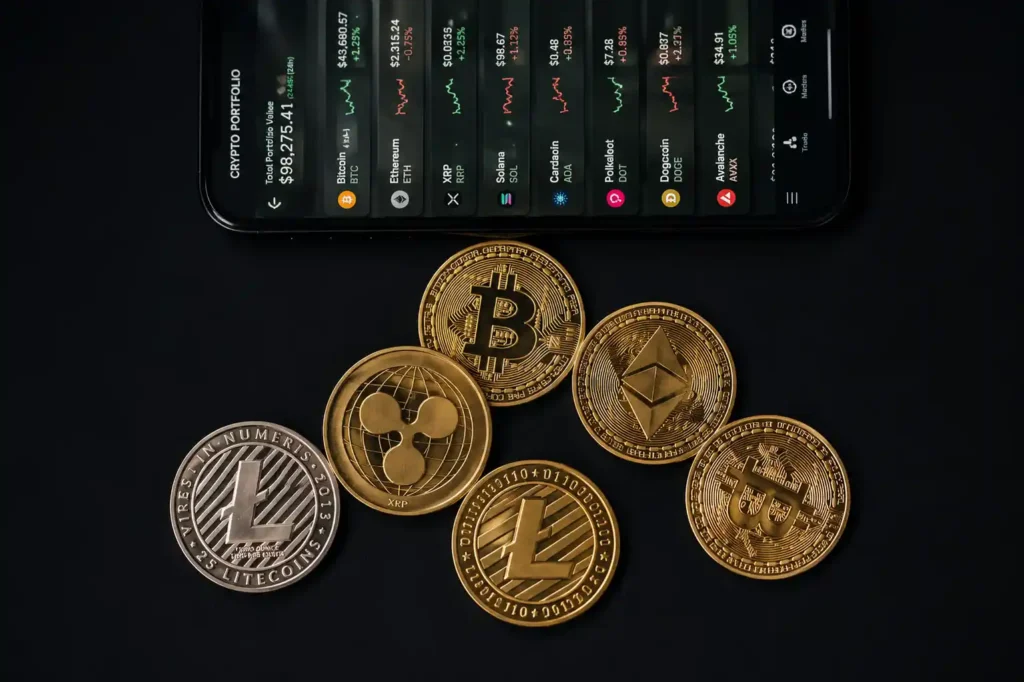
Institutional crypto investing has entered a new phase as digital assets gain broader acceptance among professional investors and global financial institutions. Once viewed primarily as speculative instruments, cryptocurrencies are increasingly being evaluated alongside traditional asset classes as part of long-term portfolio strategies. The emergence of regulated investment products such as the Bitcoin ETF, stronger custody infrastructure, and greater regulatory clarity has encouraged institutional investors to explore cryptocurrency investing with a more disciplined and strategic approach.
The shift reflects a broader transformation within global financial markets. Asset managers, pension funds, hedge funds, family offices, corporations, and wealth management firms are assessing digital assets not merely for potential returns but also for diversification, technological innovation, and participation in the evolving digital economy. At the same time, market participants recognize that cryptocurrencies remain highly volatile and require rigorous governance, sophisticated risk controls, and careful portfolio construction.
Rather than replacing traditional investments, Bitcoin, Ethereum, and other blockchain-based assets are increasingly viewed as complementary components within diversified portfolios. Improved liquidity, institutional-grade custody, transparent trading venues, and expanding compliance standards continue to reshape how professional investors approach this emerging asset class. Although uncertainty remains around regulation, cybersecurity, and market volatility, the institutionalization of crypto markets suggests that digital assets are becoming an increasingly important part of modern capital allocation.
Understanding Institutional Crypto Investing
Institutional crypto investing refers to the allocation of capital into digital assets by professional organizations that manage money on behalf of clients, shareholders, pension beneficiaries, or corporate balance sheets. Unlike retail investors, institutions generally operate within strict governance frameworks, regulatory requirements, and investment mandates designed to preserve capital while pursuing long-term returns.
Over the past decade, the cryptocurrency ecosystem has evolved dramatically. Early markets were characterized by fragmented exchanges, inconsistent regulation, and limited security infrastructure. Today, institutional investors benefit from regulated custodians, independent auditors, sophisticated trading platforms, and professional market-making services that more closely resemble traditional financial markets.
Several developments have accelerated institutional participation:
- Greater regulatory oversight in major financial jurisdictions
- Institutional-grade digital asset custody solutions
- Regulated investment vehicles, including Bitcoin ETFs
- Improved liquidity across cryptocurrency markets
- Enhanced blockchain analytics and compliance tools
- Growing acceptance among wealth management firms
These improvements have significantly reduced operational barriers that once discouraged large investors from entering crypto markets.
Institutional investment objectives also differ from retail speculation. Professional investors typically evaluate digital assets through the lens of strategic asset allocation, portfolio diversification, inflation resilience, technological innovation, and long-term structural growth. Investment committees analyze macroeconomic conditions, liquidity characteristics, valuation models, and regulatory developments before allocating capital.
Family offices have often acted as early adopters because they possess greater flexibility than many traditional institutions. Meanwhile, pension funds and insurance companies generally proceed more cautiously, requiring robust governance standards and extensive due diligence before investing. Hedge funds frequently pursue active trading strategies, whereas asset managers increasingly develop diversified digital asset products for long-term investors.
As the market matures, blockchain technology itself has become a key investment theme. Institutions are no longer evaluating cryptocurrencies solely as speculative assets but also as components of a broader digital financial infrastructure that could reshape payments, securities settlement, lending, and asset ownership.
The growing sophistication of market infrastructure has fundamentally changed perceptions. Professional investors now focus less on whether digital assets deserve consideration and more on determining appropriate allocation sizes, risk controls, and implementation strategies within diversified portfolios.
Why Institutions Are Embracing Digital Assets?
Several powerful forces are driving institutional adoption. While short-term price appreciation often attracts headlines, professional investors generally focus on structural developments that improve market quality and support long-term capital allocation.
One of the most significant milestones has been the introduction of regulated Bitcoin ETFs. These investment vehicles allow institutions to gain exposure to Bitcoin through familiar investment structures without directly managing private keys or cryptocurrency wallets. For many wealth managers, pension funds, and financial advisers, ETFs simplify operational processes while improving transparency and regulatory compliance.
Bitcoin has increasingly established itself as the flagship institutional digital asset. Its fixed supply, global liquidity, extensive trading history, and strong network effects make it the primary entry point for institutional portfolios. Many investors view Bitcoin as a potential store of value or a diversified alternative investment rather than a replacement for traditional assets.
Ethereum attracts institutional attention for different reasons. Beyond functioning as a digital currency, Ethereum supports decentralized applications, smart contracts, token issuance, and numerous blockchain-based financial services. Institutions interested in blockchain innovation often consider Ethereum an investment in the infrastructure supporting future financial ecosystems.
Tokenization represents another major catalyst. Financial institutions increasingly explore the conversion of traditional assets—including bonds, real estate, private equity interests, and investment funds—into blockchain-based digital tokens. Tokenization has the potential to improve settlement efficiency, enhance transparency, reduce administrative costs, and expand market accessibility.
Improved market maturity has also increased confidence. Compared with earlier years, cryptocurrency markets now benefit from:
- Larger trading volumes
- Better institutional liquidity
- Professional custody providers
- Advanced risk monitoring systems
- Stronger regulatory engagement
- Enhanced market surveillance
These developments reduce operational uncertainty while supporting greater institutional participation.
Before examining different institutional participants, the following table highlights how various digital asset categories align with investment objectives.
Institutional Participation Across Digital Asset Categories
| Digital Asset Category | Primary Investment Goal | Typical Institutional Investor |
|---|---|---|
| Bitcoin | Long-term store of value and portfolio diversification | Asset managers, pension funds, corporations |
| Ethereum | Exposure to blockchain infrastructure and smart contracts | Venture investors, hedge funds, family offices |
| Bitcoin ETFs | Regulated market exposure with operational simplicity | Wealth managers, financial advisers, retirement funds |
| Tokenized Assets | Improved efficiency and expanded investment access | Banks, private equity firms, asset managers |
The diversity of institutional participants demonstrates that crypto adoption is no longer driven by a single investment narrative. Some institutions seek diversification, others pursue technological innovation, while many focus on improving operational efficiency through blockchain infrastructure. This variety of objectives strengthens market resilience by expanding the range of long-term participants beyond speculative traders.
Managing Risk in Institutional Crypto Portfolios
Despite growing confidence, professional investors continue to approach digital assets with considerable caution. Institutional participation has increased because risk management frameworks have improved—not because cryptocurrencies have become risk free.
Market volatility remains the most visible challenge. Bitcoin and Ethereum can experience substantial price movements within short periods, creating significant portfolio fluctuations. Institutions therefore typically limit position sizes according to predefined investment policies and overall portfolio objectives rather than making concentrated allocations.
Regulatory uncertainty also requires continuous monitoring. Although many jurisdictions have introduced clearer rules for digital assets, regulations continue to evolve across taxation, securities law, custody standards, anti-money laundering requirements, and consumer protection. Large institutions maintain dedicated legal and compliance teams to evaluate these developments before expanding exposure.
Cybersecurity represents another critical consideration. Digital assets introduce operational risks that differ from traditional financial instruments, including private key management, wallet security, exchange vulnerabilities, and sophisticated cyber threats. Institutional investors increasingly rely on qualified custodians employing multi-signature authorization, offline cold storage, insurance coverage, and continuous security monitoring to safeguard client assets.
Governance has become equally important. Investment committees establish detailed policies covering approved assets, allocation limits, liquidity requirements, counterparty selection, valuation methodologies, and ongoing risk reporting. Independent oversight ensures that cryptocurrency exposure remains consistent with broader investment mandates and fiduciary responsibilities.
Rather than chasing short-term market momentum, institutions increasingly emphasize disciplined portfolio construction. Digital assets are generally treated as one component within diversified investment strategies, with allocations calibrated according to risk tolerance, investment horizon, liquidity needs, and broader macroeconomic conditions. This measured approach reflects the continuing evolution of institutional crypto markets from speculative trading toward strategic long-term capital allocation.
Comparing Institutional Digital Asset Strategies
Institutional investors rarely treat every digital asset as interchangeable. Instead, they evaluate each opportunity based on investment objectives, expected returns, liquidity, operational complexity, and its role within a diversified portfolio. As cryptocurrency markets mature, investment committees increasingly distinguish between assets that provide direct market exposure and those that support broader blockchain innovation.
Bitcoin remains the dominant institutional holding. Its large market capitalization, deep liquidity, and established trading infrastructure make it the preferred gateway into digital assets. Many institutions view Bitcoin as a strategic alternative investment with potential diversification benefits rather than a replacement for equities or fixed income.
Ethereum occupies a different position. While it also serves as a digital asset investment, institutions increasingly recognize Ethereum as the leading platform for smart contracts, decentralized finance, token issuance, and enterprise blockchain applications. Investors seeking exposure to blockchain technology often allocate capital to Ethereum alongside Bitcoin.
Bitcoin ETFs have lowered the operational barriers associated with cryptocurrency investing. Instead of managing wallets and private keys, investors can purchase regulated exchange-traded funds through traditional brokerage accounts. This familiar structure simplifies compliance, reporting, custody, and portfolio administration for many institutional investors.
Meanwhile, tokenized real-world assets (RWAs) represent one of the fastest-growing areas of institutional blockchain adoption. By issuing digital representations of traditional assets—including real estate, bonds, infrastructure projects, private credit, and investment funds financial institutions hope to improve settlement efficiency, increase transparency, and broaden investor access.
The following comparison illustrates how institutions typically evaluate these strategies.
Institutional Crypto Strategy Comparison
| Institutional Crypto Strategy | Primary Advantage | Best Suited For |
|---|---|---|
| Bitcoin | Long-term value preservation and high liquidity | Pension funds, corporations, asset managers |
| Ethereum | Exposure to blockchain innovation and smart contracts | Venture funds, hedge funds, technology-focused investors |
| Bitcoin ETFs | Regulated access with simplified custody | Wealth managers, retirement accounts, financial advisers |
| Tokenized Real-World Assets | Improved efficiency and broader market access | Banks, private equity firms, institutional asset managers |
Although each strategy offers distinct advantages, institutions rarely concentrate capital in a single area. Instead, portfolio managers evaluate how these investments complement existing holdings, liquidity requirements, and long-term return objectives. Diversification across digital asset categories, combined with disciplined position sizing, can help balance innovation with prudent risk management.
The growth potential of each opportunity also differs. Bitcoin benefits from broad market recognition and institutional acceptance, Ethereum derives value from expanding blockchain applications, Bitcoin ETFs improve accessibility through regulated financial products, and tokenized assets could transform capital markets by modernizing how financial instruments are issued, traded, and settled. Consequently, successful institutional allocation depends less on predicting short-term price movements and more on understanding how each asset contributes to an overall investment strategy.
The Future of Institutional Crypto Investing
Institutional crypto investing is likely to evolve alongside broader changes in global finance rather than develop in isolation. Financial institutions increasingly view blockchain technology as foundational infrastructure capable of improving payments, securities settlement, asset servicing, and capital market efficiency.
Institutional capital entering crypto markets is expected to expand gradually as regulatory frameworks mature. Greater legal certainty allows investment committees to evaluate digital assets within established governance structures while reducing operational ambiguity. At the same time, improvements in market surveillance, compliance technology, and reporting standards continue to increase confidence among professional investors.
Artificial intelligence and blockchain technology may also become increasingly interconnected. AI systems require trusted, transparent, and verifiable data, while blockchain networks provide immutable records and programmable financial infrastructure. Although these technologies remain in their early stages of integration, many institutions see opportunities where automation, digital identity, and tokenized assets work together to improve financial services.
Tokenization could become one of the most significant developments over the coming decade. Rather than focusing solely on cryptocurrencies, many financial institutions are exploring blockchain-based representations of traditional financial assets. Tokenized government bonds, private equity interests, infrastructure investments, and commercial real estate may eventually trade on more efficient digital platforms, reducing settlement times and improving market accessibility.
Nevertheless, the pace of institutional adoption will depend on several factors:
- Continued regulatory clarity across major financial markets
- Strong cybersecurity and custody standards
- Reliable market infrastructure
- Sustainable liquidity growth
- Responsible governance and compliance
- Ongoing blockchain innovation
While enthusiasm surrounding digital assets remains strong, institutional investors continue to emphasize disciplined capital allocation over speculative trading. Long-term adoption will likely favor organizations that integrate digital assets within comprehensive investment frameworks rather than pursuing short-term market trends.
Unique Insight
Institutional crypto investing represents something far more significant than growing interest in cryptocurrencies. It reflects the gradual modernization of global financial markets as traditional institutions adopt digital infrastructure capable of supporting faster settlement, programmable ownership, and more efficient capital allocation.
Many institutions no longer evaluate digital assets solely on recent price performance. Instead, they consider how blockchain technology can enhance financial operations, improve transparency, reduce administrative friction, and expand access to investment opportunities through tokenization. Regulated investment products such as Bitcoin ETFs have reduced operational barriers, enabling institutions to participate using familiar governance, reporting, and compliance processes.
Perhaps the most important shift is philosophical rather than technological. Professional investors increasingly treat digital assets as one component of diversified portfolios alongside equities, fixed income, private markets, infrastructure, and other alternative investments. Success therefore depends not on speculative enthusiasm but on disciplined portfolio construction, sound governance, effective risk management, regulatory compliance, and thoughtful capital allocation. As financial infrastructure continues to evolve, digital assets may become an increasingly integrated element of institutional investment strategies rather than a separate niche within global markets.
Frequently Asked Questions
What is institutional crypto investing?
Institutional crypto investing refers to the allocation of capital into digital assets by organizations such as asset managers, pension funds, hedge funds, banks, corporations, and family offices using professional investment processes, governance standards, and regulatory compliance.
Why are institutional investors buying Bitcoin?
Many institutions view Bitcoin as a highly liquid digital asset with a limited supply, growing market acceptance, and potential portfolio diversification benefits within long-term investment strategies.
How do Bitcoin ETFs work?
Bitcoin ETFs allow investors to gain exposure to Bitcoin through regulated exchange-traded funds without directly owning or storing cryptocurrency, simplifying custody and operational management.
Why is Ethereum attracting institutional interest?
Ethereum supports smart contracts, decentralized applications, tokenization, and blockchain infrastructure, making it attractive to institutions seeking exposure to the broader digital economy.
What are tokenized real-world assets?
Tokenized real-world assets are blockchain-based digital representations of traditional assets such as real estate, bonds, private equity, or investment funds that can improve efficiency and transparency.
Is cryptocurrency suitable for diversified portfolios?
For some investors, carefully managed digital asset exposure may complement diversified portfolios. However, allocation decisions should reflect investment objectives, risk tolerance, liquidity needs, and regulatory considerations.
What are the biggest risks of institutional crypto investing?
Major risks include market volatility, evolving regulation, cybersecurity threats, operational challenges, liquidity fluctuations, technological risks, and changing investor sentiment.
How are regulations affecting crypto adoption?
Clearer regulations improve investor confidence by establishing compliance standards, custody requirements, consumer protections, and operational guidance that support broader institutional participation.
Why are family offices investing in digital assets?
Family offices often possess greater investment flexibility than larger institutions, allowing them to explore digital assets as part of long-term diversification and alternative investment strategies.
Why is Institutional crypto investing becoming more mainstream?
Growing regulatory clarity, institutional-grade custody, Bitcoin ETFs, improved liquidity, stronger governance standards, and continued blockchain innovation have made digital assets increasingly accessible to professional investors.

Administrator at Alt Finances, leading editorial strategy and contributing in-depth coverage of investing, wealth management, alternative assets, and global financial markets. Through research-driven articles and analysis, he helps readers understand the ideas, industries, and market forces shaping modern finance.