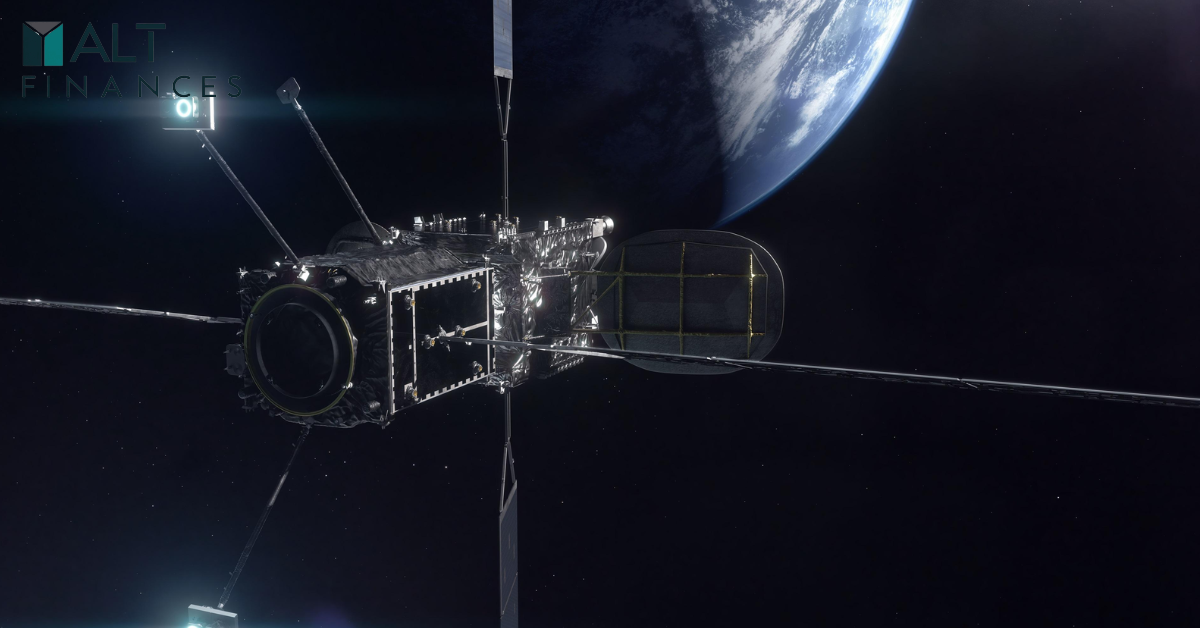
For decades, the economics of space depended on launching satellites, operating them until their fuel ran low or systems failed, and then replacing them. A new market is challenging that model. Satellite servicing companies are developing spacecraft that can inspect, reposition, refuel, extend the lives of, or help remove satellites already in orbit.
The investment case is straightforward in principle: if a satellite operator can preserve a valuable asset instead of replacing it, servicing may save money and generate additional revenue. But the market is still developing. Technical progress, government contracts and new funding rounds are encouraging, while recent mission setbacks show that operating complex robotics in orbit remains difficult.
What Is Satellite Servicing?
Satellite servicing refers to activities performed on spacecraft after they have reached orbit. Depending on the mission, a servicing vehicle may:
Inspect a satellite to assess its condition.
Dock with or capture a spacecraft.
Extend its operational life by providing propulsion or repositioning.
Refuel satellites designed to accept fuel in orbit.
Install or upgrade components.
Remove defunct satellites or other objects to reduce orbital debris.
These services are part of the broader field of in-space servicing, assembly and manufacturing, or ISAM. Satellite servicing focuses on working with existing spacecraft, while ISAM also includes assembling structures and manufacturing products in space.
The European Space Agency (ESA) sees these capabilities as a way to support a more sustainable space environment and improve the commercial value of existing satellites. Its September 2026 investor forum focused on how public institutions, investors and companies can help move servicing technologies toward operational services.
The Economics of Servicing Satellites
Satellites can cost hundreds of millions of dollars to build, launch and insure, depending on their size, mission and orbit. Replacing one may also take years, especially when the spacecraft is designed for a specialised scientific, communications or national-security role.
Servicing could offer several economic advantages.
Life extension: A satellite with functioning payloads but insufficient propulsion may still provide valuable services. A servicing vehicle could help preserve that asset, allowing its owner to continue earning revenue or delivering critical capabilities.
Avoiding replacement costs: If a servicing mission costs less than building and launching a replacement, the operator may have a financial incentive to extend the spacecraft’s life. The comparison must include the cost of the service, the satellite’s remaining useful life, operational risks and any lost revenue during the process.
Reducing operational disruption: A replacement satellite may require new launch arrangements, insurance, testing and network integration. Servicing may help operators maintain continuity, although it does not eliminate technical or operational risk.
Supporting orbital sustainability: Removing defunct satellites and improving end-of-life management may reduce debris risks. That can benefit other operators, but the environmental benefit does not automatically create a revenue stream for the servicing company.
The economics are therefore strongest when the customer has a high-value satellite, a clear need and a reliable way to pay for the service.
The Companies Building the Market
Northrop Grumman SpaceLogistics
One of the clearest commercial precedents is Northrop Grumman’s SpaceLogistics business. Its Mission Extension Vehicles (MEV-1 and MEV-2) docked with Intelsat satellites in 2020 and 2021, demonstrating that life-extension services in geostationary orbit can be commercially delivered.
In July 2026, SpaceLogistics’ Mission Robotic Vehicle (MRV), carrying a robotic servicing system developed with DARPA, launched toward geostationary orbit. The mission is designed to advance robotic inspection, upgrades and satellite repositioning. It is an important step, but the launch itself does not mean every planned servicing capability has already been demonstrated in orbit.
Astroscale
Astroscale is developing technologies for satellite servicing and debris removal, including inspection and end-of-life operations. Its ADRAS-J mission demonstrated close-up inspection of a large piece of space debris, while further missions are intended to advance capture and removal capabilities.
In June 2026, Astroscale raised approximately ¥30.6 billion (about $189 million) in a post-IPO equity round, with participation from corporate investors including Hulic and satellite operator Sky Perfect JSAT. The funding supports manufacturing expansion and development of its life-extension business. The company has also reported significant operating losses, illustrating that technical progress and funding do not yet equal profitability.
Starfish Space
Starfish Space is developing its Otter servicing vehicle for inspection, life extension and disposal missions. In April 2026, it announced a Series B funding round of more than $100 million led by Point72 Ventures, with other investors including Activate Capital and Shield Capital.
Starfish reported that it had contracted missions with NASA, the U.S. Space Force, the Space Development Agency and commercial customers. Its first full-size Otter was scheduled for launch in late 2026 for NASA’s SSPICY inspection mission. The planned mission represents a transition from smaller demonstrations toward contracted servicing work.
Orbit Fab and Katalyst Space
Orbit Fab is developing in-orbit refueling infrastructure, including its RAFTI refueling interface and fuel delivery systems. The company announced a $20 million Series B term sheet in March 2026, while working toward commercialisation and government demand. Refueling depends on compatible spacecraft and infrastructure becoming available, so the market is not yet universal.
Katalyst Space is building robotic servicing spacecraft. Its LINK mission attempted to boost NASA’s Neil Gehrels Swift Observatory in 2026. The spacecraft experienced attitude-control issues, and NASA and Katalyst abandoned the planned capture and boost. LINK nevertheless conducted rendezvous and proximity operations and gathered technical data. Katalyst also raised $12 million in June 2026 to develop its NEXUS servicing vehicle.
Who Is Funding the New Space Infrastructure Market?
Funding comes from several sources:
Venture capital: Investors fund early-stage technologies, spacecraft development and companies pursuing future servicing markets.
Strategic corporate investors: Satellite operators and aerospace companies may invest because servicing can complement their existing businesses or protect valuable assets.
Government contracts: Agencies fund demonstrations, procurement and national-security-related servicing capabilities.
Development institutions and public-private partnerships: These can help share risks and support missions that have broader public benefits.
The wider space investment environment is expanding. Reuters reported in September 2026 that private investment in global space companies more than doubled to $23 billion in the year through June, according to Seraphim and Relm Insurance. That figure covers the broader space sector not satellite servicing alone and investment is increasingly directed toward businesses with demonstrated capabilities and commercial traction.
Investors considering the wider space economy can also examine related infrastructure themes, including the AI compute marketplace and AI agents and financial infrastructure, though these are distinct markets with different economics and risks.
Where Investors Could Find Commercial Opportunities
Potential revenue models include:
Life-extension contracts: Customers pay to preserve or reposition valuable satellites.
Inspection services: Operators pay for spacecraft condition assessments or close-proximity monitoring.
Refueling: Compatible satellites may purchase fuel and servicing at a depot or from a dedicated vehicle.
Debris removal: Government agencies and satellite operators may pay for disposal or end-of-life services.
Robotic upgrades: Future missions may install components or support spacecraft modifications.
The most investable opportunities may initially be those with identifiable customers and government-backed contracts, rather than speculative markets that assume a large future fleet of serviceable satellites.
The Risks Behind the Investment Opportunity
The satellite servicing market faces significant risks.
Technical failure: Rendezvous, docking, capture and robotic manipulation require precision. A malfunction can jeopardise the servicing vehicle and the customer’s satellite.
Long development cycles: Designing, testing and launching spacecraft can take years. Capital may be tied up long before a company earns meaningful recurring revenue.
Limited recurring contracts: A demonstration contract may prove a capability without creating a sustainable commercial business. Companies need repeat customers and service demand.
Customer concentration: Many early customers are governments or a small number of satellite operators. Dependence on a limited group can create revenue volatility.
Insurance and liability: Servicing operations introduce risks of collision, damage and mission failure. Insurance costs and liability arrangements can affect project economics.
Regulatory challenges: Spacecraft operators must navigate national licensing, spectrum rules, orbital coordination and international obligations. Servicing another operator’s satellite also raises consent and ownership issues.
The Swift mission is a timely reminder that a technically ambitious servicing mission can deliver valuable lessons without completing its original commercial objective. Investors should assess what was demonstrated, what remains unproven and whether the company can translate progress into paying customers.
Conclusion: Can Satellite Servicing Become a Mainstream Industry?
The satellite servicing market has moved beyond theory. Commercial life-extension missions have demonstrated a viable use case, new robotic spacecraft are being launched, and investors are funding companies that aim to provide inspection, refueling and debris-removal services.
But the sector is not yet a mature infrastructure market. Its growth will depend on service reliability, repeat contracts, compatible satellite designs, insurance and cost competitiveness.
For venture capital and strategic investors, satellite servicing may offer exposure to an emerging space infrastructure category. For institutional investors, the opportunity is more likely to develop as a market of contracted services and established operators rather than a broad, liquid asset class in the near term.
The long-term question is not simply whether satellites can be serviced. It is whether the service can be delivered safely, repeatedly and at a price customers are willing to pay.
FAQs
1. What is satellite servicing and how does it work?
Satellite servicing involves using spacecraft to inspect, refuel, reposition, repair, upgrade or remove satellites already in orbit. A servicing vehicle may dock with a client satellite or operate near it, depending on the mission.
2. Why is in-orbit satellite servicing becoming an investment opportunity?
Satellite operators want to preserve valuable spacecraft, reduce replacement costs and improve operational resilience. Government contracts and new private funding are helping companies develop the technologies needed to provide these services.
3. Which companies are developing satellite servicing technologies?
Notable companies include Northrop Grumman SpaceLogistics, Astroscale, Starfish Space, Orbit Fab and Katalyst Space. They focus on different services, including life extension, refueling, inspection and robotic operations.
4. How can satellite servicing generate revenue?
Companies may earn revenue through life-extension contracts, inspection services, refueling, debris removal and robotic upgrades. Commercial success depends on customer demand, reliable delivery and competitive pricing.
5. Can repairing satellites be cheaper than replacing them?
It can be, particularly when a satellite has valuable functioning equipment but needs additional propulsion or other support. The financial comparison depends on servicing costs, replacement costs, remaining useful life and mission risk.
6. What are the biggest risks of investing in space infrastructure companies?
Risks include technical failures, high capital requirements, long development cycles, insurance costs, regulatory uncertainty, limited recurring contracts and dependence on government or a small number of customers.
7. Could satellite servicing become a mainstream commercial industry?
It could become an established part of space infrastructure if companies demonstrate reliable operations, recurring demand and commercially competitive services. The timing and scale of that market remain uncertain.

Ana Goldenberg is a Contributing Editor at Alt Finances with a career rooted in the high-stakes worlds of banking and private placements. From profiling global philanthropists to managing complex financial operations at Wells Fargo, she bridges the gap between editorial storytelling and disciplined financial expertise.