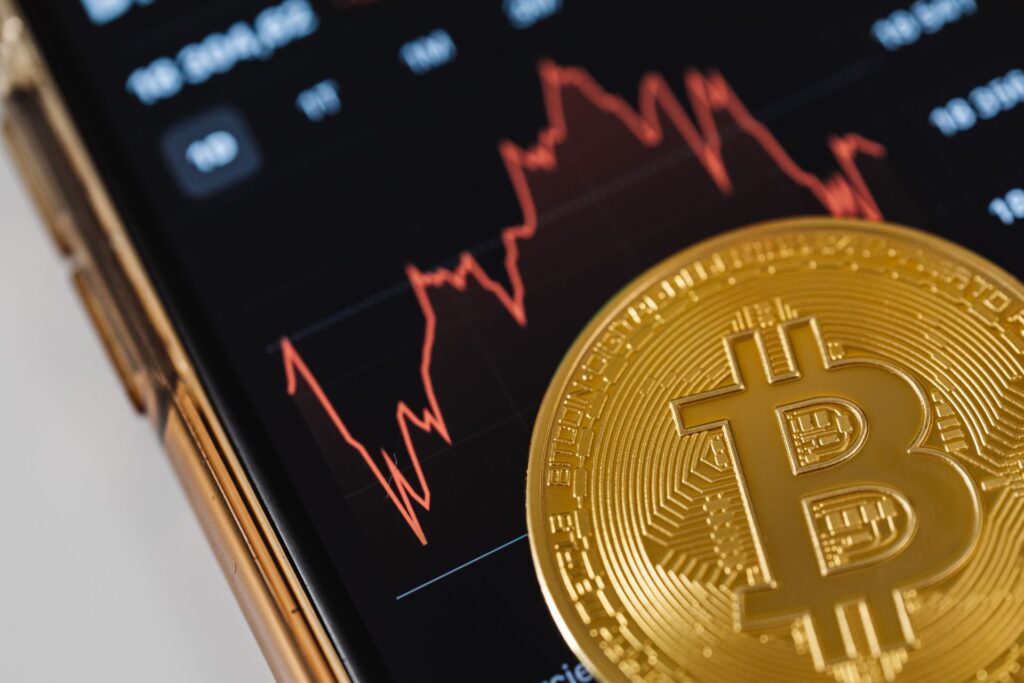
Few investment phenomena of the past decade generated as much enthusiasm, as much money, and as much subsequent regret as non-fungible tokens. In the space of roughly eighteen months between late 2020 and early 2022, a market that barely existed created and destroyed billions of dollars of apparent value, turned digital images of cartoon apes into assets selling for hundreds of thousands of dollars, attracted celebrity endorsements and major brand launches, and then collapsed with a speed and thoroughness that left most participants significantly worse off than when they arrived.
Understanding what happened, why it happened, and what if anything remains of genuine value in the NFT space requires engaging honestly with both the technology’s legitimate capabilities and the speculative mania that briefly made it one of the most discussed investment categories in the world.
What an NFT Actually Is
A non-fungible token is a unique digital record on a blockchain that verifies ownership of a specific asset, whether digital or physical. The non-fungible part is the key distinction from standard cryptocurrencies: one Bitcoin is interchangeable with any other Bitcoin, making it fungible like a dollar bill. An NFT, by contrast, is unique, a one-of-a-kind record pointing to a specific piece of digital art, a specific in-game item, a specific event ticket, or increasingly a specific real-world asset.
The NFT itself is not the asset, a distinction that was widely misunderstood during the boom. When someone purchased a digital image as an NFT, they were purchasing a blockchain record pointing to that image, not the image itself, which could generally still be viewed, copied, and downloaded by anyone. What the NFT conferred was a verifiable ownership record that could not be forged, duplicated, or altered because it existed on a decentralized blockchain rather than on any single company’s servers.
That property, verifiable provenance and unique ownership on a public record, is genuinely useful for specific applications. It is also, as the market eventually demonstrated, not on its own sufficient to sustain the price levels that speculative enthusiasm temporarily created.
The Boom, the Collapse, and the Numbers
The NFT market’s trajectory from 2020 through 2022 and beyond is one of the more dramatic boom-bust cycles in recent financial history, compressed into a shorter timeframe than most.
Trading volumes grew explosively through 2021, with quarterly volumes increasing roughly eightfold between the second and third quarters of that year alone. At its peak, OpenSea, the dominant NFT marketplace, processed over $4.87 billion in a single month in January 2022. Celebrity endorsements, major brand launches, and mainstream media coverage brought retail participants into the market in unprecedented numbers, driving prices for profile picture collections including Bored Ape Yacht Club, CryptoPunks, and dozens of imitators to levels that seemed to confirm that a genuine new asset class had arrived.
The correction that followed was severe and sustained. Annual NFT trade volume hit approximately $5.5 billion in 2025, down 37% from 2024 and roughly 95% below the 2021 peak. Approximately 96% of collections show zero trading activity, and platforms that once processed billions monthly are reinventing themselves as general crypto exchanges.
The top 50 NFT projects represent less than 1% of all projects but have a market cap equal to 52% of the total market capitalization, illustrating the extreme concentration of surviving value in a tiny fraction of the collections that launched during the boom. The vast majority of projects that raised money, generated excitement, and promised roadmaps of metaverse integration and community benefits are now worthless or nearly so, their communities disbanded and their floor prices collapsed to fractions of their original sale prices.
The K-Shaped Market That Emerged
A helpful way to look at 2026 is as a K-shaped market. There is a top tier with strong trading and attention, and a lower tier that keeps losing ground.
What survived the correction? Projects with revenue models, technical infrastructure, and real communities. What died? Hype-driven launches, celebrity endorsements without substance, and roadmaps promising metaverse vaporware.
At the top of the K sit a small number of collections with genuine cultural weight and established secondary market liquidity. CryptoPunks and Bored Ape Yacht Club retain significant brand recognition and institutional collector interest, with both collections attracting IP licensing deals and brand partnership revenue that creates utility beyond speculation. These collections function more like cultural artifacts with a secondary market than pure financial instruments, and their value is more comparable to established collectibles than to the speculative momentum plays most of the 2021-era market represented.
Three major platforms dominate activity in 2026: OpenSea processed $4.2 billion in cumulative volume during Q4 2025, Blur captured 38% of Ethereum NFT volume in early 2026, and Magic Eden leads Solana and Bitcoin Ordinals trading.
Where Genuine Activity Exists in 2026
The most meaningful development in the NFT market since the bust is the shift from speculation toward utility, where the token functions as something practically useful rather than purely as a store of speculative value.
Gaming NFTs command 38% of the total transaction volume in 2026, driven by play-to-earn and genuine ownership models. Games like Illuvium and Gods Unchained generate ongoing secondary market activity because the items actually get used. Players want them for gameplay reasons first. Resale value is a secondary consideration. Active user counts in gaming NFT projects grew approximately 80% year over year heading into 2026, the one category in the NFT space showing genuine organic growth.
The lesson from gaming’s earlier failures, particularly Axie Infinity’s spectacular collapse, has been absorbed by successful projects. Successful gaming NFTs in 2026 are built on traditional game mechanics, cosmetic skins, equipment upgrades, card pack equivalents, where blockchain is the settlement layer, not the value proposition.
Phygital NFTs saw 60% transaction volume growth, connecting physical goods with digital tokens, particularly in luxury markets. The application here is straightforward and genuinely useful: an NFT attached to a physical luxury item provides a permanent, tamper-proof provenance record that travels with the asset through every resale, addressing a real authentication problem that the luxury goods industry has struggled with through conventional means.
Event ticketing NFTs capture 5.3% of ticket sales across major US venues, providing fraud prevention and resale control. The blockchain-based ticket functions as an unforgeable, transferable access credential that solves the ticket fraud and scalping problems that have plagued live event ticketing for decades, while giving event organizers visibility and control over secondary market activity.
Identity NFTs reached 12 million issued in 2026, supporting decentralized IDs and membership systems. Brand membership NFTs follow a similar utility logic: a token granting access to exclusive product drops, events, or content creates a verifiable, tradeable access credential that provides ongoing value independent of speculative price appreciation.
Starbucks Odyssey enrolled 2 million members who earn collectible Journey Stamps redeemable for real-world rewards, demonstrating that major consumer brands have found practical applications for NFT mechanics within loyalty programs that generate genuine customer engagement.
The Investment Reality in 2026
For investors considering NFTs, the honest assessment requires separating the speculative collectibles market from the utility applications, since they represent fundamentally different propositions with different risk profiles and different criteria for evaluation.
Speculative NFT collecting, buying profile picture collections or digital art with the primary motivation of price appreciation, has been one of the worst-performing investment strategies of the past several years for anyone who was not among the earliest participants or skilled enough to sell near the peak. The 95% decline from peak trading volumes and the near-total collapse of most 2021-era collections is not a temporary setback awaiting a recovery. It reflects the market’s correction of genuinely irrational pricing driven by speculative momentum rather than underlying utility value.
The market cleared out speculative noise and retained genuine utility. For investors attracted to specific utility applications, including gaming NFTs that provide genuine in-game functionality, phygital authentication tokens tied to physical assets, or membership credentials with verifiable ongoing benefits, the evaluation framework is different from pure speculation and more analogous to evaluating the utility of any digital product: does it solve a real problem better than alternatives, and does the price reflect reasonable value for that utility rather than speculative premium?
The legal ambiguity surrounding NFT ownership remains unresolved in most jurisdictions, and the gap between what buyers believe they are acquiring and what they actually own legally has not been clarified by meaningful regulatory or judicial guidance. Owning an NFT pointing to a piece of digital art does not automatically confer copyright in that art, the right to reproduce it commercially, or any specific intellectual property rights beyond the ownership record itself, unless those rights are explicitly granted in the smart contract or supporting documentation.
Illiquidity remains a distinct risk: many NFTs have no reliable exit market. Copyright and IP confusion persists: owning an NFT does not necessarily grant legal rights to the underlying content. Scams and wallet-draining approvals remain a major threat vector in NFT trading platforms.
What the NFT Landscape Actually Tells Us
In 2026, NFTs are moving from collectibles to infrastructure: access, certification, licensing, membership. That framing is accurate and useful. The technology’s genuine value proposition, verifiable unique ownership records on a public, tamper-proof ledger, is most compelling precisely when it is applied to problems where existing ownership verification mechanisms are inadequate: authentication of physical luxury goods, fraud prevention in ticketing, provenance tracking in creative markets, and access credential management for digital communities.
The speculative collectibles market that made NFTs famous and then notorious was always a separate and more fragile phenomenon, driven by momentum, social dynamics, and the human tendency to extrapolate recent returns into indefinite futures. That market has largely reset to levels that better reflect genuine collector demand rather than speculative momentum.
For investors, the most defensible position is that NFTs as pure speculative instruments belong in the same category as any highly speculative, illiquid asset: potentially interesting for a small allocation by someone with deep market knowledge and genuine risk tolerance for total loss, but unsuitable as a meaningful portfolio allocation for anyone operating without that expertise. The utility applications are more interesting intellectually but are still early-stage enough that most individual investors are better served observing their development from the sidelines than committing capital to bet on specific outcomes that remain genuinely uncertain.

Contributing Editor for Alt Finances, specializing in financial strategy, investment research, and capital markets. Ahmed has extensive experience advising global clients and managing complex financial operations.