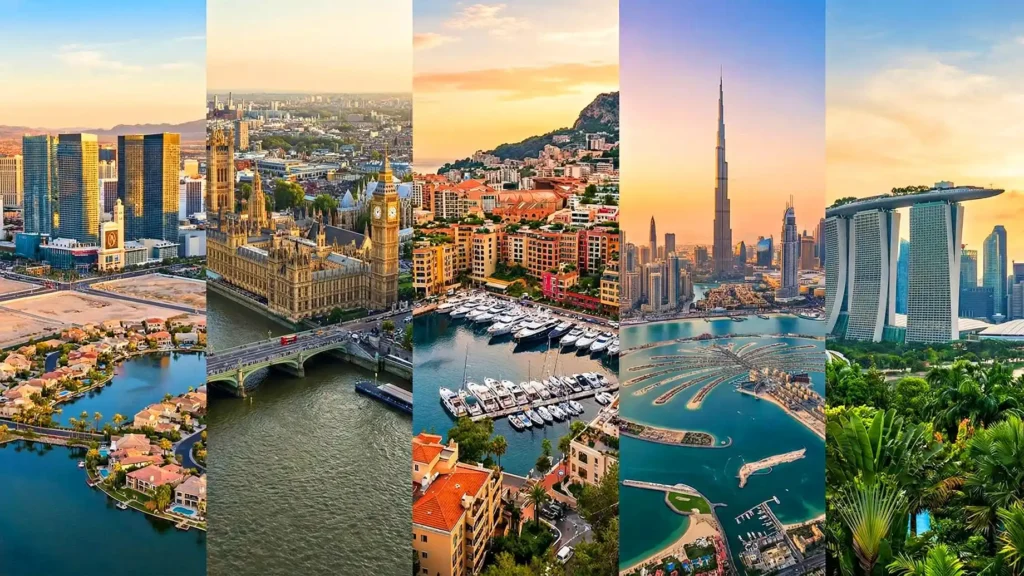
Cross-border property investing has become one of the defining trends in modern wealth management as investors increasingly look beyond domestic markets to strengthen long-term portfolio resilience. Rather than viewing international property simply as a way to own assets abroad, affluent individuals, family offices, and institutional investors now see it as a strategic tool for diversification, income generation, and capital preservation. As capital moves more freely across borders, international real estate has evolved into an increasingly important component of sophisticated investment portfolios.
The globalization of capital has fundamentally changed how investors approach asset allocation. Economic growth is no longer concentrated within a handful of mature economies, while demographic shifts, urbanization, and technological development continue to reshape global real estate markets. Consequently, investors are evaluating opportunities across multiple jurisdictions instead of relying exclusively on their home countries. From prime office towers in global financial centers to logistics hubs supporting e-commerce and luxury residences in internationally recognized destinations, overseas property now serves a wide range of investment objectives.
At the same time, expanding internationally requires far more than identifying attractive properties. Currency movements, financing structures, taxation, political stability, legal frameworks, and operational management all influence investment outcomes. Although international property ownership may enhance wealth diversification, it also introduces complexities that differ significantly between jurisdictions. Therefore, successful investors combine rigorous due diligence with disciplined portfolio construction rather than assuming overseas assets will automatically outperform domestic alternatives.
Growing participation from institutional investors, sovereign wealth funds, pension funds, and private capital managers further illustrates how cross-border investment has matured into a globally integrated asset class. Instead of chasing short-term appreciation, many sophisticated investors use international real estate to balance risk, access diverse income streams, and preserve purchasing power across economic cycles.
Understanding Cross-Border Property Investing
Cross-border property investing refers to purchasing, financing, developing, or managing real estate outside an investor’s home country. While the concept may appear straightforward, modern international ownership often involves sophisticated legal entities, tax-efficient structures, local operating partners, and long-term strategic planning.
Unlike domestic investing, international property investment exposes investors to multiple economic environments simultaneously. A diversified portfolio may include residential apartments in one country, commercial office assets in another, and logistics facilities serving regional supply chains elsewhere. This broader geographic footprint allows investors to participate in different growth stories while reducing dependence on a single national economy.
Ownership structures also vary considerably. Individual investors may purchase properties directly, whereas family offices and institutional investors frequently invest through holding companies, real estate funds, joint ventures, or private investment vehicles. These structures can improve governance, simplify succession planning, and support more efficient portfolio management across jurisdictions.
Financing decisions play an equally important role. Local borrowing can create a natural hedge against currency movements, while international financing may provide access to more competitive lending terms depending on interest rate environments. Nevertheless, financing costs differ widely across markets, making debt strategy an integral component of overall investment performance.
Investors also pursue different objectives depending on property type. Residential assets often focus on long-term appreciation and rental income, while commercial real estate may prioritize stable cash flow supported by longer lease agreements. Mixed portfolios increasingly combine both approaches to balance growth and income throughout changing market cycles.
Ultimately, successful cross-border ownership depends less on geographic expansion alone and more on selecting markets that align with long-term investment objectives, governance standards, and risk tolerance. Investors who understand local regulations, demographic trends, and economic fundamentals generally position themselves more effectively than those pursuing opportunities based solely on headline growth rates.
Why Global Investors Are Expanding Across Borders?
International diversification has become a central principle of modern portfolio management because economic cycles rarely move in perfect synchronization. As a result, investors increasingly allocate capital across multiple countries to reduce concentration risk while accessing broader growth opportunities.
Several strategic motivations continue to drive this shift:
- Geographic diversification across different economies and property cycles.
- Exposure to multiple currencies that may reduce reliance on a single monetary system.
- Recurring rental income from diverse tenant bases.
- Potential inflation protection through tangible real assets.
- Long-term capital appreciation linked to urban development and demographic growth.
- Broader real estate portfolio diversification alongside equities, fixed income, and alternative investments.
Although diversification remains the primary objective, investors also recognize that different regions offer distinct competitive advantages. Mature markets often provide greater transparency, stronger legal protections, and deeper liquidity. Emerging economies, meanwhile, may offer higher growth potential driven by expanding middle-class populations, infrastructure investment, and rapid urbanization.
Currency diversification has become particularly relevant during periods of economic uncertainty. Holding income-producing assets denominated in different currencies can reduce dependence on domestic monetary policy, although exchange-rate fluctuations may also amplify gains or losses. Consequently, many investors actively hedge foreign currency exposure or match local financing with local rental income.
Another important consideration involves inflation resilience. Property values and rental income frequently respond differently to inflation than financial assets. While real estate is not immune to market downturns, quality assets with strong occupancy levels may provide relatively stable cash flows during volatile economic conditions.
Institutional investors have embraced these principles for decades. Pension funds, insurance companies, and sovereign wealth funds routinely allocate capital across global property markets to achieve diversified long-term returns. Today, wealthy entrepreneurs and high-net-worth investors increasingly adopt similar approaches, supported by improved market transparency, professional advisory services, and global investment platforms.
Even so, experienced investors acknowledge that international diversification is not a substitute for disciplined analysis. Market fundamentals, governance quality, financing conditions, taxation, and operational execution remain far more influential than geography alone.
The Property Sectors Driving International Investment
Global capital no longer concentrates exclusively in landmark office buildings or prestigious city-center apartments. Instead, investors increasingly allocate capital across multiple sectors to balance income generation, long-term appreciation, and resilience against changing economic conditions.
Luxury residential property continues to attract international buyers seeking asset preservation, lifestyle flexibility, and exposure to globally recognized cities. Prime residences in established financial and cultural hubs often benefit from constrained supply and sustained international demand. However, values remain sensitive to taxation changes, foreign ownership policies, and broader economic sentiment.
Meanwhile, commercial real estate remains a cornerstone of institutional allocation despite structural changes affecting traditional office markets. High-quality offices in central business districts continue attracting tenants seeking premium locations, although investors now evaluate workplace trends more carefully than before.
Industrial and logistics properties have become some of the fastest-growing segments within global real estate. Expanding e-commerce, supply chain modernization, and nearshoring strategies have strengthened demand for warehouses, distribution centers, and advanced logistics facilities across major trade corridors.
Mixed-use developments also continue gaining attention because they combine residential, retail, hospitality, and office functions within integrated urban environments. These projects often generate diversified income streams while reducing dependence on a single tenant category or market segment.
Hospitality assets, including luxury resorts and branded residences, attract investors seeking exposure to tourism recovery and global mobility trends. Nevertheless, these investments generally experience greater sensitivity to economic slowdowns and geopolitical events than sectors supported by long-term commercial leases.
The diversity of international property sectors illustrates why investors increasingly tailor allocations according to broader portfolio objectives rather than pursuing a one-size-fits-all strategy.
Before examining sector characteristics in greater depth, the following comparison highlights where different investor groups typically concentrate their capital.
| Property Sector | Primary Investment Goal | Typical Investor |
|---|---|---|
| Luxury Residential | Wealth preservation and long-term appreciation | High-net-worth individuals, family offices |
| Commercial Real Estate | Stable rental income and institutional diversification | Pension funds, insurers, institutional investors |
| Mixed-Use Developments | Diversified cash flow and urban regeneration exposure | Private equity real estate funds, developers |
| Logistics & Industrial Properties | Income growth supported by supply chain demand | Institutional investors, REITs, sovereign wealth funds |
While these sectors differ significantly, none offers a universally superior investment outcome. Luxury assets may preserve value over long horizons, yet they often generate lower rental yields. Commercial assets can produce dependable income, although tenant demand fluctuates with business cycles. Logistics facilities have benefited from structural economic changes, whereas mixed-use projects depend heavily on successful long-term management.
Consequently, sophisticated investors increasingly blend multiple property sectors within a diversified real estate investment strategy. Rather than concentrating capital in a single asset class, they construct portfolios capable of adapting to changing economic conditions, demographic trends, and evolving patterns of global demand. This balanced approach has become one of the defining characteristics of modern cross-border investment and reflects the growing maturity of international property ownership as part of broader global wealth management.
Managing Cross-Border Risks and Regulatory Challenges
As international capital becomes increasingly mobile, investors recognize that successful overseas property ownership depends as much on risk management as on identifying attractive opportunities. Cross-border property investing introduces legal, financial, and operational considerations that vary widely between jurisdictions. Consequently, comprehensive due diligence has become an essential part of every investment decision.
Taxation remains one of the most complex aspects of international property ownership. Countries apply different rules to acquisition taxes, capital gains, rental income, inheritance, and corporate ownership structures. Double taxation treaties may reduce certain liabilities, yet investors frequently require coordinated advice from tax specialists in multiple jurisdictions to avoid unexpected costs.
Legal frameworks also differ significantly. Property ownership rights, foreign ownership restrictions, land registration systems, and contractual enforcement vary across markets. Even in highly transparent economies, regulatory changes can alter investment economics over time. As a result, sophisticated investors evaluate legal certainty alongside projected financial returns.
Currency exposure adds another layer of complexity. Rental income may be earned in one currency while financing costs or investor obligations are denominated in another. Exchange-rate fluctuations can enhance or reduce overall returns, encouraging many investors to incorporate currency management into their broader portfolio strategy.
Other important considerations include:
- Political stability and regulatory consistency
- Financing availability and borrowing costs
- Local property management capabilities
- Market transparency and data quality
- Environmental and sustainability regulations
- Exit liquidity during changing market conditions
Rather than treating these factors as obstacles, experienced investors incorporate them into disciplined decision-making frameworks. Robust governance, local expertise, and long-term planning often distinguish resilient international portfolios from speculative investments.
Comparing Global Property Investment Strategies
Different property sectors fulfill different portfolio objectives. Rather than concentrating capital in a single asset class, investors increasingly combine complementary assets that balance income generation, capital appreciation, and diversification.
Luxury residential property often appeals to investors seeking long-term capital preservation and exposure to globally recognized cities. Commercial real estate typically emphasizes stable income through institutional-quality tenants, while logistics and industrial assets continue to benefit from structural shifts in global supply chains. Mixed-use developments offer diversified revenue streams by integrating residential, office, retail, and hospitality components.
The table below summarizes how different investment destination types align with varying investor objectives.
| Investment Destination Type | Primary Advantage | Best Suited For |
|---|---|---|
| Established Global Gateway Cities | Market transparency, liquidity, and capital preservation | Family offices, institutional investors |
| High-Growth Emerging Markets | Long-term economic expansion and demographic growth | Growth-oriented investors |
| Regional Commercial Hubs | Stable rental demand and diversified business activity | Income-focused investors |
| Luxury Lifestyle Destinations | Lifestyle appeal with premium property demand | High-net-worth individuals |
| Logistics & Industrial Corridors | Supply chain expansion and e-commerce growth | Institutional investors and REITs |
| Mixed-Use Urban Developments | Diversified income sources and urban regeneration | Long-term diversified investors |
Selecting among these opportunities depends on investment objectives rather than market popularity. Investors seeking dependable income may prioritize commercial or logistics assets, while those focused on wealth preservation often allocate capital to prime residential markets. Portfolio construction therefore becomes an exercise in balancing expected returns with liquidity needs, operational complexity, and overall risk tolerance.
The Future of Cross-Border Real Estate Investing
Global property investment continues to evolve alongside technological innovation, demographic change, and shifting capital flows. Family offices are expanding their international allocations, while institutional investors increasingly evaluate real estate alongside infrastructure, private equity, and private credit within broader alternative investment portfolios.
Artificial intelligence and advanced analytics are also transforming investment decisions. Investors now have access to increasingly sophisticated tools for evaluating demographic trends, rental demand, climate risks, and asset performance across global markets. Although technology cannot eliminate uncertainty, it supports more informed market selection and portfolio monitoring.
Sustainability has become another defining theme. Buildings with strong environmental credentials are attracting growing attention from both tenants and investors, reflecting stricter regulations and evolving market preferences. Consequently, environmental performance is increasingly considered alongside traditional financial metrics.
Emerging markets are likely to remain important destinations where economic development, infrastructure investment, and urbanization create new opportunities. Nevertheless, investors continue to balance higher growth potential against governance, regulatory, and currency considerations.
Unique Insight: From Overseas Ownership to Global Capital Allocation
Cross-border property investing is increasingly viewed as a sophisticated capital allocation strategy rather than simply purchasing overseas property. For affluent individuals, family offices, and institutional investors, international real estate represents one component of a diversified portfolio designed to manage risk across multiple economic environments.
Instead of concentrating wealth in a single domestic market, investors evaluate opportunities across jurisdictions with different demographic profiles, monetary policies, and real estate cycles. This broader perspective may reduce concentration risk, but it also introduces legal, tax, currency, and operational complexities that require disciplined governance.
Institutional investors increasingly assess global real estate alongside infrastructure, private credit, and other alternative investments, reflecting a more integrated approach to portfolio construction. Likewise, many family offices focus on combining income-producing assets with long-term capital preservation rather than pursuing short-term appreciation.
The most resilient portfolios are typically built through careful market selection, rigorous due diligence, diversified sector exposure, and consistent oversight. Long-term success depends less on identifying the next high-growth market and more on maintaining a disciplined investment framework capable of adapting to changing economic conditions.
Conclusion
As global capital becomes more interconnected, Cross-border property investing continues to reshape how sophisticated investors build resilient portfolios. International real estate offers opportunities for geographic diversification, income generation, and exposure to different economic cycles, yet it also requires careful consideration of legal frameworks, taxation, financing, currency movements, and political developments.
For family offices, institutional investors, entrepreneurs, and high-net-worth individuals, overseas property is rarely viewed as a standalone wealth-building strategy. Instead, it forms part of a broader investment approach that combines multiple asset classes, jurisdictions, and risk profiles. Investment outcomes ultimately depend on market selection, governance, disciplined portfolio construction, and long-term perspective rather than geography alone.
Frequently Asked Questions
What is cross-border property investing?
Cross-border property investing involves purchasing or investing in real estate outside your home country to achieve objectives such as diversification, income generation, or long-term capital preservation.
Why do investors buy property overseas?
Many investors seek exposure to different economies, currencies, demographic trends, and property cycles while diversifying their overall portfolios.
Is international real estate a good diversification strategy?
International real estate can support diversification by reducing concentration in a single market. However, results depend on market conditions, regulations, financing costs, and currency movements.
What are the biggest risks of investing in overseas property?
Common risks include taxation, legal differences, currency fluctuations, political uncertainty, financing challenges, and property management complexity.
How do family offices invest in international real estate?
Family offices often allocate capital through direct acquisitions, joint ventures, private real estate funds, and institutional investment partnerships.
Which countries attract the most global real estate investment?
Established markets such as the United States, United Kingdom, Australia, Singapore, Germany, and selected Gulf states frequently attract international investment due to market transparency and liquidity.
How do currency fluctuations affect property investments?
Exchange-rate movements influence both rental income and overall investment returns when assets and liabilities are denominated in different currencies.
What is the difference between international real estate and cross-border property investing?
International real estate describes property located outside an investor’s home market, while cross-border property investing refers to the broader strategy of allocating capital internationally through ownership, funds, or partnerships.
Are luxury properties good long-term investments?
Luxury properties may provide long-term capital preservation and global demand in prime locations, but performance varies according to local market dynamics, taxation, and economic conditions.
Why is Cross-border property investing becoming more popular among global investors?
Growing global wealth, improved market transparency, institutional participation, and the desire for portfolio diversification have made cross-border property investing an increasingly important component of modern wealth management.

Administrator at Alt Finances, leading editorial strategy and contributing in-depth coverage of investing, wealth management, alternative assets, and global financial markets. Through research-driven articles and analysis, he helps readers understand the ideas, industries, and market forces shaping modern finance.