
Currency market trading represents the largest financial exchange system globally, often referred to as the decentralized forex trading environment. Every day, trillions of dollars change hands across international borders as participants seek to capitalize on fluctuating exchange rates within the foreign exchange market. Retail traders, global banks, and multinational corporations all participate in this massive financial network to manage their global interests.
You might wonder how this global exchange impacts daily economic activity and the valuation of international trading currency pairs. When a United States company buys electronics from Japan, they must exchange US dollars for Japanese yen immediately. This constant need for currency conversion creates continuous trading opportunities for those who understand the underlying market dynamics.
Learning the mechanics behind currency market trading gives you a distinct advantage when navigating the complexities of global finance. You can analyze global economic trends and potentially profit from price movements by implementing disciplined currency trading strategies and frameworks. We will cover the specific strategies and frameworks necessary to participate safely and effectively in this high-volume environment.
Unlike traditional stock exchanges, the foreign exchange operates entirely over-the-counter through a global network of banks and brokers. Participants trade directly with one another through electronic networks rather than a centralized physical location or a single exchange. This decentralized structure allows trading to continue twenty-four hours a day, five days a week, providing high liquidity.
Major financial hubs in New York, London, Tokyo, and Sydney drive the bulk of this daily trading activity. As one major global market closes, another one opens to maintain continuous market liquidity for all active participants. This constant overlap creates distinct trading sessions with varying levels of volatility that traders must account for in their plans.
Every market quotation features a specific bid price and an asking price for the asset being traded currently. The bid represents the maximum price a buyer will pay, while the ask represents the minimum a seller accepts. The mathematical difference between these two specific price points creates the spread, which represents the primary cost of trading.
Brokers generate their revenue primarily through this spread rather than charging direct commissions on every individual transaction made. A tighter spread reduces your trading costs and makes profitability easier to achieve over a long series of trades. Highly liquid currency pairs like the EUR/USD typically feature the lowest spreads in the industry due to high volume.
The Role of Currency Pairs
You cannot simply buy a single currency in isolation during a transaction on the global forex market. Every transaction involves buying one currency while simultaneously selling another related currency to complete the exchange process. Traders quote these transactions as currency pairs, such as the EUR/USD or the GBP/JPY, to show relative value.
The first currency listed is the base currency, while the second acts as the quote currency in the pair. If the EUR/USD exchange rate sits at 1.10, one Euro costs 1.10 US dollars at that specific moment. Traders buy the pair if they expect the base currency to appreciate against the quote currency over time.
- The foreign exchange operates 24/5 through a decentralized, over-the-counter electronic network.
- All transactions occur in pairs, requiring you to buy one currency and sell another.
- Brokers typically earn money through the spread, which is the difference between the bid and ask price.
Trading Currency Pairs: Core Mechanics of the Foreign Exchange and Currency Pairs
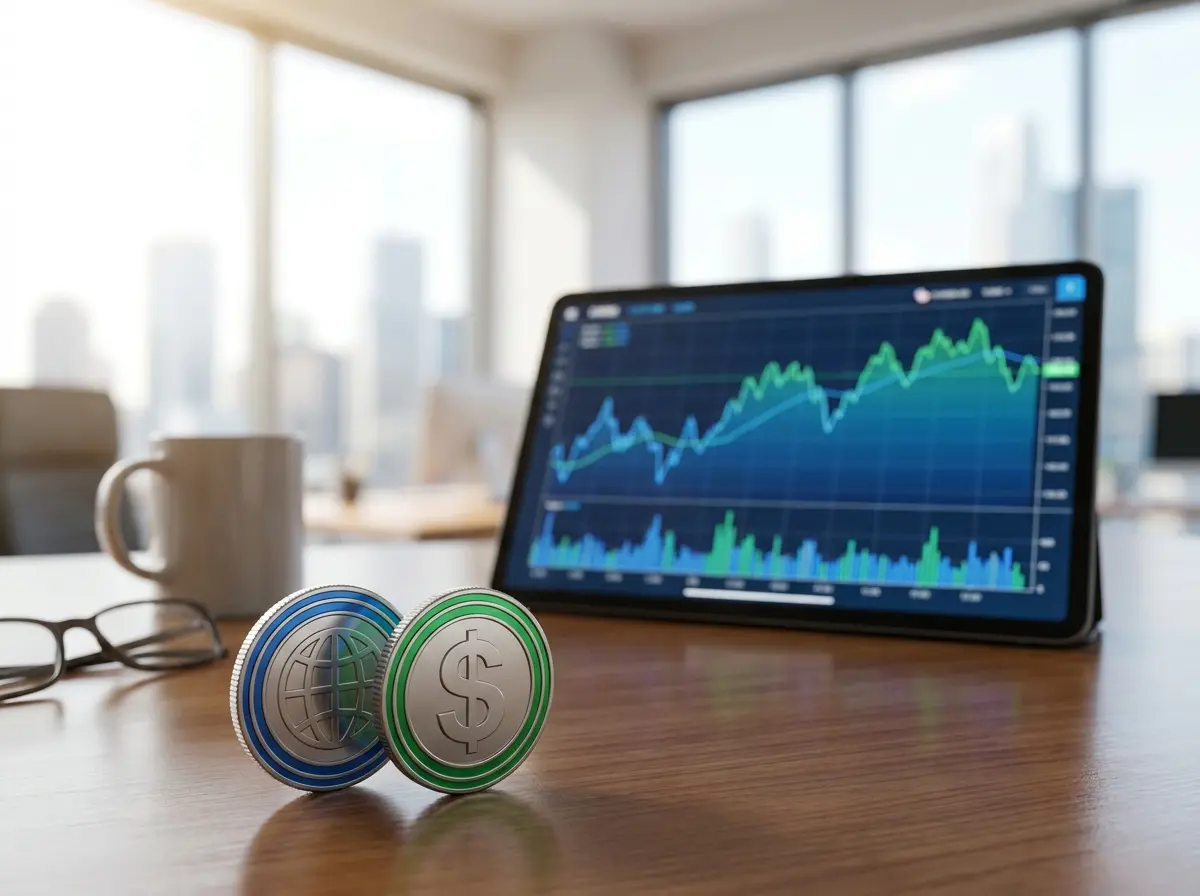
Price movements in currency market trading occur in extremely small increments called pips, which measure the smallest price change. Understanding the pip value is essential for calculating potential gains or losses accurately across different lot sizes. Because these price changes are microscopic, traders use large volume sizes called lots to generate meaningful financial profits.
A standard lot controls 100,000 units of the base currency in your account during a single trade. Many brokers also offer mini lots of 10,000 units and micro lots of 1,000 units for smaller accounts. Smaller lot sizes help retail traders manage their financial risk exposure much more effectively while learning the market dynamics.
Margin and Leverage in the US
Leverage allows you to control a large position with a relatively small amount of capital in your account. Your broker sets aside a specific percentage of your account balance as margin to keep the trade open indefinitely. This system magnifies both your potential profits and your potential losses, requiring a cautious approach to position sizing.
In the United States, regulatory bodies enforce strict limits on leverage to protect retail investors from excessive risk. The Commodity Futures Trading Commission (CFTC) caps leverage at 50:1 for major currency pairs. Exotic and minor pairs face an even stricter limit of 20:1 under current regulations to ensure market stability.
While leverage can dramatically increase your profits, it simultaneously magnifies your potential losses. A sudden market reversal on an over-leveraged account can trigger a margin call and wipe out your entire capital.
Market Participants: Major Market Participants in Currency Market Trading
Central banks play a massive role in currency market trading by setting the economic tone for their nations. Institutions like the Federal Reserve influence exchange rates through monetary policy and interest rate adjustments. When central banks intervene, their massive transaction volumes can cause immediate and sharp price shifts across the global market.
Commercial banks and investment firms facilitate the majority of daily transaction volume in the interbank market today. These institutions trade on behalf of their corporate clients and conduct speculative trading for their own private accounts. They form the interbank market, which establishes the baseline exchange rates used by the rest of the financial system.
The Rise of the Retail Trader
Historically, currency market trading remained inaccessible to the average individual due to high capital requirements and limited technology. The advent of high-speed internet and electronic brokerage platforms completely transformed this dynamic for people around the world. Today, retail traders account for a significant and growing percentage of daily market volume through accessible online platforms.
Retail participants typically rely on technical analysis and short-term price movements to generate consistent financial returns. They use charting software to identify patterns and execute trades quickly from their home or mobile devices. While they lack the massive capital of institutional players, retail traders benefit from superior agility and faster execution.
Currency Trading Strategies: Common Trading Strategies and Styles
Traders utilize different timeframes depending on their personality, daily schedule, and specific financial goals for their trading accounts. Your chosen style dictates how long you hold positions and the specific charts you monitor throughout the day. Selecting the right approach prevents burnout and improves your overall trade execution and long-term consistency in the markets.
Scalping and Day Trading
Scalpers execute dozens of trades per day to capture microscopic price movements within the fast-moving forex market environment. They hold positions for seconds or minutes, closing all trades before the trading session ends to avoid risk. This intense style requires constant focus and a high-speed internet connection to ensure rapid order execution and management.
Day traders operate on a slightly longer timeframe than scalpers do during their active trading sessions each day. They might take two or three trades daily, holding them for several hours at a time for larger moves. Like scalpers, day traders never leave positions open overnight to avoid unexpected gap risks and overnight financing fees.
Swing and Position Trading
Swing traders hold positions for several days to capture broader market trends and significant price swings in pairs. They analyze daily or four-hour charts to find optimal technical setups that align with the prevailing market direction. This approach requires less screen time, making it ideal for individuals with full-time jobs or other daily commitments.
Position traders take a long-term macroeconomic view of currency market trading to capture major structural shifts in value. They might hold a single trade for months or even years based on fundamental analysis of global economies. These traders ignore daily volatility and focus entirely on massive structural changes in global economies and interest rates.
Online Forex Broker Selection: How to Start Currency Market Trading for Beginners
Getting started requires careful preparation and the right technical infrastructure to ensure a smooth entry into the market. You need to establish a solid foundation before risking your capital in live markets with real financial consequences. Following a structured approach helps prevent common beginner mistakes that lead to early losses and emotional frustration for traders.
Steps to Start Trading Safely
Select a Regulated Online Forex Broker
Verify that your chosen brokerage firm maintains active registration with the National Futures Association and the CFTC.
Develop Currency Trading Strategies
Create a written plan defining your exact entry criteria, exit rules, and risk management parameters.
Practice with a Demo Account
Trade with virtual funds for at least three months to test your strategy in live market conditions.
Forex Market Analysis: Analytical Approaches: Technical Analysis vs Fundamental Analysis
Successful currency market trading relies heavily on thorough forex market analysis and a deep understanding of price action. Traders generally categorize their research into two primary methodologies to evaluate potential opportunities in the global marketplace. Most professionals combine elements of both approaches to make highly informed decisions and minimize their overall market risk.
Fundamental Analysis
Fundamental analysts study macroeconomic indicators to determine a currency’s intrinsic value based on the health of the economy. They monitor gross domestic product reports, employment data, and inflation metrics to gauge the strength of a nation. Strong economic data typically attracts foreign investment, which increases demand for the national currency and drives up value.
The Non-Farm Payrolls report serves as a perfect example of fundamental impact on the US dollar’s valuation. Released monthly by the US Bureau of Labor Statistics, this report details employment growth across the country. A higher-than-expected payroll number usually triggers massive buying pressure for the US dollar in the global markets.
Interest rates serve as the strongest driver of long-term currency valuations in the modern financial system. Higher interest rates offer better returns on investments denominated in that currency, attracting global capital from investors. Traders closely watch central bank meetings to predict future rate adjustments and position themselves accordingly for the move.
Technical Analysis
Technical traders focus exclusively on price charts and historical market data to identify high-probability trading opportunities. They believe that all fundamental factors are already reflected in the current exchange rate of any given pair. These analysts use mathematical indicators to identify trends and predict future price movements based on historical price patterns.
Common tools include moving averages, Fibonacci retracements, and relative strength indexes to measure market momentum and direction. By spotting repeating geometric patterns on a chart, traders determine optimal entry and exit points for their trades. This approach works particularly well for short-term day trading strategies where timing is the most critical factor.
Always check a reliable economic calendar before opening new technical positions. Avoid trading directly during major news releases to protect your account from extreme, unpredictable volatility spikes.
Forex Risk Management: Managing Risk Effectively with Proven Trading Strategies
Risk management separates profitable traders from those who quickly lose their capital in the volatile forex market. You must prioritize capital preservation above the desire for outsized returns to ensure longevity in your trading career. A disciplined approach to forex risk management strategies prevents a single bad trade from destroying your account balance.
Professional traders rarely risk more than one percent of their total account equity on a single setup. This strict rule allows them to survive a string of consecutive losses without emotional distress or financial ruin. Consistent profitability requires mathematical discipline rather than mere intuition or gambling on the next big market move.
Your risk-to-reward ratio dictates the long-term mathematical expectancy of your trading system over hundreds of trades. A positive ratio means your potential profit exceeds your potential loss on every setup you take. For example, risking fifty dollars to make one hundred dollars creates a highly favorable ratio for long-term growth.
With a strong risk-to-reward ratio, you can achieve profitability even with a low win rate over time. If your winners are consistently twice as large as your losers, you only need to win thirty-four percent of your trades to break even. This mathematical edge takes the emotional pressure off individual trade outcomes and focuses on the long-term process.
Stop-loss orders act as your primary defense against sudden market reversals and unexpected global news events. This automated instruction tells your broker to close a losing position at a predetermined price level without delay. Placing a stop-loss order immediately after entering a trade prevents catastrophic losses during unexpected news events or flash crashes.
- Never risk more than one percent of your total account capital on a single trade.
- Maintain a positive risk-to-reward ratio to ensure your winning trades outpace your losing trades.
- Always use stop-loss orders to automatically close losing positions before they drain your account.
Conclusion
Currency market trading offers substantial opportunities for those willing to put in the work and study the markets. The decentralized structure provides unmatched liquidity and the flexibility to trade on your own schedule from anywhere in the world. Success requires a deep understanding of global economics and strict emotional control during periods of market volatility.
Developing a profitable trading system takes considerable time and persistent effort to master the various market nuances. You must rigorously backtest your strategies and continuously adapt to shifting market conditions to maintain your competitive edge. If you approach the markets with patience and discipline, you can build a sustainable trading career over the long term.
Remember to rely on regulated online forex brokers and prioritize forex risk management above all else to protect your hard-earned capital. Review your trading journal regularly to identify your strengths and eliminate recurring mistakes that hinder your overall progress. Consistent education and deliberate practice remain your best tools for long-term financial success in the global currency markets.

Contributing Editor for Alt Finances, specializing in financial strategy, investment research, and capital markets. Ahmed has extensive experience advising global clients and managing complex financial operations.