
Following daily economy news helps you make smarter financial decisions during periods of intense market volatility and shifting global landscapes. You need accurate data to protect your retirement investments and manage your monthly household budget effectively in an era of high inflation. Recent shifts in federal monetary policy have created major financial challenges for everyday consumers and large corporations alike, necessitating a deeper understanding of fiscal trends. Furthermore, understanding the nuances of fiscal policy allows you to anticipate how legislative changes might impact your specific tax bracket or investment portfolio over the coming fiscal year. By staying informed, you can navigate the complexities of the financial markets with greater confidence and precision.
Understanding these massive economic trends gives you a distinct advantage over the average uninformed retail investor who may react emotionally to headlines. We will examine the current financial indicators that dictate market performance across the United States and international sectors. This comprehensive analysis provides you with the practical knowledge required to interpret intricate financial data accurately and build a resilient long-term strategy. As the global economy becomes increasingly interconnected, the ability to synthesize diverse information sources is more valuable than ever before. Developing a disciplined habit of reviewing market data ensures that your financial goals remain achievable despite any temporary economic headwinds.
The United States financial system currently faces a delicate balance between controlling inflation and preventing a prolonged recession that could damage growth. The Federal Reserve continues to adjust interest rates based on incoming data from various financial sectors, including housing, manufacturing, and services. These aggressive policy moves directly impact everything from local mortgage rates to credit card annual percentage rates, influencing the purchasing power of millions. Monitoring these shifts is essential for anyone looking to maintain a competitive edge in their personal investment strategy. Investors must remain vigilant as these fluctuations often dictate the short-term direction of major stock market indices.
Consumer spending remains surprisingly resilient despite the higher borrowing costs across the entire financial sector and rising costs of living. Retail sales data shows that Americans continue purchasing essential goods and services at a steady pace, supporting the broader GDP. However, many households have depleted their pandemic-era savings and now rely heavily on revolving credit accounts to maintain their lifestyles. This increase in consumer debt levels presents a potential risk to long-term economic stability if interest rates remain elevated for an extended period. Financial planners often suggest that maintaining a low debt-to-income ratio is the best defense against these rising interest costs.
Labor market statistics present a similarly mixed picture for professional economists trying to forecast future corporate growth and wage inflation. While the headline unemployment rate stays historically low, several major technology companies recently announced massive workforce layoffs to preserve their margins. This sharp divergence between different industries makes interpreting daily economy news highly critical for your financial planning and career security. Understanding which sectors are expanding and which are contracting can help you position your assets more effectively in a volatile market. By diversifying your professional skills and investment holdings, you can better withstand the cyclical nature of the modern labor market.
- High interest rates directly increase the cost of consumer borrowing and corporate debt.
- Consumer spending remains strong, but reliance on credit cards has increased significantly.
- Labor market strength varies wildly depending on the specific industry sector you analyze.
Federal Reserve Monetary Policy: The Role of the Central Bank in Economy News
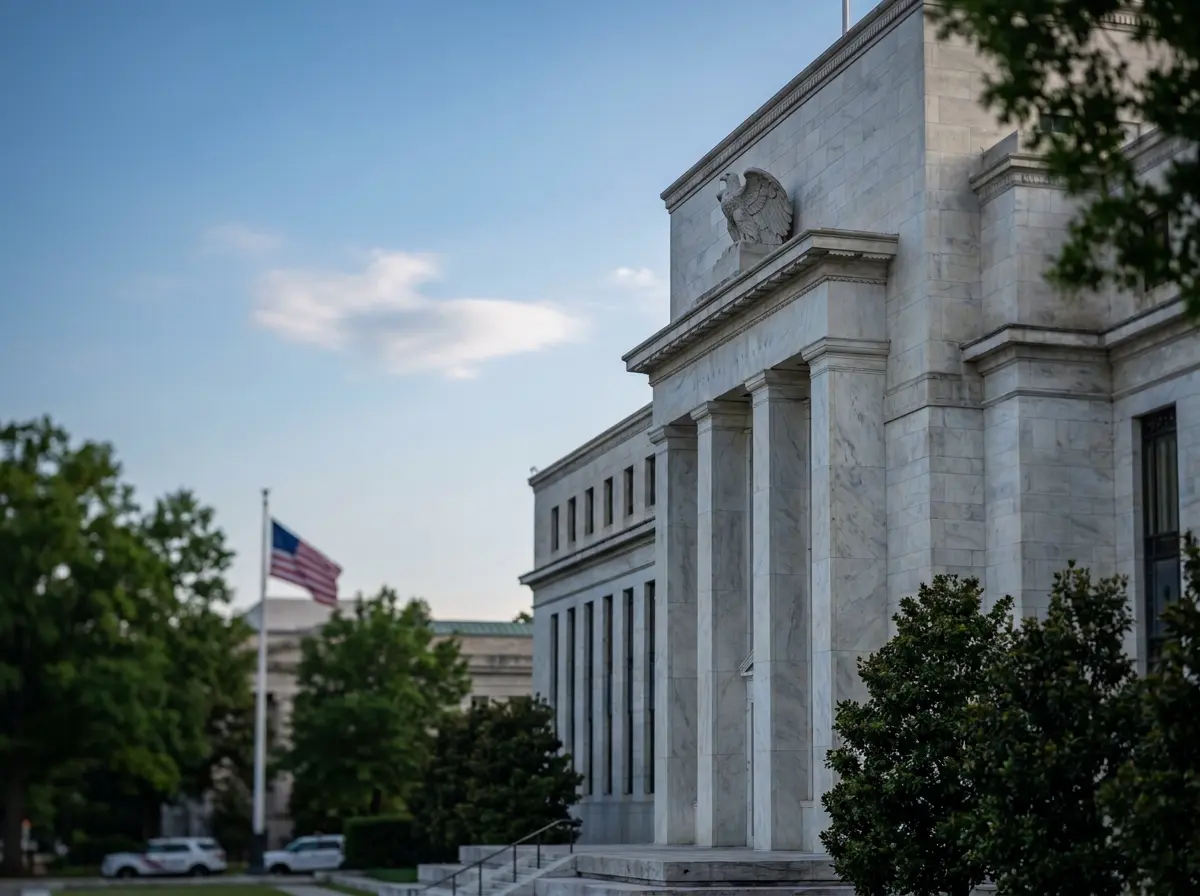
The Federal Reserve system operates as the central bank of the United States with immense economic influence over global liquidity. Financial journalists and stock market analysts closely monitor every public statement released by the Chairman of the Federal Reserve Board. These press conferences frequently trigger massive stock market rallies or severe selloffs within a matter of minutes as traders digest new policy hints. The nuances of monetary policy often dictate whether the market enters a bullish phase or retreats into defensive positioning, making every word from the FOMC vital for long-term planning.
Central bankers primarily utilize the federal funds rate as their main tool to regulate national economic growth and maintain price stability. When inflation runs too hot, the committee raises this target rate to intentionally cool down consumer spending and business investment. Conversely, they lower borrowing costs during recessionary periods to stimulate corporate investment and encourage rapid job creation across the country. This delicate calibration of interest rates is the primary mechanism used to prevent the economy from overheating or falling into a deep depression. Understanding the timing of these rate changes can help you decide when to lock in a mortgage or expand a business.
You can track these monetary policy decisions by reading the minutes released after each Federal Open Market Committee (FOMC) meeting. This detailed documentation reveals the underlying economic concerns driving the voting behaviors of individual central bank officials regarding quantitative easing or tightening. Professional traders use this precise information to reposition their massive institutional portfolios ahead of future rate adjustments and economic shifts. By analyzing the internal debates of the committee, you can gain foresight into the likely trajectory of the national economy over the next several quarters. This high-level perspective is essential for anyone managing a significant retirement portfolio or corporate treasury.
Key Economic Indicators and Inflation Rates Driving Daily Economy News Reports

Financial analysts rely on a specific set of government reports to measure overall national prosperity and predict future market cycles. These leading indicators provide quantitative evidence about the current trajectory of the American financial system and its global standing. Learning to read these reports allows you to anticipate market movements before they affect your portfolio or your local economy. Consistent monitoring of these metrics provides a factual basis for making complex financial decisions in an uncertain world.
Gross Domestic Product (GDP)
Gross Domestic Product represents the total monetary value of all finished goods and services produced domestically within a specific timeframe. The Bureau of Economic Analysis releases this critical data point on a quarterly basis for public review and academic study. A steadily growing GDP signals a healthy business environment, while consecutive declines officially mark a recessionary period that may require fiscal intervention. Economists often look at real GDP, which is adjusted for inflation, to get a clearer picture of actual economic expansion versus nominal price increases. This distinction is vital because it reveals whether the economy is truly producing more or simply experiencing higher prices.
Consumer Price Index (CPI)
The Consumer Price Index tracks the average change in prices paid by urban consumers for a market basket of essential goods. This monthly release from the Bureau of Labor Statistics serves as the primary gauge for national inflation and purchasing power. When you read economy news headlines about rising inflation, reporters are almost always referencing this specific index to explain cost-of-living increases. Maintaining price stability is a core mandate of the central bank, and the CPI provides the most direct evidence of whether their policies are succeeding or failing. High CPI readings often lead to immediate speculation about future interest rate hikes by the Federal Reserve.
Always look at the “Core CPI” number rather than just the headline inflation rate to understand long-term trends. Core CPI strips out volatile food and energy prices to reveal the true underlying inflation trend that central bankers watch most closely.
Employment Data and Payrolls
The monthly jobs report offers vital clues about the underlying strength of the American labor force and consumer confidence levels. This comprehensive document details both the national unemployment rate and the total number of non-farm payrolls added during the previous month. Strong employment numbers generally boost stock market indices because working citizens have more disposable income to spend on discretionary items and services. Additionally, the labor participation rate provides insight into how many people are actively seeking work versus those who have left the workforce entirely. A high participation rate combined with low unemployment is the gold standard for a robust and healthy national economy.
 Real-time financial data is essential for tracking economy news and market trends.
Global Economy Trends and Stock Market Volatility: How International Events Shape Domestic Markets
The American financial system does not operate in a vacuum isolated from international geopolitical developments and foreign market fluctuations. Supply chain disruptions in Asia can immediately trigger inventory shortages for major retailers in the United States, leading to higher prices. You must pay close attention to international trade agreements and foreign policy shifts to understand domestic pricing and corporate profitability in a globalized world. These international dynamics often serve as the catalyst for sudden shifts in domestic stock market trends. Furthermore, the role of the U.S. Dollar as the world’s primary reserve currency means that global demand for our currency impacts our domestic interest rates.
Energy markets provide the clearest example of how international conflicts impact your daily living expenses and transportation costs. When geopolitical tensions rise in oil-producing regions, the cost of crude oil spikes on global commodity exchanges almost instantly. This price increase quickly trickles down to local gas stations and raises transportation costs for domestic goods, further fueling inflationary pressures across the board. Understanding the correlation between global energy production and domestic inflation is key to managing a household budget during times of international strife. Many savvy investors use energy sector stocks as a hedge against these specific types of geopolitical risks.
Currency fluctuations also play a massive role in determining the profitability of large multinational corporations listed on major exchanges. A strong United States dollar makes American exports significantly more expensive for foreign buyers to purchase, potentially slowing down industrial growth. Conversely, it lowers the cost of imported manufactured goods, which can help suppress domestic inflation rates and benefit the average American consumer. This constant tug-of-war between currency values affects everything from the price of your next smartphone to the performance of your international mutual funds. Monitoring the DXY index can provide valuable clues about the future earnings potential of major U.S. exporters.
Expert Strategies for Market Analysis: How to Analyze Economy News Like a Pro
Reading financial headlines without proper context often leads to panic selling or irrational investment decisions that can harm your wealth. You need a systematic approach to process breaking financial information without letting human emotion cloud your objective judgment. Following a structured analytical method transforms confusing statistical releases into actionable intelligence for your personal wealth strategy and long-term financial security. By adopting a professional mindset, you can filter out the noise and focus on the data that truly matters for your financial future.
How to Evaluate Financial Reports
1. Identify the Primary Source
Examine the origin of the financial data to evaluate its credibility and potential political bias in reporting. Relying on primary sources like the Bureau of Labor Statistics provides the most accurate foundation for your personal economic analysis.
2. Compare Against Market Expectations
Markets react to how actual data compares to consensus estimates rather than the raw number itself in most cases. Review what Wall Street analysts predicted before the report dropped to understand the subsequent market reaction and price movements fully. This comparison helps you distinguish between “good news” that was already priced in and genuine surprises that will drive future volatility.
3. Examine the Long-Term Trend
Avoid making sweeping assumptions based on a single month of potentially anomalous economic data points or seasonal variations. Chart the specific metric over a rolling twelve-month period to identify legitimate structural shifts in the marketplace and broader economy. Long-term trends are far more reliable indicators of economic health than short-term fluctuations that may be caused by temporary events.
Applying these three analytical steps prevents you from overreacting to sensationalized financial media headlines that prioritize clicks over accuracy. Institutional investors employ similar filtering mechanisms to tune out market noise and focus on fundamental realities that drive long-term value. You can adopt this exact same mindset to protect your assets during periods of extreme market volatility and economic uncertainty. By remaining objective and data-driven, you position yourself to capitalize on opportunities that others might miss due to fear or confusion.
Wealth Management and Investment Strategy: Protecting Your Finances During Economic Shifts
Understanding the latest economic developments means little if you fail to adjust your personal financial strategy accordingly to mitigate risks. High inflation environments require you to prioritize investments that outpace the rapidly depreciating value of fiat currency over time. Many financial advisors recommend diversifying your portfolio with tangible assets like real estate or Treasury inflation-protected securities (TIPS) to maintain purchasing power. Additionally, reviewing your asset allocation annually ensures that your risk tolerance remains aligned with the current economic climate.
Rising interest rates create an entirely different set of challenges for consumers carrying variable-rate debt obligations like HELOCs or credit cards. You should prioritize paying down expensive credit card balances before the bank increases your annual percentage rate further in response to Fed moves. Simultaneously, you can take advantage of these higher rates by moving cash into high-yield savings accounts or certificates of deposit. This proactive approach to debt management can save you thousands of dollars in interest payments over the life of your loans. It also frees up more of your monthly income for investment purposes when market conditions become favorable.
Building a robust emergency fund remains your strongest defense against unexpected macroeconomic shocks and corporate layoffs in a shifting economy. Financial experts typically suggest keeping three to six months of vital living expenses in a highly liquid account for immediate access. This cash buffer prevents you from selling long-term retirement investments at a severe loss during a market downturn or personal financial crisis. Having this liquidity provides peace of mind and allows you to stay the course with your long-term investment strategy even when headlines are discouraging. Ultimately, financial security is built on a foundation of preparation and disciplined execution.
- Always compare incoming economic data against Wall Street expectations to gauge the likely market reaction.
- Pay down variable-rate debt immediately when the Federal Reserve signals future interest rate hikes.
- Maintain a liquid emergency fund to avoid liquidating long-term investments during sudden economic downturns.
Conclusion
Staying informed about daily economy news requires dedication and a critical eye, but the financial rewards absolutely justify the required effort for any serious investor. You gain the critical ability to anticipate market transitions rather than simply reacting to them after the fact when it may be too late. This proactive approach to wealth management separates successful long-term investors from those who consistently lose money during inevitable market downturns. By making data-driven decisions, you can protect your assets and even find growth opportunities in the most challenging economic environments.
The global financial system will continue producing unexpected challenges and lucrative opportunities for attentive market participants who understand the underlying mechanics. By monitoring employment data, inflation metrics, and international events, you build a comprehensive understanding of market dynamics and fiscal health. You now possess the analytical framework necessary to interpret complex financial reporting, navigate economy news, and protect your family’s financial future in an ever-changing world. Remember that financial literacy is a lifelong journey, and staying curious about the world around you is the best way to ensure continued prosperity. Your commitment to understanding the economy today will pay dividends for decades to come.

Contributing Editor for Alt Finances, specializing in financial strategy, investment research, and capital markets. Ahmed has extensive experience advising global clients and managing complex financial operations.