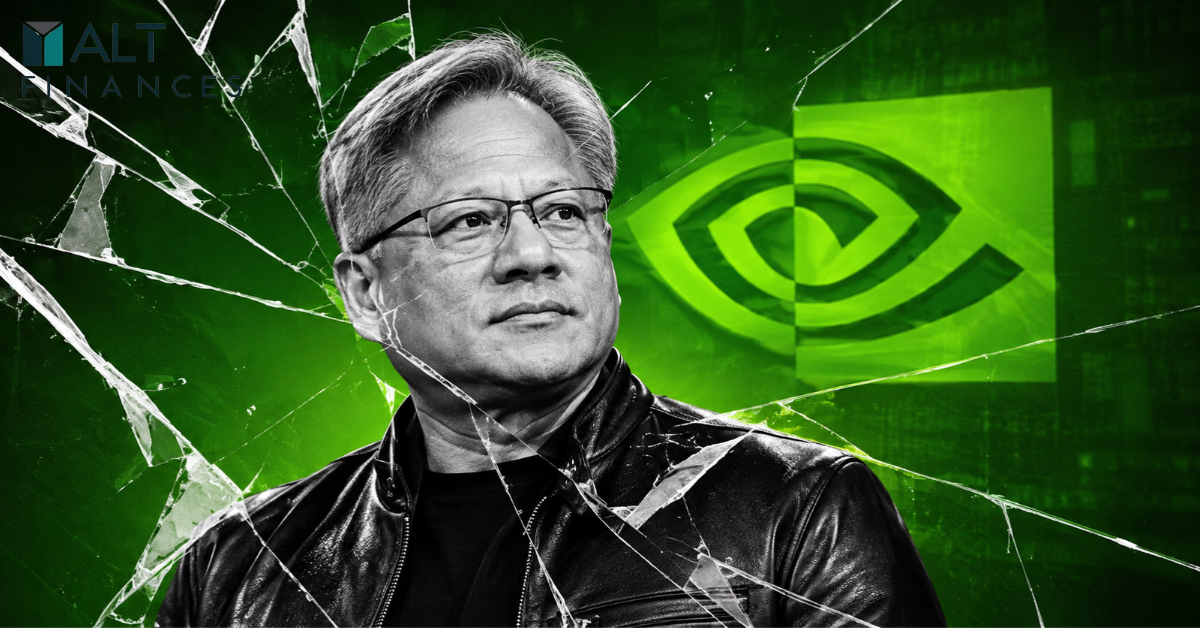
NVIDIA’s leadership transition has introduced an unexpected question into the global artificial intelligence investment story: can the company maintain its extraordinary growth and competitive position without the founder who shaped its development for more than three decades?
On November 12, 2026, NVIDIA announced that Jensen Huang had resigned as president, chief executive officer and a member of its board, effective immediately. The company appointed Chief Financial Officer Colette Kress as interim CEO while its board begins searching for a permanent replacement. Harvey C. Jones, a long-serving board member, was appointed NVIDIA’s first-ever board chair.
The announcement represents a significant governance change at one of the world’s most influential semiconductor companies. For investors, however, the central issue is not simply who leads NVIDIA next. It is whether its technology, customer relationships, financial performance and competitive advantages can continue developing without Huang’s direct leadership.
The Nvidia leadership transition therefore deserves attention beyond the immediate market reaction. Its implications extend across semiconductor investment, AI infrastructure and the wider technology industry.
Why Jensen Huang Was Central to NVIDIA’s Success
Huang co-founded NVIDIA in 1993 and led its transformation from a graphics-chip manufacturer into a major provider of accelerated computing and artificial intelligence infrastructure.
His influence extended beyond executive management. He consistently promoted GPU computing, invested in software development and positioned NVIDIA’s products as part of a broader computing platform rather than standalone processors.
One of the company’s most important strategic decisions was developing CUDA, its parallel computing platform. CUDA allowed developers to use NVIDIA GPUs for workloads beyond traditional graphics processing, helping establish a software ecosystem around the company’s hardware.
That ecosystem became increasingly valuable as demand for machine learning, generative AI and large-scale computing expanded.
Huang also helped develop relationships with cloud providers, technology companies, researchers and AI developers. These relationships supported NVIDIA’s transition into supplying complete computing systems, networking technologies and software for large AI data centres.
His departure creates key-person risk: the possibility that a company’s performance or strategic direction depends heavily on an individual. However, founder dependence should not be confused with the disappearance of the business capabilities that person helped build.
NVIDIA retains its engineering teams, established product roadmap, developer ecosystem and commercial relationships. The investment question is whether those institutional strengths can operate effectively through a different leadership structure.
Colette Kress and the Challenge of Interim Leadership
Colette Kress now faces the immediate responsibility of maintaining operational and financial continuity.
She joined NVIDIA in September 2013 as executive vice president and chief financial officer, after nearly 25 years in finance positions at technology companies including Microsoft and Cisco. Her experience gives her substantial familiarity with NVIDIA’s financial operations, customer commitments, supply-chain requirements and capital allocation.
Her appointment also provides continuity because she will retain the CFO position while serving as interim CEO.
However, leading a semiconductor company is different from managing its finances. NVIDIA must continue making decisions about chip architecture, software development, product launches, manufacturing capacity, strategic partnerships and competition.
The board has stated that it will consider both internal and external candidates for the permanent CEO position. Until that process is completed, investors will be assessing whether Kress and the existing leadership team can maintain the company’s execution.
Harvey Jones’s appointment as board chair also introduces a more formal distinction between board oversight and executive management. That may become important as the company reviews its governance and long-term succession arrangements.
The transition does not establish that NVIDIA’s strategy will change. It does, however, make leadership accountability and succession planning more important to shareholders.
Can NVIDIA’s Competitive Advantage Survive Its Founder?
NVIDIA’s strongest defence is that its competitive position rests on more than its CEO.
Its advantage combines GPU architecture, CUDA software, networking technology, system integration, developer relationships and the ability to deliver large-scale computing platforms. Customers building AI infrastructure often evaluate the complete system, not just the price or performance of an individual chip.
This creates switching costs. Moving to a competing platform can require software changes, new development processes, different system configurations and additional engineering work.
However, these advantages are not permanent guarantees.
Companies including AMD and Intel compete in accelerated computing, while major cloud providers such as Amazon, Google and Microsoft continue developing their own AI-related silicon. Custom processors can reduce dependence on external GPU suppliers for particular workloads.
NVIDIA itself identifies competition from GPU providers, custom-chip developers and companies building internal hardware and software solutions in its regulatory disclosures.
Its own second-quarter fiscal 2027 filing also highlights the importance of developer ecosystems, customer adoption and the availability of data-centre infrastructure. These factors can influence demand regardless of who occupies the CEO position.
For investors, the important distinction is between a temporary leadership disruption and a structural weakening of NVIDIA’s technology advantage. The latter would require evidence of declining customer demand, weaker product execution, lost market share or sustained deterioration in financial performance.
What the Transition Means for AI Investors
NVIDIA’s financial performance provides important context for evaluating the leadership change.
For the second quarter of fiscal 2027, ended July 26, 2026, the company reported US$96.2 billion in revenue, an increase of 106% from the same quarter a year earlier. Data Centre revenue reached US$89 billion, up 117% year over year. GAAP gross margin was 75%.
These figures demonstrate the scale of the business entering the transition. They also explain why investors will pay close attention to any disruption in product development, customer relationships or capital allocation.
NVIDIA’s August outlook projected third-quarter revenue of approximately US$108 billion, plus or minus 2%, with a gross margin of around 74%. The company also stated that its outlook did not assume Data Centre compute revenue from China.
That exclusion highlights an important existing risk: geopolitical restrictions can influence the company’s addressable market independently of its leadership.
NVIDIA’s regulatory disclosures describe the difficulties of serving China’s data-centre computing market under US and Chinese restrictions. The company has warned that export controls may benefit competitors and encourage customers to develop alternative suppliers.
Investors must therefore assess several risks together:
- Leadership risk: Can the interim team maintain strategic direction and execution?
- Competition: Will AMD and custom AI chips gain market share?
- Capital allocation: Will a permanent CEO change investment, acquisition or shareholder-return priorities?
- Customer concentration: Can demand remain strong when a relatively small number of customers account for substantial revenue?
- Infrastructure constraints: Can customers secure the power, land, financing and data-centre capacity required to deploy NVIDIA systems?
- Geopolitical exposure: Will export restrictions continue limiting access to important markets?
The leadership announcement does not automatically make NVIDIA a weaker investment. Equally, strong historical results do not eliminate the possibility that a prolonged transition could create operational or strategic problems.
The wider AI infrastructure market is also evolving. Investors interested in how computing capacity is being financed and distributed can explore the AI compute marketplace connecting buyers and sellers of computing power. NVIDIA’s position is closely connected to that wider ecosystem, although its business is not limited to marketplace activity.
What Investors Should Watch Next
The next important event is NVIDIA’s third-quarter fiscal 2027 financial announcement, scheduled for November 17, 2026.
The results will provide an opportunity to evaluate business performance against the company’s previous outlook. Investors will also be listening for management commentary on demand, supply constraints, gross margins, the product roadmap and customer commitments.
Because the results have not yet been announced as of November 14, their figures should not be assumed or anticipated.
Several developments deserve particular attention:
1. Permanent CEO selection: The board’s eventual choice will indicate whether NVIDIA prioritises internal continuity or seeks a leader from outside the organisation.
2. Product execution: Continued progress in its Blackwell and Vera Rubin platforms will help demonstrate whether the technology roadmap remains on schedule.
3. Customer investment: Spending by cloud providers, AI developers and enterprises will influence demand for accelerated computing.
4. Capital allocation: Investors should monitor any changes in acquisitions, strategic investments, infrastructure commitments, dividends and share repurchases.
5. Competitive pressure: The performance and adoption of AMD products and internally developed customer chips will help reveal whether NVIDIA’s ecosystem advantage is holding.
These developments also connect to broader investment questions about the infrastructure supporting AI-powered financial services and the financial risks associated with AI data-centre expansion.
Conclusion: Separating Leadership Uncertainty from Business Fundamentals
NVIDIA’s leadership transition marks a significant moment for the AI industry, but it does not automatically signal the end of the company’s competitive position.
Jensen Huang played a central role in building NVIDIA’s technology strategy, corporate culture and industry relationships. His departure creates uncertainty around leadership, succession and future decision-making. Nevertheless, the company retains a substantial technology platform, established customer relationships and an experienced executive team.
For investors, the appropriate response is to examine evidence rather than react solely to headlines. Future financial results, product execution, customer demand, competitive developments and the selection of a permanent CEO will provide a clearer picture of the company’s direction.
The longer-term investment question is whether NVIDIA’s institutional capabilities can sustain the momentum created under its founder. That is more important than the immediate market reaction to a change in leadership.
Frequently Asked Questions
1. Why did Jensen Huang leave NVIDIA?
NVIDIA announced on November 12, 2026, that Huang had resigned as president, CEO and board member, effective immediately. The announcement did not provide a detailed explanation for his departure.
2. Who is replacing Jensen Huang as NVIDIA’s CEO?
Colette Kress, NVIDIA’s CFO, has been appointed interim CEO. The board is searching for a permanent replacement and has not announced a final appointment.
3. Will NVIDIA’s stock be affected by Jensen Huang’s departure?
The announcement may influence investor sentiment and market volatility. Longer-term performance will depend on financial results, leadership execution, competition and demand for AI infrastructure.
4. Can NVIDIA maintain its AI leadership without Jensen Huang?
Its CUDA ecosystem, hardware, software, engineering teams and customer relationships provide institutional strengths. Maintaining that position will depend on continued innovation and successful execution.
5. What does Colette Kress’s appointment mean for investors?
Her long experience as CFO provides financial and operational continuity. Investors will also assess how effectively she manages product strategy, industry relationships and executive leadership while serving as interim CEO.
6. Who could become NVIDIA’s permanent CEO?
The board has confirmed that it will consider internal and external candidates. No permanent successor has been officially announced.
7. What should investors watch after the leadership change?
Important indicators include third-quarter results, management guidance, gross margins, customer demand, product launches, competitive developments and the board’s permanent CEO decision.

Contributing Editor for Alt Finances, vision-driven with 20+ years in family office, asset management, and corporate development. Holds UN Special Consultative Status and is 100 Women in Finance Board Chair. Tulane University – A.B. Freeman School of Business.