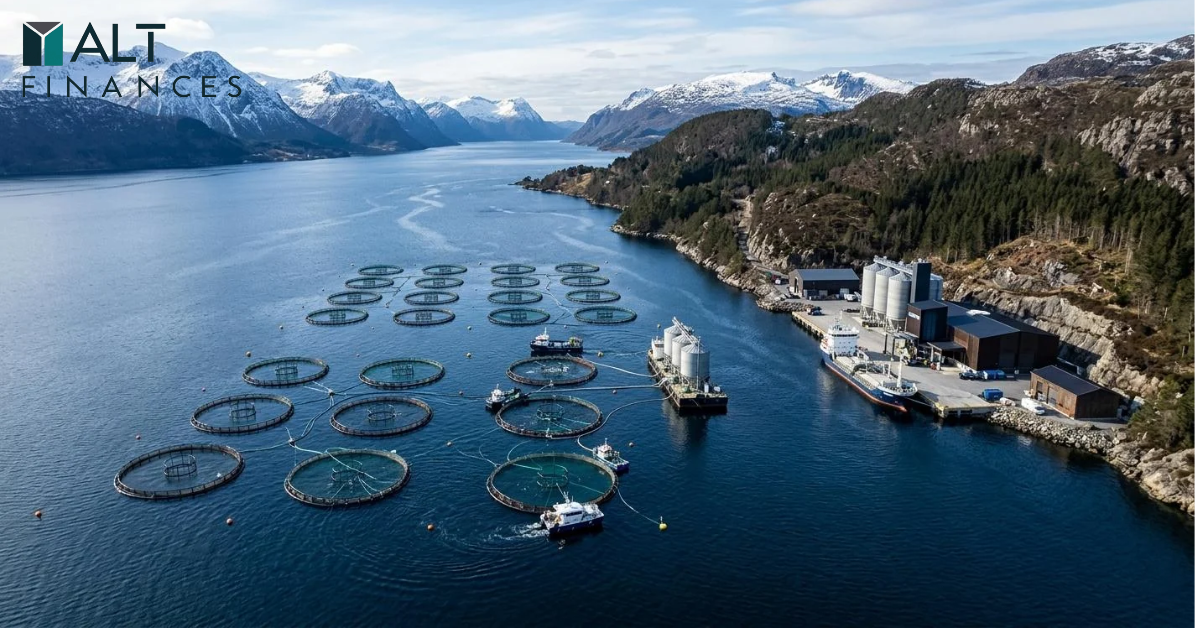
The ocean economy is drawing growing attention from financial markets, but turning its potential into investable opportunities remains a challenge. A new World Economic Forum report published in October 2026 examines more than 220 ocean-related transactions completed between 2021 and 2026, highlighting how different types of capital are financing established industries and emerging ocean solutions. The findings suggest that institutional investors may have a larger role to play but scaling investment will require more than simply directing money toward projects labelled sustainable.
Blue finance is developing as a framework for funding ocean-related activities while supporting marine health, sustainable resource use and coastal resilience. It can connect commercial investment with environmental priorities, but its success depends on credible project design, measurable outcomes and financial structures that account for risk.
What Is Blue Finance?
Blue finance refers to financial instruments and investment approaches designed to fund sustainable use and protection of ocean and water resources. These may include blue bonds, blue loans, private investment funds, sustainability-linked financing and blended finance structures.
The concept overlaps with the broader sustainable blue economy: economic activities connected to oceans and coasts that aim to generate social and economic benefits while protecting marine ecosystems.
Blue finance is not simply conventional investment in businesses that operate near the sea. A shipping company, fishery or coastal property developer can have substantial ocean exposure without necessarily making a positive contribution to marine health. The environmental and social characteristics of a project matter.
The International Finance Corporation (IFC) published its Blue Finance Guidelines Version 2.0 in September 2025, updating its framework for eligible activities and practical guidance on blue bonds, loans and sustainability-linked instruments. The guidelines cover areas including water security, plastics recycling, shipping, aquaculture and marine conservation.
IFC+1
Blue finance therefore sits at the intersection of sustainable investing, infrastructure finance and impact investing. Its distinctive focus is the relationship between capital allocation and the health, resilience and sustainable use of ocean and water resources.
Why Institutional Investors Are Looking at the Ocean Economy
The ocean underpins global trade, food systems, energy production, tourism and coastal infrastructure. It also faces growing pressures from pollution, overfishing, warming waters and extreme weather.
The IFC says the ocean economy supports more than 100 million full-time jobs globally and could contribute over $5 trillion to the global economy by 2050. These estimates point to the economic scale of ocean-linked industries, although they do not represent the size of the sustainable investment market or guarantee returns for investors.
IFC+1
For institutional investors, several factors are driving interest:
Long-term demand: Ports, shipping, water infrastructure, seafood production and energy projects serve essential economic needs.
Infrastructure requirements: Many ocean-related industries require substantial investment in assets with long operating lives.
Climate resilience: Coastal protection, flood management and water systems are increasingly important as climate risks grow.
Resource security: Sustainable seafood, clean water and offshore energy can contribute to national and regional economic resilience.
Portfolio diversification: Ocean-related businesses may offer exposure to sectors and assets that differ from conventional public equities and bonds.
But the opportunity is uneven. Mature sectors such as ports and offshore wind may offer more established commercial models, while early-stage marine technologies and conservation projects can face significant financing gaps.
Where the Investment Opportunities Are
Offshore renewable energy and sustainable shipping
Offshore wind and other marine renewable energy projects can attract infrastructure investors, utilities and long-term asset owners. Their revenues may depend on power purchase agreements, electricity markets, project costs and regulatory frameworks.
Shipping is another major area. Financing can support energy-efficient vessels, cleaner fuels, port upgrades and technologies intended to reduce emissions. However, a project’s environmental value depends on the technology used, its lifecycle impact and whether the investment delivers measurable improvements.
Aquaculture and sustainable seafood
Aquaculture can help meet demand for seafood, but it is not automatically sustainable. Environmental performance depends on factors such as feed, disease management, water quality, habitat impacts and local regulation.
Investment may flow into responsible fish and shellfish production, seaweed cultivation, traceability systems and processing infrastructure. These businesses can have commercial revenue streams, but investors must evaluate operating costs, market demand and environmental risks on a project-by-project basis.
Water infrastructure and coastal resilience
Water treatment, wastewater management, desalination and leakage reduction can serve growing demand from cities and industry. Coastal infrastructure including flood protection, shoreline restoration and resilience projects may also be essential as sea levels rise and extreme weather becomes more damaging.
Such projects can offer infrastructure-style cash flows when backed by user fees, government contracts or other reliable revenue sources. Some, however, deliver broad public benefits without generating enough direct revenue to attract private investors on commercial terms.
Marine biotechnology and conservation
Marine biotechnology explores potential uses of ocean organisms in pharmaceuticals, materials, food and industrial applications. The sector can offer innovation opportunities, but commercialisation timelines and scientific uncertainty can be substantial.
Marine conservation and ecosystem restoration can also attract funding. Mangrove restoration, coral protection and sustainable fisheries management may provide environmental and social benefits, yet their financial returns are often indirect. They may depend on public funding, philanthropy, carbon or biodiversity-related revenues, tourism or carefully structured blended finance.
For AltFinances readers interested in natural assets, the rise of natural capital investing provides related context on how investors are exploring nature-linked assets.
Financial Instruments Unlocking Ocean Investment
Blue finance is not one product. Different instruments are used depending on the borrower, project, risk profile and source of revenue.
Blue bonds are debt securities whose proceeds are allocated to eligible ocean- or water-related activities. Issuers may include governments, development banks and companies. Investors receive the bond’s contractual payments; the blue designation concerns how proceeds are used and reported, not a guarantee of financial performance.
Blue loans provide similar purpose-linked financing through loan agreements. They can be used by banks and other lenders to fund eligible projects, with terms based on credit risk and the borrower’s capacity to repay.
Sustainability-linked loans and bonds tie financial terms to the borrower’s performance against specified sustainability targets. These differ from use-of-proceeds instruments because funding may not be restricted to a particular project. Credible targets, transparent reporting and consequences for missing them are important.
Private equity and specialist funds can invest in ocean-related companies, technologies and infrastructure. They may provide growth capital or operational expertise, but returns depend on business performance, exit opportunities and investment risk.
Blended finance combines public, development or philanthropic capital with private investment. Concessional funding, guarantees or first-loss capital can help absorb risks that commercial investors may not accept alone.
The World Bank’s blue finance review also identifies debt-for-nature swaps, parametric insurance and dedicated funds among instruments used to support marine conservation, coastal resilience and sustainable ocean development.
For investors evaluating broader environmental investment themes, the insurance protection gap and climate risks also illustrate how climate exposure can create financing needs and risks for assets and infrastructure.
The Role of Institutional and Development Investors
Pension funds and insurance companies may be suited to long-duration infrastructure investments, while asset managers can create diversified strategies or funds with ocean-related exposure. Banks provide loans, underwriting and working-capital finance. Private equity investors can fund companies as they expand, and development finance institutions can provide capital, guarantees or technical assistance.
Development institutions are particularly important when projects face country risk, unfamiliar technologies, limited data or regulatory uncertainty. Their participation can help structure transactions and establish a track record that later attracts commercial investors.
The World Economic Forum’s October 2026 report highlights the role of catalytic capital across both emerging and established ocean sectors. In its analysis, 46% of the transactions reviewed included a catalytic capital layer, while 78% of transactions in the $100 million–$500 million range included a catalytic component. These figures describe the transactions reviewed not the entire blue finance market but they underline that risk-sharing may remain relevant even for relatively large investments.
The Challenges and Risks of Blue Finance
Blue finance faces a number of obstacles that can limit its growth.
Project bankability: Some projects provide environmental benefits but lack stable revenue streams. Without dependable cash flow, private capital may be difficult to attract.
Regulatory fragmentation: Ocean-related projects operate across national jurisdictions and varied regulatory regimes. Permitting, environmental standards and enforcement can differ significantly.
Climate exposure: Coastal assets, ports, aquaculture and marine infrastructure can be vulnerable to storms, flooding, warming waters and other climate-related disruptions.
Measurement difficulties: Marine ecosystems are complex. Establishing a baseline and measuring changes in biodiversity, water quality or ecosystem health can require specialised expertise and long-term monitoring.
Greenwashing risk: A blue label alone does not demonstrate sustainability. Projects may have adverse environmental impacts, weak safeguards or vague reporting. Investors need to scrutinise eligibility criteria, impact indicators and verification.
The IFC’s updated guidelines and UNEP Finance Initiative’s Sustainable Blue Economy Finance Principles aim to improve the way financial institutions assess ocean-linked activities and incorporate ocean health into financing decisions.
Conclusion: Can Blue Finance Become a Mainstream Investment Market?
Blue finance is emerging as a way to connect institutional capital with the needs of ocean industries, water infrastructure and marine ecosystems. Its investment potential spans established businesses with commercial revenues and newer activities that require patient capital, technical support and risk-sharing.
The opportunity should not be overstated. Ocean exposure does not automatically make an investment sustainable, and positive environmental impact does not guarantee financial returns. Investors must assess business fundamentals, project risks and the credibility of impact claims separately.
If public institutions, development finance providers and private investors can build repeatable financing structures, blue finance may become a more established part of the institutional investment landscape. Its long-term credibility will depend on whether capital supports commercially viable projects while producing measurable, durable benefits for the ocean.
FAQs
1. What is blue finance?
Blue finance is the use of financial instruments including bonds, loans, funds and blended finance to support sustainable ocean and water-related activities. Credible blue finance considers both financial performance and environmental and social outcomes.
2. Why are institutional investors interested in the ocean economy?
Ocean-linked industries support global trade, food, energy, water and infrastructure. Investors are exploring these sectors for long-term demand, infrastructure opportunities, climate resilience and portfolio diversification.
3. What are blue bonds and how do they work?
Blue bonds are debt securities that direct proceeds toward eligible ocean- or water-related projects. Investors receive contractual payments from the issuer. The blue designation relates to the intended use of funds and reporting, not a guarantee of returns.
4. Which industries are attracting investment through blue finance?
Investment opportunities include offshore renewable energy, sustainable shipping, aquaculture, water treatment, coastal resilience, marine biotechnology and conservation. Their commercial potential and environmental benefits vary by project.
5. How can private equity and institutional investors finance ocean conservation?
They may invest through specialist funds, conservation businesses, sustainable infrastructure or blended finance structures. Some conservation projects generate revenue through services or commercial activities, while others require public, philanthropic or concessional funding.
6. What are the biggest risks associated with blue finance?
Risks include uncertain project revenues, climate exposure, regulatory fragmentation, environmental harm, measurement difficulties and greenwashing. Investors need to assess each project’s financial and environmental performance independently.
7. Can blue finance generate financial returns while protecting marine ecosystems?
Yes, some projects can combine commercial revenues with measurable environmental benefits. But outcomes depend on project design, operating performance, market conditions and credible impact monitoring. Environmental benefits do not guarantee financial returns.

Contributing Writer for Alt Finances with experience in luxury events, travel, fashion, and the arts. Active investor through her family office across real estate, energy, and private equity. University of Miami – BBA.