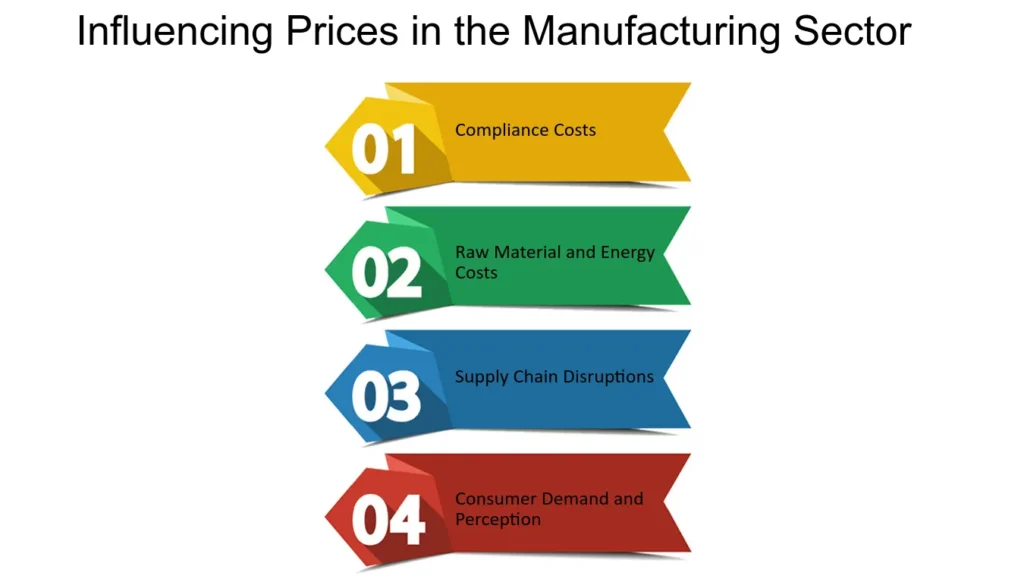
Government regulations play a central role in shaping market behavior. Among the most impactful of these are price regulations, which influence how businesses set, adjust, and manage the prices of goods and services. Whether it’s to protect consumers, stabilize markets, or control inflation, these regulations can significantly affect business strategies, decision-making, and operational practices.
But which statement best explains how regulations on prices affect business practices?
The most accurate explanation is:
“Price regulations limit the ability of businesses to adjust their prices freely, which in turn influences their production, marketing, and profit strategies.”
This article explores how price controls work, why they are used, and the multiple ways they shape the behavior and structure of businesses across industries.
What Are Price Regulations?
Price regulations refer to legal restrictions set by government authorities that dictate how much businesses can charge for specific products or services. These regulations can take several forms:
Price Ceilings: The maximum price a company can charge (e.g., rent control).
Price Floors: The minimum allowable price (e.g., minimum wage).
Fixed Prices: Specific prices set by the government for essential goods.
Rate-of-return Regulation: Caps the amount of profit a company can make in regulated industries like utilities.
Why Are Prices Regulated?
Governments impose price regulations for a variety of reasons:
| Objective | Description |
|---|---|
| Consumer Protection | Ensures affordability of essential goods and services |
| Market Stability | Prevents price gouging during emergencies or shortages |
| Fair Competition | Reduces monopolistic or predatory pricing |
| Economic Equality | Controls the gap between consumer affordability and business pricing |
| Inflation Control | Slows rapid increases in prices to stabilize the economy |
These objectives often require balancing economic growth with social welfare.
How Price Regulations Influence Business Practices
Regulations on prices create ripple effects throughout an organization. Below are several core areas of business that are impacted:
1. Pricing Strategy
Businesses can no longer rely solely on market demand or competition to determine pricing. Instead, they must:
Comply with legal pricing limits
Recalculate margins
Identify alternative revenue streams
2. Cost Management
If a company cannot raise prices due to regulation, it must control costs to maintain profitability. This may include:
Reducing labor costs
Switching to cheaper suppliers
Scaling down production
3. Product Offerings
Businesses may change the quality, size, or availability of products to adjust to regulated prices.
Example: A fast-food chain may reduce portion sizes to keep meals under a regulated price ceiling.
4. Investment Decisions
If profits are capped, businesses may be less willing to invest in innovation, expansion, or upgrades.
5. Marketing and Positioning
Price-regulated products may require value-focused branding instead of premium positioning.
Table: Effects of Price Regulations on Business Functions
| Business Function | Impact of Price Regulation |
|---|---|
| Pricing | Loss of autonomy; need for legal compliance |
| Production | Need to optimize or scale back due to profitability constraints |
| Supply Chain | Pressure to source cheaper materials or services |
| Workforce | Potential layoffs or hiring freezes to reduce costs |
| Investment | Lower ROI discourages new projects or expansions |
| Marketing | Focus on cost-efficiency and affordability messaging |
Real-World Examples
1. Rent Control (Housing Sector)
Landlords in cities with rent control cannot raise prices beyond a fixed percentage annually. As a result:
Some reduce maintenance services
Others convert rental units to condos
Investment in new housing developments may decline
2. Utility Price Caps
Electricity providers with regulated rates cannot freely increase prices, even during spikes in fuel costs. Companies then:
Rely on energy efficiency incentives
Cut overhead
Delay infrastructure upgrades
3. Agricultural Price Floors
Governments sometimes guarantee minimum prices for crops to support farmers. This leads to:
Overproduction of some goods
Increased storage costs
Government purchases of surplus products
Balancing Regulation with Business Communication
Adapting to price controls requires not just internal adjustments but also clear, consistent messaging to stakeholders. This is where Business Communications Solutions come into play.
Companies need tools to:
Notify customers of pricing policies
Coordinate teams on pricing strategies
Update suppliers and partners
Manage crisis communication when pricing changes impact operations
A streamlined communication system ensures that internal decisions made in response to regulations are well understood across departments, and customer trust is maintained even when pricing shifts are necessary.
Frequently Asked Questions (FAQs)
Q: Do price regulations always hurt businesses?
A: Not necessarily. While they can reduce profit margins, they may also create market stability and increase demand by keeping prices affordable.
Q: Can businesses lobby against price regulations?
A: Yes. Many industries work with trade associations or legal teams to influence public policy and advocate for flexible regulations.
Q: How do companies stay profitable under price ceilings?
A: By cutting costs, optimizing operations, diversifying revenue, or using tiered product models to offer both basic and premium options.
Q: Are small businesses more affected by price regulations than large ones?
A: Often, yes. Smaller businesses may have less flexibility in adjusting their cost structure or absorbing financial losses.
Q: Can price regulations vary by region?
A: Absolutely. Local, state, and national governments can all implement different pricing controls based on their jurisdiction and market conditions.
Conclusion
Understanding how regulations on prices affect business practices is essential for any company operating in a regulated market. The key takeaway is this:
Price regulations restrict pricing flexibility, prompting businesses to revise operational strategies, control costs, and refine customer communications.
Whether you’re navigating government-imposed price ceilings, responding to industry-specific rate caps, or reevaluating your pricing structure, your ability to adapt can determine long-term success.
Smart businesses don’t just react—they plan. From adjusting product offerings to implementing robust Business Communications Solutions, companies must take a strategic approach to survive and thrive under regulatory pressure.

Kaleem Afzal Khan is a finance and investment writer specializing in alternative investments, wealth-building strategies, global economic trends, and emerging financial opportunities. His work focuses on helping readers understand complex financial concepts through clear, research-driven analysis and practical insights.
With a strong background in engineering, project management, and analytical problem-solving, Kaleem brings a data-oriented perspective to investment research, market developments, and long-term wealth creation. He regularly explores topics including private markets, infrastructure investments, cryptocurrency trends, personal finance, and macroeconomic developments that shape the future of capital allocation.
Through his writing, Kaleem aims to bridge the gap between institutional-level financial knowledge and everyday investors, empowering readers to make informed financial decisions in an increasingly complex economic landscape.