

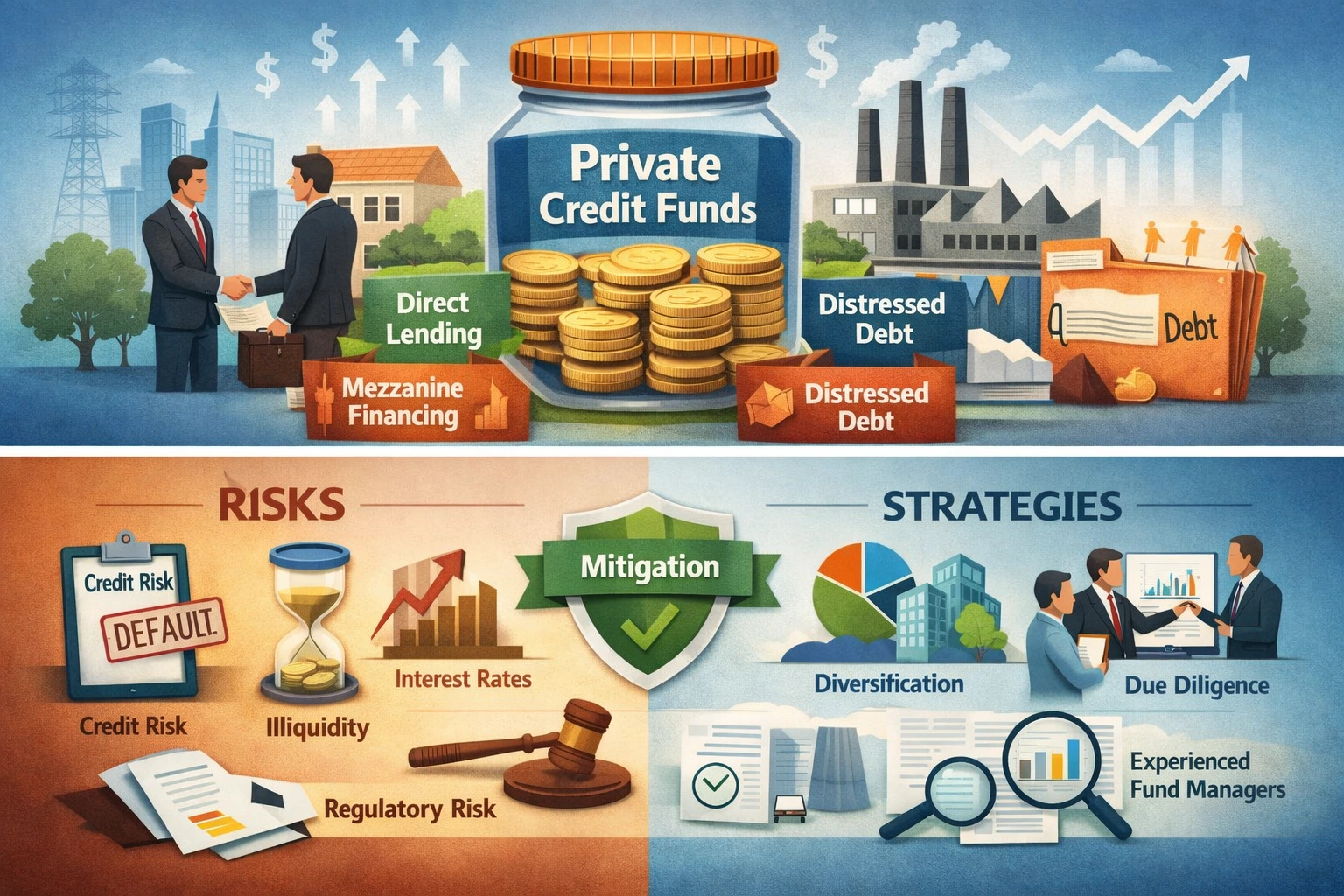
Private credit investments are loans provided directly to companies or individuals outside traditional banking channels. Unlike public bonds or equities, these loans are privately negotiated and structured through private credit funds, including direct lending, mezzanine financing, and distressed debt.
Private credit enables investors to earn higher yields by financing businesses or projects that banks may avoid. For example, a mid-sized manufacturing firm seeking $10 million to upgrade machinery might secure a senior secured private loan at 10–12% interest, whereas a comparable public bond would yield only 5–6%. This creates a win-win: borrowers access flexible funding, and investors capture enhanced yields while diversifying their portfolio.
Case Study:
In 2022, a private credit fund lent $8 million to a healthcare technology startup. By structuring the loan as senior secured, the fund obtained priority claims on company assets. Over two years, the borrower met interest payments consistently, yielding an effective annual return of 11%. Default risk was minimized via strict covenants and regular monitoring, emphasizing the importance of hands-on management.
Key Benefits of Private Credit Investments
Private credit is favored by investors seeking higher returns and portfolio diversification. Its advantages include:
-
Higher Returns: Private loans often generate 7–12% yields, compared to 3–5% from traditional bonds.
-
Portfolio Diversification: Low correlation with public equities reduces overall volatility.
-
Customizable Terms: Options include senior secured loans, subordinated debt, mezzanine financing, and distressed debt.
-
Capital Preservation: Senior secured loans prioritize repayment from collateral, mitigating default risk.
Practical Example: Allocating $500,000 across ten mid-market loans yielding 9% annually can generate ~$45,000/year. Diversification ensures that even if one borrower defaults, the portfolio remains largely intact.
Is Private Credit Investing Risky?
Yes, private credit carries risks, but understanding them enables effective management:
Private credit investing carries certain inherent risks that investors must carefully manage. Credit risk is a primary concern, as borrowers may default, particularly those unable to secure traditional bank financing. Illiquidity is another factor, since private loans often lock capital for three to seven years, limiting immediate access to funds.
Additionally, interest rate sensitivity can affect the market value of fixed-rate loans, reducing returns when rates rise. The sector is also subject to regulatory risk, as less-regulated markets can be influenced by sudden legal or policy changes. To mitigate these risks, investors should diversify their portfolio across sectors such as healthcare, technology, renewable energy, and manufacturing, partner with experienced private credit fund managers, and conduct thorough due diligence on borrower financials, collateral, and management practices. This proactive approach not only safeguards capital but also enhances the potential for stable, high-yield returns.
Common Pain Points Investors Face
-
Limited transparency in borrower operations makes risk assessment challenging.
-
High-quality deals may be inaccessible to individual investors.
-
Defaults can occur unexpectedly, especially during economic downturns.
-
Long lock-in periods limit liquidity flexibility for investors needing quick access to funds.
Practical Insight: Managing a $50 million private credit portfolio, an optimal allocation could be:
-
40% Senior Secured Loans
-
30% Mezzanine Debt
-
30% Opportunistic/Distressed Debt
This balances predictable income with higher yields from riskier assets. Regular monitoring, strong covenants, and proactive borrower engagement are essential.
Comparison Table: Private Credit vs Traditional Bonds
| Feature | Private Credit | Traditional Bonds |
|---|---|---|
| Expected Return | 7–12% | 3–5% |
| Liquidity | Low (3–7 years) | High (daily trading) |
| Market Correlation | Low | Moderate to high |
| Risk Level | Medium to High | Low to Medium |
| Customization | High (loan terms, borrower selection) | Low |
How to Maximize Returns in Private Credit
-
Diversify Portfolio: Across borrowers, sectors, and loan types.
-
Perform Due Diligence: Analyze borrower financials, collateral, and management quality.
-
Engage Expert Fund Managers: Provides access to better deals and risk oversight.
-
Active Monitoring: Track borrower performance and adjust exposure.
-
Use Protective Covenants: Include reporting requirements and default triggers.
Real-Life Example: A $5 million loan to a renewable energy startup had quarterly revenue reporting covenants. Early detection of payment delays allowed corrective negotiations, preserving the expected yield.
Comparison Table: Senior Secured vs Mezzanine Loans
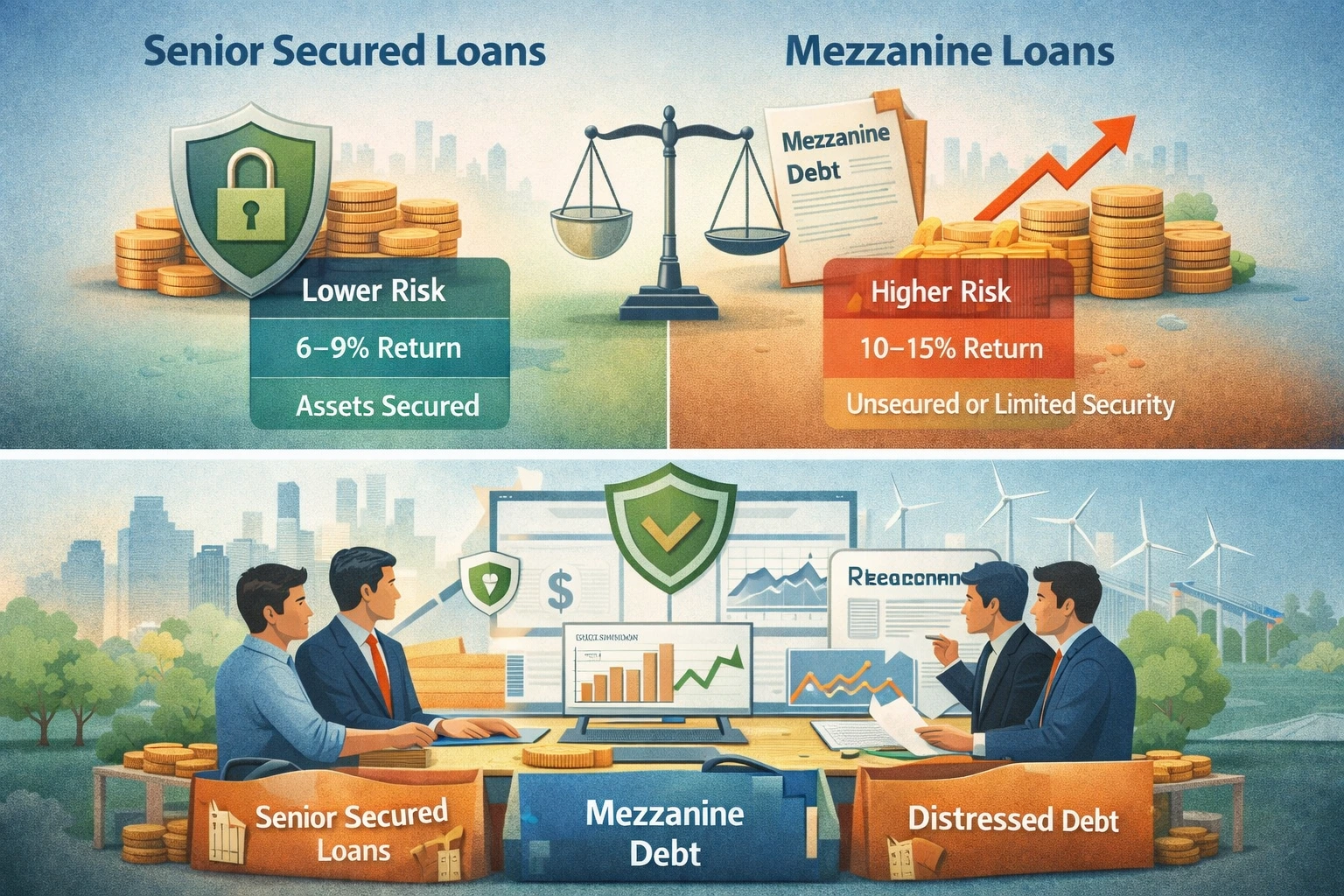
| Feature | Senior Secured Loans | Mezzanine Loans |
|---|---|---|
| Security | Yes (assets pledged) | Limited or unsecured |
| Expected Return | 6–9% | 10–15% |
| Risk | Low to Medium | Medium to High |
| Liquidity | Low | Low |
| Investor Control | High (priority in default) | Moderate |
Key Strategies for Successful Private Credit Investing
-
Build a diversified portfolio across sectors to reduce risk.
-
Invest in funds with strong track records and high transparency.
-
Mix senior secured loans with higher-yield mezzanine or distressed debt.
-
Commit to long-term lock-in periods (3–7 years) to realize full returns.
-
Monitor macro trends: interest rates, inflation, and sector health.
-
Implement covenants to safeguard against borrower defaults.
Bonus Tip: Allocate part of the portfolio to opportunistic distressed debt during downturns. Carefully selected distressed loans can generate double-digit returns and early access to high-recovery opportunities.
Conclusion & Free Investor Value
Private credit provides high yields, portfolio diversification, and capital preservation. While risks such as credit defaults, illiquidity, and regulatory changes exist, these can be managed with diversification, strong covenants, fund selection, and active monitoring.
Extra Value Tip: Combining private credit with traditional bonds and equities creates a balanced portfolio capable of withstanding market volatility while generating steady income. Real-world experience shows that funds with robust due diligence, diversified exposure, and strong covenants consistently outperform in downturns. Active engagement and selective allocation to higher-yield opportunities enhance long-term returns.
Frequently Asked Questions(FAQs)
What is the minimum investment for private credit funds?
$250,000–$1 million depending on fund policies.
Can individual investors access private credit deals?
Yes, through funds or syndicates, though some deals are institutionally reserved.
How long is the typical lock-in period?
3–7 years, depending on loan type and fund structure.
Are private credit investments safer than stocks?
Less volatile than equities, but credit and liquidity risks exist. Risk-adjusted returns are attractive.
How do interest rate changes affect private credit?
Rising rates may reduce market value of existing loans, but new loans usually offer higher yields.


