
You go to the grocery store and notice your regular carton of eggs costs a dollar more than last month. You stop at the gas station and see fuel prices creeping higher yet again as the Federal Reserve monitors market shifts. This silent thief, which erodes your purchasing power, has a name you hear on the news constantly. Economists call this persistent phenomenon inflation, a trend that significantly impacts the global cost of living and overall price stability.
At its core, inflation represents the steady increase in the general price level of goods and services. Economists use the Consumer Price Index (CPI) to track these changes, noting that as prices rise, the purchasing power of your money declines. Unlike deflation, where prices fall, a moderate rate of price increases signals a growing economy, yet rapid spikes squeeze household budgets. Understanding these economic indicators is essential for maintaining your long-term financial health in a shifting market.
Understanding how prices fluctuate helps you make better decisions regarding your personal wealth and long-term investments. Key economic indicators driving these changes affect everything from your mortgage rate to your retirement account, often dictated by shifts in monetary policy. By learning the mechanics of this financial force, you can build strategies to protect your purchasing power. Staying informed allows you to navigate the complexities of interest rates and market volatility with greater professional confidence.
Inflation rarely happens in a vacuum without underlying economic catalysts pushing the market toward higher costs. Various financial forces, including shifts in monetary policy, push and pull at the supply chain to drive consumer costs upward. Analysts generally categorize these complex market forces into three primary economic camps to better understand price stability.
Demand-Pull Inflation: How Consumer Spending Impacts the Federal Reserve
Demand-pull inflation occurs when consumer demand heavily outpaces the available supply of physical goods. Imagine a booming economy where unemployment stays remarkably low and corporate wages remain high. Consumers possess extra disposable cash, so they rush out to buy cars, homes, and electronics, which often prompts the Federal Reserve to act.
Manufacturers struggle to produce enough physical items to satisfy this massive consumer appetite. Since products become scarce on the shelves, businesses realize they can charge higher prices without losing customers. Too many dollars end up chasing too few goods, forcing the overall cost of living aggressively upward and reducing purchasing power.
Cost-Push Inflation: Supply Chain Disruptions and Monetary Policy
Cost-push inflation originates directly from the supply side of the global economic equation. Companies frequently face higher operational expenses for raw materials, factory labor, or international transportation. To maintain their strict profit margins, these businesses pass their increased costs directly down to the consumer, impacting monetary policy decisions.
A perfect example occurred during recent global supply chain disruptions involving overseas manufacturing. Shipping container costs skyrocketed globally, and computer microchips became incredibly scarce for technology companies. Automakers had to pay more to build cars, so they raised the final sticker price for buyers, fueling inflation.
The Wage-Price Spiral: Labor Costs and Price Stability
Another dangerous catalyst for rising prices is the continuous cycle known as the wage-price spiral. When the cost of living increases, workers naturally demand higher hourly pay to support their families. Employers eventually grant these necessary raises to retain their top talent and avoid disruptive labor strikes, which can threaten price stability.
Paying higher wages immediately increases the overall operating expenses for those specific businesses. To cover the new payroll costs, companies must raise the retail prices of their goods once again. Workers then need another pay raise to afford the newly inflated prices, creating a continuous, self-sustaining loop that challenges the Federal Reserve.
- Demand-pull inflation happens when consumer spending outpaces product availability.
- Cost-push inflation occurs when businesses pass higher manufacturing costs to buyers.
- The wage-price spiral creates a continuous loop of rising pay and rising costs.
Historical Inflation: Economic Cycles and the Federal Reserve Response
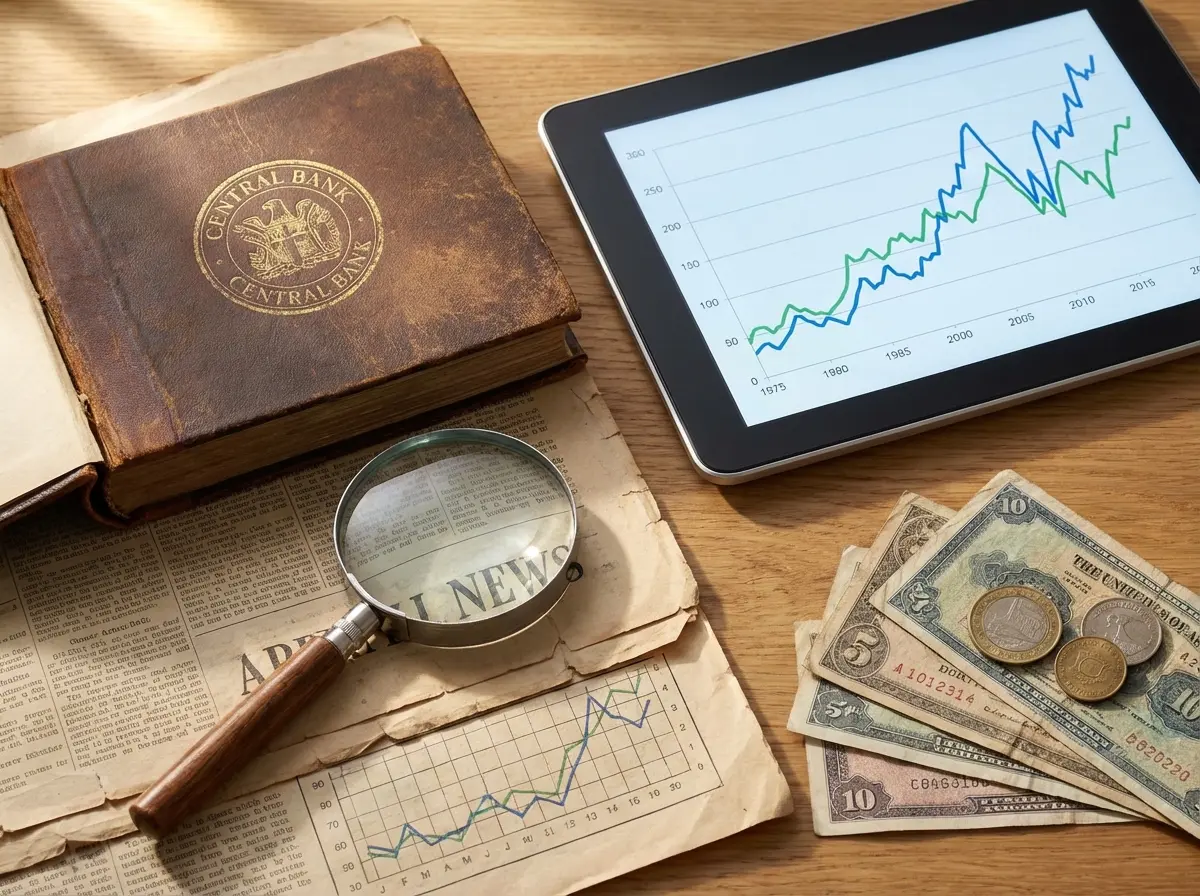
Looking at past economic cycles provides valuable context for current financial conditions in the modern market. The United States experienced its most famous bout of severe price instability during the chaotic 1970s. Economists frequently refer to this painful financial period, marked by stagflation, as the Great Inflation.
During this decade, a combination of foreign oil embargoes and loose monetary policy sent prices skyrocketing. Annual inflation rates eventually peaked at nearly fifteen percent by the early 1980s. The Federal Reserve had to push benchmark interest rates above twenty percent to finally break the cycle and restore price stability.
Hyperinflation Risks: Currency Collapse and Economic Indicators
While the United States dealt with double-digit rates, other nations have suffered through complete currency collapses. Hyperinflation occurs when monthly consumer price increases exceed a staggering fifty percent threshold. This catastrophic economic failure wipes out personal savings and destroys the local currency completely, serving as a warning for monetary policy makers.
Countries like Zimbabwe and Venezuela provide modern examples of this extreme and devastating financial scenario. Governments printed massive amounts of paper money to pay off national debts, rendering their cash virtually worthless. Citizens had to spend their paychecks immediately because food prices would double within a matter of days, destroying all purchasing power.
Measuring Inflation: How the Consumer Price Index (CPI) Tracks Data
The United States government uses several specialized statistical tools to track price fluctuations across the country. The Bureau of Labor Statistics (BLS) releases the most famous metric, widely known as the Consumer Price Index (CPI). The Federal Reserve prefers a slightly different calculation called the Personal Consumption Expenditures (PCE) Price Index.
Understanding the Consumer Price Index (CPI) and Cost of Living
The Consumer Price Index (CPI) measures the average monthly change in prices paid by urban American consumers. The government tracks a theoretical basket of consumer goods and essential services to monitor the cost of living. This representative basket includes everyday household expenses like housing, food, transportation, and medical care.
Statisticians check the retail prices of these specific items every month to see how much they fluctuate. If the total cost of the basket goes up by three percent over twelve months, the annual inflation rate sits at three percent. This specific metric heavily influences how the government adjusts Social Security benefits and federal tax brackets to maintain purchasing power.
You will often hear analysts discuss “Core” versus “Headline” data. Core metrics exclude highly volatile food and energy prices to provide a clearer picture of long-term economic trends and price stability.
The Personal Consumption Expenditures (PCE) Index and Monetary Policy
While the general public watches the CPI, the Federal Reserve closely monitors the Personal Consumption Expenditures (PCE) Index. This alternative metric actively adjusts for consumer substitution behavior during periods of high prices. Central bankers rely on this specific data point when they decide whether to raise or lower interest rates.
The Consumer Price Index (CPI) assumes people keep buying beef, while this alternative index accounts for the switch to chicken. This built-in flexibility makes it a highly accurate reflection of actual consumer spending habits. Central bankers rely on this specific data point when they decide whether to raise or lower interest rates to manage inflation.
The Real Impact of Inflation: Interest Rates and Purchasing Power
Rising prices affect far more than just your weekly grocery bill or your daily commute costs. High inflation creates a massive ripple effect that touches every single aspect of your financial life. Your savings accounts, debt obligations, and long-term retirement plans all take a substantial hit as interest rates fluctuate.
First, your personal purchasing power erodes rapidly as the broader economy experiences rising costs. If your salary stays flat while prices rise by five percent, you effectively took a five percent pay cut. You must spend a larger portion of your income just to maintain your basic cost of living, making it difficult to save.
Second, borrowing money becomes significantly more expensive for the average working consumer. Central banks typically combat rising prices by aggressively hiking their benchmark interest rates to maintain price stability. When the Federal Reserve raises its rate, commercial banks immediately increase the rates they charge consumers for mortgages and loans.
Carrying a balance on variable-rate credit cards during high inflation periods can devastate your finances. As the central bank raises interest rates, your minimum payments and monthly interest charges will automatically increase, further straining your budget.
Economic Winners: Who Benefits from Inflation and Interest Rates?
Most everyday people view inflation as a purely negative economic force that destroys household wealth. However, certain individuals and corporate entities actually gain a massive financial advantage when prices rise rapidly. If you hold a significant amount of fixed-rate debt, such as a fixed-rate mortgage, you sit in a highly favorable position.
Imagine you secured a thirty-year fixed-rate mortgage at a low three percent interest rate. As inflation drives consumer prices and corporate wages up, your monthly mortgage payment remains exactly the same. You essentially pay back the bank using dollars that hold far less value, effectively increasing your purchasing power elsewhere.
Federal governments also benefit tremendously from this exact same financial dynamic. The United States carries trillions of dollars in outstanding national debt obligations. As inflation increases nominal tax revenues, the relative burden of that fixed national debt decreases over time, which influences monetary policy decisions.
- Rising prices erode your purchasing power and make saving money much harder.
- Central banks raise interest rates to cool the economy, making consumer borrowing more expensive.
- People holding fixed-rate debt benefit because they repay loans with devalued dollars.
Financial Protection: Managing Your Portfolio During High Inflation
You cannot control macroeconomic trends or dictate Federal Reserve monetary policy. However, you can take specific, proactive steps to shield your personal wealth from eroding over time. Strategic financial planning helps you weather economic storms and preserve your daily purchasing power against rising interest rates.
Many successful investors adjust their portfolios to include assets that historically perform well during inflationary periods. Real estate, physical commodities, and Treasury Inflation-Protected Securities (TIPS) often retain their value when cash loses its punch. You should review your financial strategy to confirm it aligns with current economic indicators.
Steps to Shield Your Wealth
1. Rebalance Your Investment Portfolio for Price Stability
Shift a portion of your assets into financial vehicles that resist price increases. Treasury Inflation-Protected Securities automatically adjust their principal value based on Consumer Price Index (CPI) data.
2. Pay Down Variable-Rate Debt to Combat Interest Rates
Eliminate high-interest credit card balances immediately before interest rates climb any further. Focus intensely on variable-rate obligations that become more expensive as central banks tighten monetary policy.
3. Delay Large Financed Purchases During High Inflation
Avoid locking in long-term loans when consumer interest rates hit their peak. Wait patiently for the economic cycle to normalize before financing a new vehicle or real estate property.
Conclusion: Adapting to Inflation, Interest Rates, and Economic Shifts
Inflation remains a permanent fixture of modern economic systems across the globe. While central banks deliberately target price stability with a two percent annual rate, rapid spikes will inevitably occur. Understanding how these economic forces operate gives you a distinct advantage in managing your personal money and purchasing power.
You must stay informed about economic indicators and adjust your financial habits accordingly. Monitor the Consumer Price Index (CPI) reports and pay close attention to Federal Reserve interest rate decisions. By maintaining a flexible approach to saving and investing, you can aggressively protect your wealth from the silent thief of rising prices.
Remember to consult with a registered financial professional before making drastic changes to your portfolio. They can review your financial situation and recommend strategies that align with your long-term goals. [Check out our complete guide to building a resilient investment portfolio] for more actionable advice on protecting your assets.

Ana Goldenberg is a Contributing Editor at Alt Finances with a career rooted in the high-stakes worlds of banking and private placements. From profiling global philanthropists to managing complex financial operations at Wells Fargo, she bridges the gap between editorial storytelling and disciplined financial expertise.