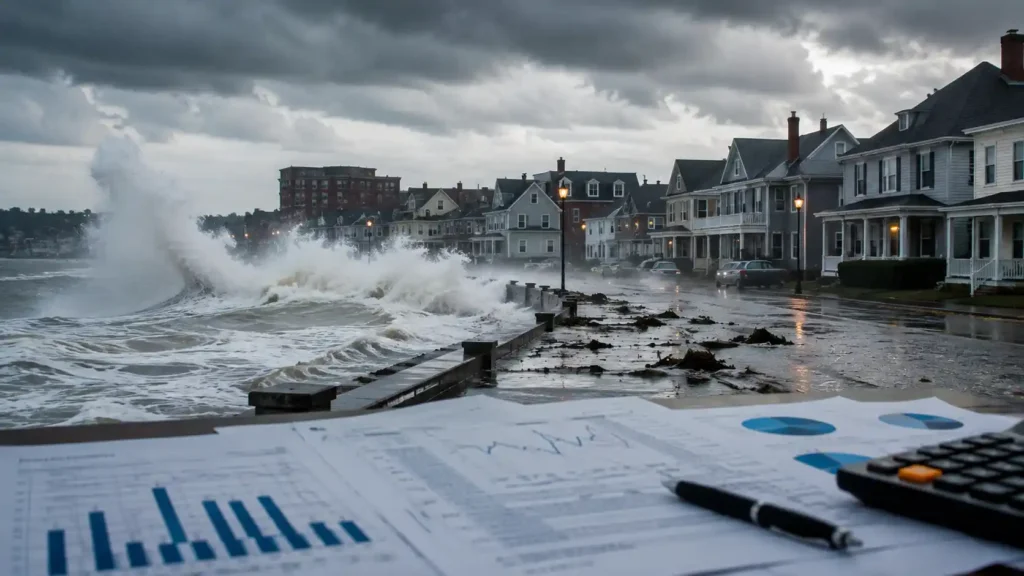
Financial markets are increasingly evolving beyond financing businesses and governments. Today, they are also helping absorb risks once managed almost exclusively by the global insurance industry. As climate-related disasters become more frequent, insured losses grow larger, and capital requirements continue to rise, insurers and reinsurers are turning to capital markets for additional capacity. In this changing environment, catastrophe bonds have emerged as a specialized investment solution that connects institutional capital with disaster risk, creating a new category within alternative investments.
This structural shift reflects more than financial innovation. It illustrates how modern capital markets are expanding to address complex global challenges through sophisticated risk transfer mechanisms. Rather than viewing natural catastrophes solely as insurance events, investors increasingly recognize them as distinct financial risks that can be modeled, diversified, and incorporated into long-term portfolios. Consequently, insurance-linked securities (ILS), including cat bonds, have attracted growing interest from pension funds, family offices, sovereign wealth funds, and other institutional investors seeking exposure to assets with relatively low correlation to traditional equity and fixed-income markets. While investment outcomes remain highly dependent on catastrophe frequency, pricing, trigger structures, and portfolio construction, catastrophe bonds have become an increasingly important component of institutional capital allocation.
What Are Catastrophe Bonds and How Do They Work?
Despite their name, catastrophe bonds are not conventional fixed-income securities.
Instead, they are a specialized form of insurance-linked securities designed to transfer defined disaster risks from insurers and reinsurers to investors. Rather than assuming credit risk or interest-rate risk, investors agree to absorb carefully specified insurance risks in exchange for the potential to earn attractive risk-adjusted returns.
The process typically begins when an insurance company or reinsurer seeks additional protection against major natural catastrophes.
Instead of retaining all potential losses on its own balance sheet, the insurer establishes a special purpose vehicle (SPV) that issues catastrophe bonds to investors through the capital markets.
Investor capital is placed into highly secure collateral accounts while the sponsoring insurer pays periodic premiums into the structure.
If no qualifying disaster occurs during the bond’s life, investors generally receive their principal back at maturity along with the agreed coupon payments.
However, if a predefined trigger event occurs, some or all of the principal may be used to compensate the insurer for covered losses.
This structure allows insurers to secure additional protection while giving investors access to an asset class driven primarily by natural catastrophe risk rather than corporate earnings, inflation expectations, or interest-rate movements.
Importantly, Investors are not simply betting on the occurrence of disasters; they are assuming defined insurance risks in exchange for premium income.
Instead, they are accepting clearly defined insurance risks that have been extensively analyzed using catastrophe modeling, historical data, engineering assessments, and actuarial research.
Several trigger mechanisms determine whether investors experience losses, including:
- Indemnity triggers based on the insurer’s actual losses.
- Industry-loss triggers linked to total insured market losses.
- Parametric triggers tied to measurable physical events such as earthquake magnitude or hurricane wind speed.
- Modeled-loss triggers using catastrophe simulation models.
Each structure balances transparency, pricing, basis risk, and investor preferences differently.
The broader reinsurance market plays an essential role in this ecosystem.
Traditional reinsurers continue providing significant catastrophe protection, yet capital markets increasingly complement that capacity through catastrophe bonds and other insurance-linked securities.
As natural catastrophe exposure grows worldwide, combining insurance expertise with institutional capital has become an increasingly important method of managing large-scale disaster risks.
Why this matters to investors
Catastrophe bonds provide exposure to risks that differ fundamentally from those driving most financial assets. Instead of relying on corporate profitability or economic expansion, returns depend primarily on defined insurance events and disciplined risk modeling. For investors seeking broader portfolio diversification, this creates a distinct source of potential return while also introducing unique risks related to natural catastrophes and trigger structures.
Why Institutional Investors Allocate to Catastrophe Bonds?
Institutional investors rarely allocate capital based solely on return expectations.
Instead, they evaluate how each investment contributes to broader portfolio construction.
This perspective helps explain why catastrophe bonds have become increasingly attractive to sophisticated investors.
Unlike many traditional financial assets, catastrophe bonds generally exhibit relatively low correlation with stock markets, government bonds, or corporate credit because their performance depends primarily on natural catastrophe events rather than macroeconomic conditions.
As a result, many investors view them as a potential source of returns with relatively low correlation to traditional markets within diversified institutional portfolios.
This characteristic has encouraged participation from:
- Pension funds
- Sovereign wealth funds
- Insurance companies
- Endowment funds
- Family offices
- Dedicated ILS investing specialists
Another attraction lies in the transparency of risk.
Unlike many complex financial instruments, catastrophe bonds define covered events, trigger conditions, maturity dates, and payout structures before issuance.
Although catastrophe modeling cannot eliminate uncertainty, investors understand the specific risks they are assuming and can diversify across different geographic regions, disaster types, and issuers.
Furthermore, catastrophe bonds support broader trends in insurance capital formation.
As insured losses continue rising globally, insurers require additional sources of capital to maintain underwriting capacity. Capital markets therefore increasingly supplement traditional reinsurance by providing long-term financing for disaster-related risks.
Before comparing catastrophe bonds with other forms of risk transfer, it is useful to understand how they fit within the broader spectrum of institutional investment strategies.
Comparing Risk Transfer Instruments
| Risk Transfer Instrument | Primary Purpose | Key Risk |
|---|---|---|
| Catastrophe Bonds | Transfer defined disaster risk to capital markets | Partial or total principal loss after qualifying events |
| Traditional Reinsurance | Transfer insurance liabilities between insurers | Counterparty exposure and underwriting cycles |
| Insurance-Linked Securities Funds | Diversified exposure to insurance risks | Manager selection and portfolio concentration |
| Private Credit | Generate income through private lending | Credit defaults and economic downturns |
The comparison demonstrates that catastrophe bonds occupy a unique position within alternative investments. While private credit focuses on borrower repayment and traditional reinsurance relies on insurance company balance sheets, catastrophe bonds connect institutional investors directly with defined insurance risks through the capital markets.
Consequently, they represent both a diversification tool and a growing source of private market capital supporting global insurance systems.
Why this matters to investors?
Understanding the distinction between catastrophe bonds and other risk-transfer instruments is essential for effective capital allocation. Although catastrophe bonds may improve portfolio diversification under certain market conditions, investors must also recognize risks including catastrophe frequency, pricing cycles, model uncertainty, liquidity constraints, and event concentration. Long-term success depends not on predicting disasters but on disciplined portfolio construction and rigorous risk management.
Opportunities, Risks, and Climate Challenges
The growth of catastrophe bonds reflects more than investor demand for new asset classes. It also mirrors structural changes taking place across the global insurance industry. Rising insured losses, expanding urban development in catastrophe-prone regions, and increasing climate-related volatility have intensified the need for additional risk-bearing capital beyond traditional reinsurance.
For institutional investors, this creates both opportunities and challenges.
One of the primary attractions of catastrophe bonds is their potential diversification benefit. Because returns are generally linked to predefined natural catastrophe events rather than corporate earnings, interest rates, or economic growth, they have historically exhibited relatively low correlation with many traditional financial assets. That characteristic makes them an attractive consideration within broader alternative investments and private markets portfolios.
However, diversification should never be confused with reduced risk.
Catastrophe bonds expose investors to low-frequency but potentially severe loss events. A qualifying hurricane, earthquake, wildfire, or other covered catastrophe may trigger partial or complete principal loss depending on the bond’s structure.
Climate change adds another layer of complexity.
Changing weather patterns, rising sea temperatures, and increasing concentrations of insured assets in vulnerable regions may influence future catastrophe frequency and severity. While catastrophe modeling continues to improve through advances in data analytics and risk assessment, no model can eliminate uncertainty.
Liquidity also deserves careful attention.
Although the catastrophe bond market has matured significantly, it remains smaller and less liquid than traditional bond markets. Investors with shorter investment horizons may therefore encounter greater pricing volatility or reduced secondary-market liquidity during periods of elevated catastrophe risk.
Regulatory developments continue shaping the market as well.
Insurance regulation, disclosure standards, catastrophe modeling practices, and capital requirements evolve over time, affecting both issuers and investors. Successful participation therefore requires ongoing monitoring of market developments rather than relying solely on historical performance.
Why this matters to investors?
Catastrophe bonds illustrate that diversification often involves accepting different kinds of risk rather than less risk. Investors should evaluate catastrophe exposure, model assumptions, geographic concentration, liquidity needs, and portfolio construction carefully before allocating capital to this specialized asset class.
Comparing Catastrophe Bonds With Other Alternative Investments
Institutional investors rarely evaluate catastrophe bonds in isolation.
Instead, they compare them with other alternative investment strategies to determine how each contributes to overall portfolio objectives.
Unlike private credit, which generates returns primarily through borrower interest payments, catastrophe bonds derive performance from assuming predefined insurance risks.
Similarly, while traditional reinsurance relies on insurance company balance sheets and underwriting expertise, catastrophe bonds transfer those risks directly into the capital markets through specialized investment structures.
Insurance-linked securities funds represent another approach.
Rather than purchasing individual catastrophe bonds, investors gain diversified exposure through professionally managed portfolios covering multiple catastrophe types, geographic regions, and issuers.
The following comparison highlights how catastrophe bonds differ from more traditional fixed-income investments.
Catastrophe Bonds vs. Traditional Fixed Income
| Investment Characteristic | Catastrophe Bonds | Traditional Fixed Income |
|---|---|---|
| Primary Return Driver | Insurance risk premiums | Interest payments and credit spreads |
| Main Risk | Qualifying catastrophe events | Interest-rate and credit risk |
| Market Correlation | Generally lower correlation with traditional markets | Higher sensitivity to economic and interest-rate cycles |
| Liquidity | More limited secondary market | Generally higher liquidity |
| Typical Investor | Institutional investors and specialized ILS funds | Broad range of institutional and retail investors |
The comparison demonstrates why catastrophe bonds occupy a distinctive place within institutional portfolios.
Traditional bonds primarily respond to inflation expectations, monetary policy, and borrower credit quality. By contrast, catastrophe bonds are influenced mainly by predefined insurance events and catastrophe risk pricing.
That difference explains why many sophisticated investors view catastrophe bonds as a complementary allocation rather than a replacement for conventional fixed-income securities.
Why this matters to investors?
Portfolio construction increasingly focuses on combining multiple sources of return rather than relying on a single asset class. Catastrophe bonds may complement traditional investments by introducing exposure to a different set of underlying risk factors. Nevertheless, investors should view them as one component of a diversified portfolio rather than a standalone solution.
The Future of Insurance-Linked Investing
Insurance-linked investing continues evolving alongside changes in climate, insurance markets, and institutional capital allocation.
As global catastrophe exposure increases, insurers and reinsurers will likely continue seeking additional sources of capital through financial markets. At the same time, institutional investors continue searching for differentiated investment opportunities capable of enhancing long-term portfolio diversification.
Technological innovation is also reshaping the market.
Advances in catastrophe modeling, satellite monitoring, artificial intelligence, and data analytics are improving how insurers estimate disaster probabilities and price insurance risks. Although uncertainty will always remain, better analytical tools may support more informed investment decisions.
The insurance-linked securities market is also expanding.
While catastrophe bonds remain the most recognized segment of the insurance-linked securities universe, other forms of insurance risk transfer continue expanding as capital markets develop increasingly sophisticated mechanisms for absorbing complex risks.
Ultimately, the long-term evolution of catastrophe bonds will depend on several interconnected factors: climate resilience, regulatory developments, investor demand, insurance market capacity, and continued financial innovation.
Why this matters to investors?
Insurance-linked investing is becoming a more established segment of institutional portfolios. Investors who understand how catastrophe risk interacts with capital markets may be better positioned to evaluate both the opportunities and the limitations of this evolving asset class.
Unique Insight
Catastrophe bonds represent far more than an innovative insurance product. They illustrate a broader transformation in modern finance, where capital markets increasingly absorb risks that were once managed almost exclusively by insurance companies.
This evolution reflects a significant shift in institutional investing. Rather than concentrating solely on traditional economic risks such as credit, inflation, or equity market performance, investors now evaluate specialized risk categories supported by sophisticated modeling, diversified portfolio construction, and disciplined capital allocation.
In this context, catastrophe bonds demonstrate how financial innovation can expand the range of investable assets while helping insurers strengthen their capacity to manage large-scale natural disasters. Their long-term value therefore lies not in speculating on catastrophes, but in providing an efficient mechanism for transferring clearly defined risks between insurers and global capital markets.
Conclusion
What began as a specialized insurance solution has evolved into an established segment of alternative investing and insurance-linked securities, attracting institutional investors seeking differentiated sources of return and broader portfolio diversification.
For investors, the key lesson is that catastrophe bonds should not be viewed as wagers on natural disasters. Instead, they represent a disciplined approach to assuming clearly defined insurance risks through carefully structured financial instruments. While the asset class offers unique diversification characteristics, outcomes ultimately depend on catastrophe frequency, trigger structures, pricing conditions, climate trends, portfolio construction, and rigorous risk management. As insurance markets and capital markets become more closely connected, catastrophe bonds are likely to remain an important example of financial innovation within institutional investing.
Frequently Asked Questions
What are catastrophe bonds?
Catastrophe bonds are insurance-linked securities that allow insurers and reinsurers to transfer specified disaster risks to investors through the capital markets.
How do catastrophe bonds work?
Investors provide capital through a special purpose vehicle, receive periodic premium payments, and may lose part or all of their principal if a predefined catastrophe trigger occurs during the bond’s term.
What are insurance-linked securities?
Insurance-linked securities (ILS) are financial instruments whose performance depends on insurance-related risks rather than traditional financial market movements. Catastrophe bonds are the most widely recognized type of ILS.
Who invests in catastrophe bonds?
Typical investors include pension funds, sovereign wealth funds, insurance companies, endowment funds, family offices, and specialized insurance-linked securities funds.
Why are catastrophe bonds considered alternative investments?
Catastrophe bonds are considered alternative investments because they provide exposure to insurance risk rather than conventional equity or fixed-income markets, offering a differentiated source of portfolio diversification.
What risks do catastrophe bond investors face?
Investors face catastrophe-event risk, model uncertainty, climate-related risks, liquidity constraints, pricing fluctuations, and the possibility of partial or total principal loss.
How does climate change affect catastrophe bonds?
Climate change may influence the frequency and severity of certain natural disasters, making accurate catastrophe modeling and ongoing risk assessment increasingly important.
How do catastrophe bonds differ from traditional bonds?
Traditional bonds primarily compensate investors for credit and interest-rate risk, whereas catastrophe bonds compensate investors for assuming defined insurance risks linked to qualifying natural disasters.
Why do insurers issue catastrophe bonds?
Insurers issue catastrophe bonds to transfer portions of their catastrophe exposure to capital markets, increasing financial capacity and improving risk management.
Why are catastrophe bonds considered a portfolio diversification tool?
Because catastrophe bond performance is generally driven by predefined insurance events rather than corporate earnings or interest-rate movements, they may provide diversification benefits within broader institutional portfolios, although diversification is not guaranteed.

Contributing Writer for Alt Finances with experience in luxury events, travel, fashion, and the arts. Active investor through her family office across real estate, energy, and private equity. University of Miami – BBA.