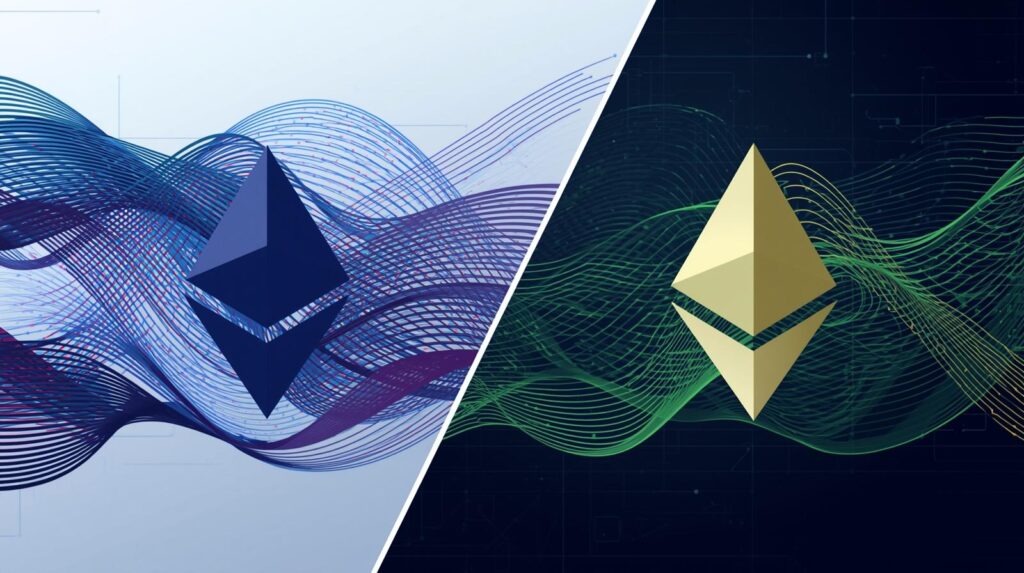
Solana vs Ethereum refers to the comparison between two major blockchain platforms that power decentralized applications (dApps), smart contracts, and Web3 ecosystems. Both networks aim to support decentralized finance, NFTs, and digital services, but they use very different approaches to solve scalability, transaction speed, and cost challenges. For a more detailed analysis of their differences, you can read this comprehensive comparison on CoinMarketCap
In simple terms, Ethereum focuses on security, decentralization, and ecosystem maturity, whereas Solana prioritizes speed, low transaction fees, and high throughput. To understand this difference in real-world terms, imagine two financial systems. Ethereum functions like a global banking infrastructure designed for reliability and trust. Meanwhile, Solana operates more like a high-speed digital payment network capable of processing thousands of transactions almost instantly. Because of these architectural differences, developers, investors, and Web3 startups frequently compare Solana and Ethereum before choosing where to build their blockchain applications.
Solana vs Ethereum: Understanding Ethereum and Its Role in Web3
Ethereum is a decentralized blockchain platform that enables developers to build smart contracts and decentralized applications without relying on centralized intermediaries.
Launched in 2015 by Vitalik Buterin, Ethereum introduced programmable blockchain technology that allows developers to create automated digital agreements. As a result, Ethereum became the foundation of the modern Web3 economy.
Major sectors powered by Ethereum include:
Decentralized Finance (DeFi)
NFT marketplaces
Blockchain gaming
Decentralized exchanges
Stablecoin ecosystems
To explore Ethereum’s potential price growth, future adoption trends, and impact on the Web3 ecosystem, you can read our detailed analysis Will Ethereum Reach New Heights by 2026
Real-World Case Study
For example, Uniswap, one of the largest decentralized exchanges in the world, operates on Ethereum. Instead of using traditional brokers, users can trade cryptocurrencies directly from their wallets using smart contracts. According to blockchain analytics platforms like DeFiLlama, Ethereum consistently holds the largest Total Value Locked (TVL) in decentralized finance. Therefore, Ethereum acts as the primary financial layer of Web3, similar to how stock exchanges support traditional financial markets.
What Is Solana and Why Is It Growing Rapidly?
Solana is a high-performance blockchain designed to process extremely large numbers of transactions quickly while maintaining very low transaction costs.
Unlike Ethereum, Solana focuses heavily on speed and scalability. The network uses an innovative mechanism called Proof of History (PoH), which records timestamps for transactions before consensus occurs. Because of this design, Solana can process transactions much faster than many other blockchains. This makes Solana particularly attractive for applications that require constant interaction.
Common Solana use cases include:
Blockchain gaming
NFT marketplaces
High-frequency trading platforms
Web3 social media apps
Micro-payment systems
Real-World Example
One popular Solana platform is Magic Eden, an NFT marketplace where users can mint and trade NFTs at extremely low cost. While Ethereum NFT minting fees can sometimes reach tens or even hundreds of dollars during high demand, Solana transactions typically cost less than a cent. Consequently, many consumer-focused Web3 startups prefer Solana when building applications that require frequent transactions.
Solana vs Ethereum: Technological Differences
The biggest difference between Solana and Ethereum lies in their consensus mechanisms and network architecture.
Ethereum currently runs on Proof-of-Stake (PoS), where validators stake ETH to verify transactions and secure the network. This system significantly reduces energy consumption compared with the older Proof-of-Work model used previously. Solana, however, combines Proof of Stake with Proof of History. Proof of History creates a cryptographic timeline that records the order of transactions before they are validated.
As a result:
Validators communicate less frequently
Transactions process faster
Network throughput increases significantly
A useful analogy is factory production lines. Ethereum processes transactions more sequentially, like a single assembly line. In contrast, Solana uses parallel processing, similar to multiple production lines operating simultaneously. Because of this architecture, Solana can theoretically process tens of thousands of transactions per second, while Ethereum processes far fewer on its base layer.
Comparing Blockchain Speed and Fees
Solana is generally faster and cheaper, while Ethereum provides stronger decentralization and a more mature ecosystem.
Speed and cost differences become clear during high network activity. Ethereum processes approximately 15–30 transactions per second on its base layer. During high demand, users must compete for block space, which increases gas fees.Solana, on the other hand, can process thousands of transactions per second.
Transaction fees also differ significantly:
| Feature | Ethereum | Solana |
|---|---|---|
| TPS | 15-30 | Thousands |
| Fees | Variable | Very low |
| Scalability | Layer-2 solutions | High base-layer throughput |
Real-World Example
During popular NFT launches on Ethereum, users often pay high gas fees to prioritize their transactions. Meanwhile, NFT launches on Solana platforms usually cost only a few cents. Therefore, projects requiring high transaction frequency often choose Solana.
Solana vs Ethereum: Comparing Ecosystem Strengths
Ethereum currently has the largest developer ecosystem, although Solana is growing quickly in certain sectors. Ethereum benefits from years of development and widely adopted technical standards.
Important Ethereum token standards include:
ERC-20 for cryptocurrencies
ERC-721 for NFTs
ERC-1155 for gaming assets
Because these standards are widely used across the crypto industry, many projects choose Ethereum to ensure compatibility with wallets and developer tools. However, Solana has seen rapid growth in NFTs, gaming, and consumer applications, where high transaction speed is essential. As a result, both ecosystems are expanding but focusing on slightly different markets.
Solana vs Ethereum: Key Challenges and Limitations
Despite their advantages, both blockchains face ongoing technical challenges.
Ethereum challenges include:
High gas fees during peak demand
Complex Layer-2 scaling solutions
Slower base-layer performance
Solana challenges include:
Occasional network outages
Higher hardware requirements for validators
Smaller validator network compared with Ethereum
However, both communities continuously develop upgrades to improve scalability, security, and reliability.
Practical Value: How Developers and Investors Choose Between Them
Instead of asking which blockchain is “better,” experts usually evaluate project requirements.
Ethereum is better for
DeFi platforms
High-value financial applications
Long-term security
Institutional adoption
Solana is better for
Blockchain gaming
NFT marketplaces
Social Web3 platforms
High-frequency applications
Interestingly, many modern startups adopt multi-chain strategies, combining Ethereum’s security with faster networks like Solana for scalability.
Final Advice
Instead of competing directly, Solana and Ethereum represent two different approaches to blockchain scalability. Ethereum provides a secure and decentralized financial infrastructure, while Solana delivers high-speed performance for consumer applications. As Web3 adoption grows, both networks will likely continue evolving and supporting different segments of the decentralized internet.
Frequently Asked Questions(FAQs)
What is the main difference between Solana vs Ethereum?
Ethereum focuses on decentralization and ecosystem maturity, whereas Solana prioritizes speed, scalability, and lower transaction costs.
Solana vs Ethereum Why Solana is faster than Ethereum?
Solana uses Proof of History combined with Proof of Stake, allowing transactions to be timestamped before validation and processed more efficiently.
Does Ethereum still dominate Web3?
Yes. Ethereum currently hosts the largest DeFi ecosystem, developer community, and total value locked in decentralized applications.
Why do some projects choose Solana instead of Ethereum?
Projects requiring fast and inexpensive transactions such as gaming platforms or NFT marketplaces often choose Solana.
Can both blockchains coexist in the future?
Yes. Many experts believe Web3 will become multi-chain, where different blockchains specialize in different types of applications.

Ana Goldenberg is a Contributing Editor at Alt Finances with a career rooted in the high-stakes worlds of banking and private placements. From profiling global philanthropists to managing complex financial operations at Wells Fargo, she bridges the gap between editorial storytelling and disciplined financial expertise.